Quick Answer
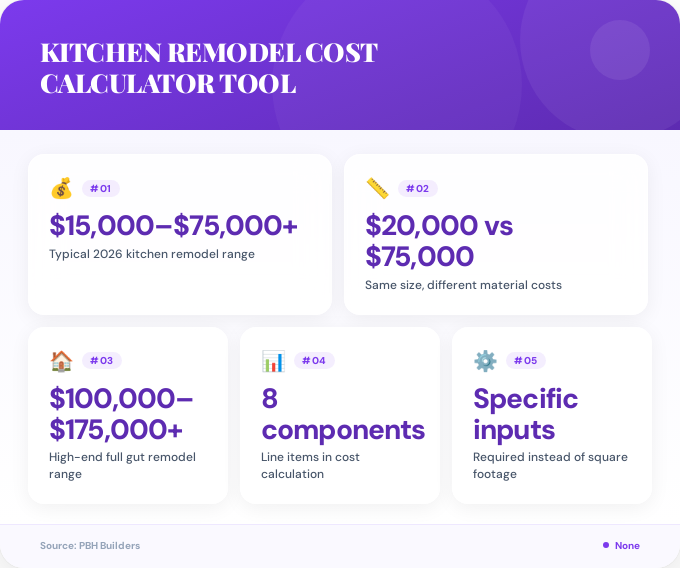
A kitchen remodel cost calculator tool estimates your project total by adding up cabinets, countertops, appliances, labor, surfaces, plumbing and electrical work, permits, and a contingency buffer, not just a flat rate per square foot. In 2026, most U.S. kitchen remodels fall between $15,000 and $75,000 or more, with full custom projects often exceeding $100,000 depending on scope, materials, and local labor rates. The most reliable calculators ask for specific inputs like linear cabinet feet and layout changes rather than giving one generic number.
What Is a Kitchen Remodel Cost Calculator Tool?
Most homeowners type “kitchen remodel cost” into a search bar expecting a single number back. A kitchen remodel cost calculator tool is built to do something smarter: it breaks your project into its real cost drivers (cabinetry, countertops, labor, layout changes, permits) and adds them together based on inputs you provide, not a generic square-footage multiplier.
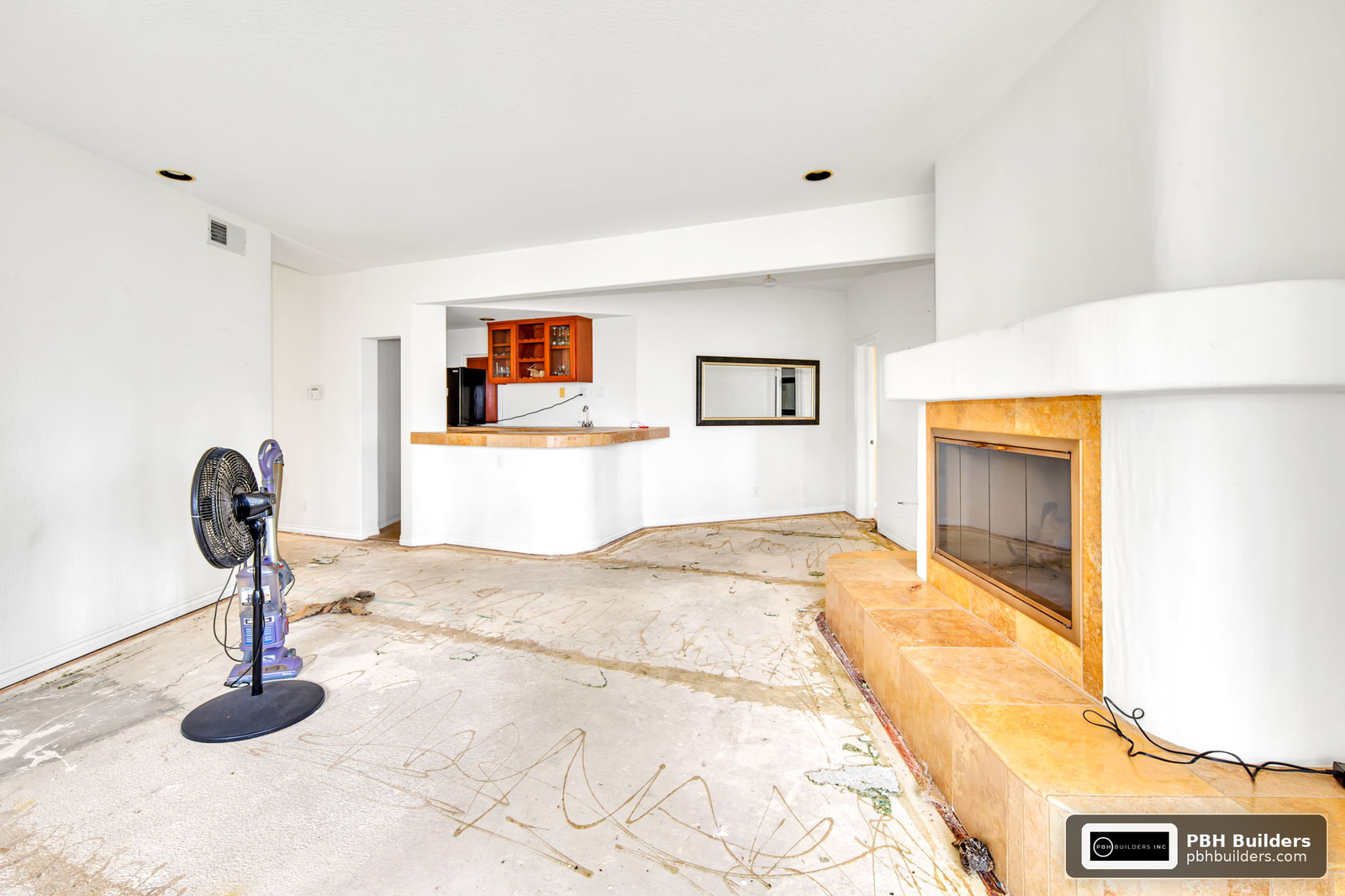
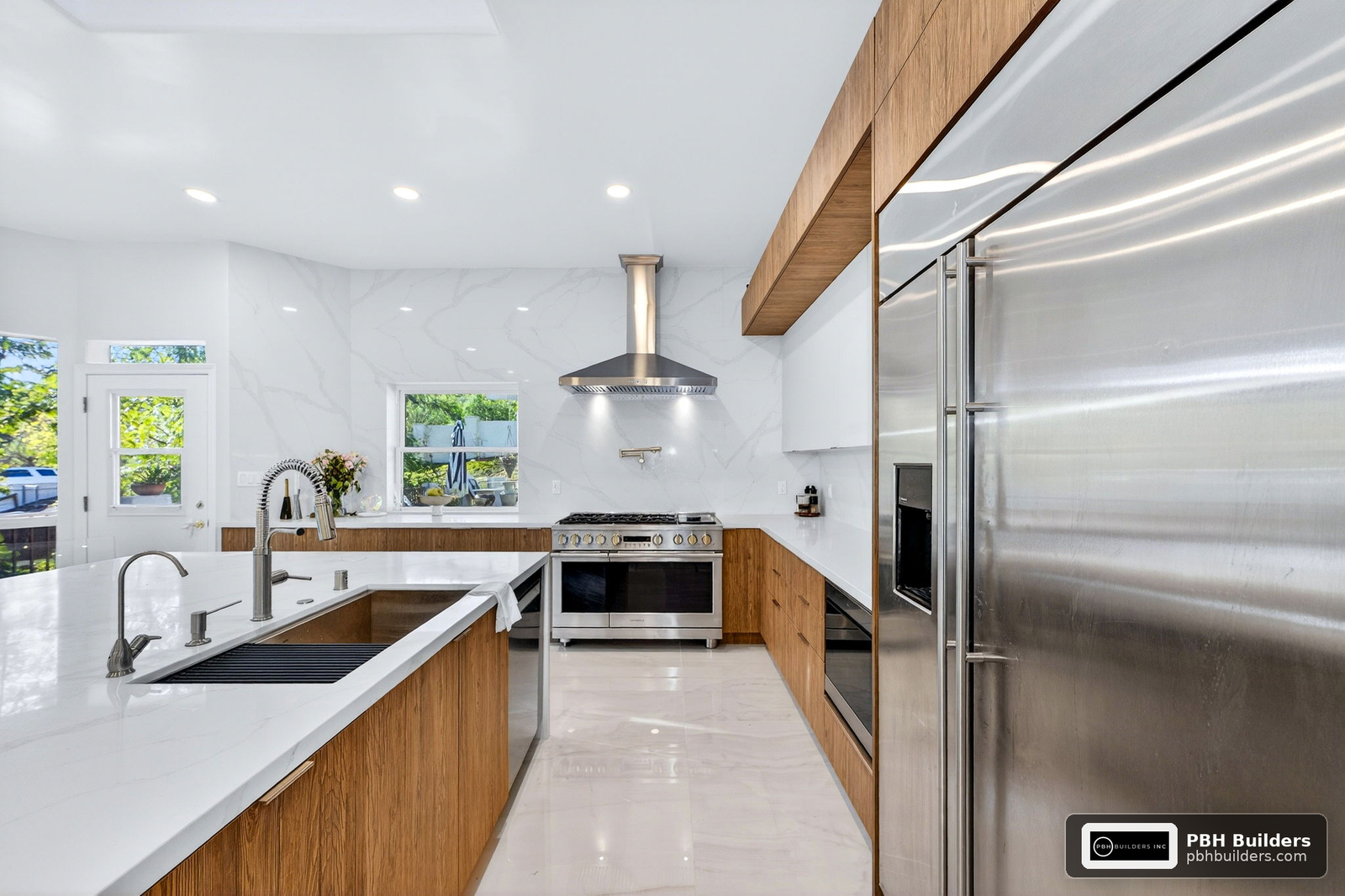
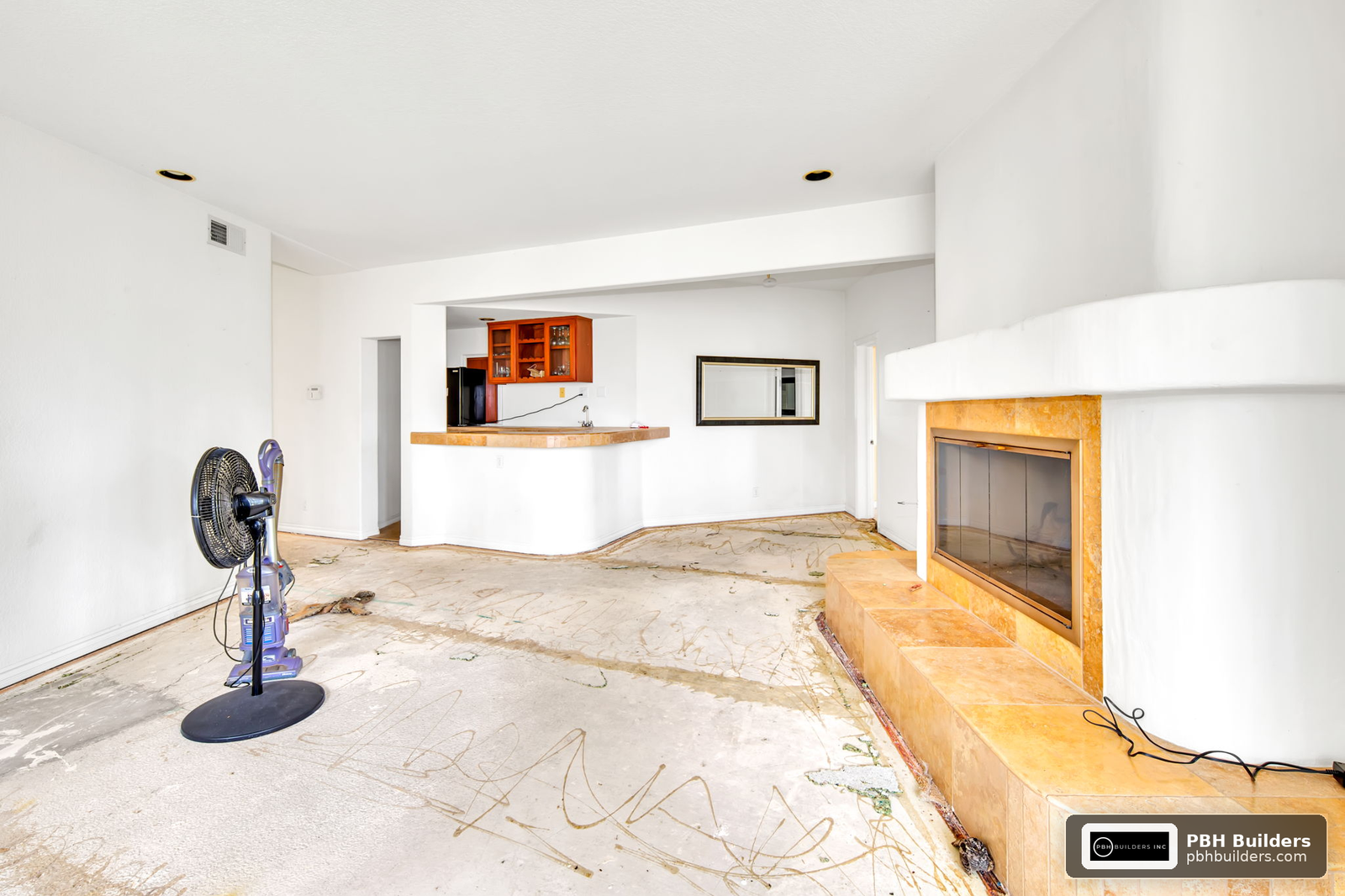
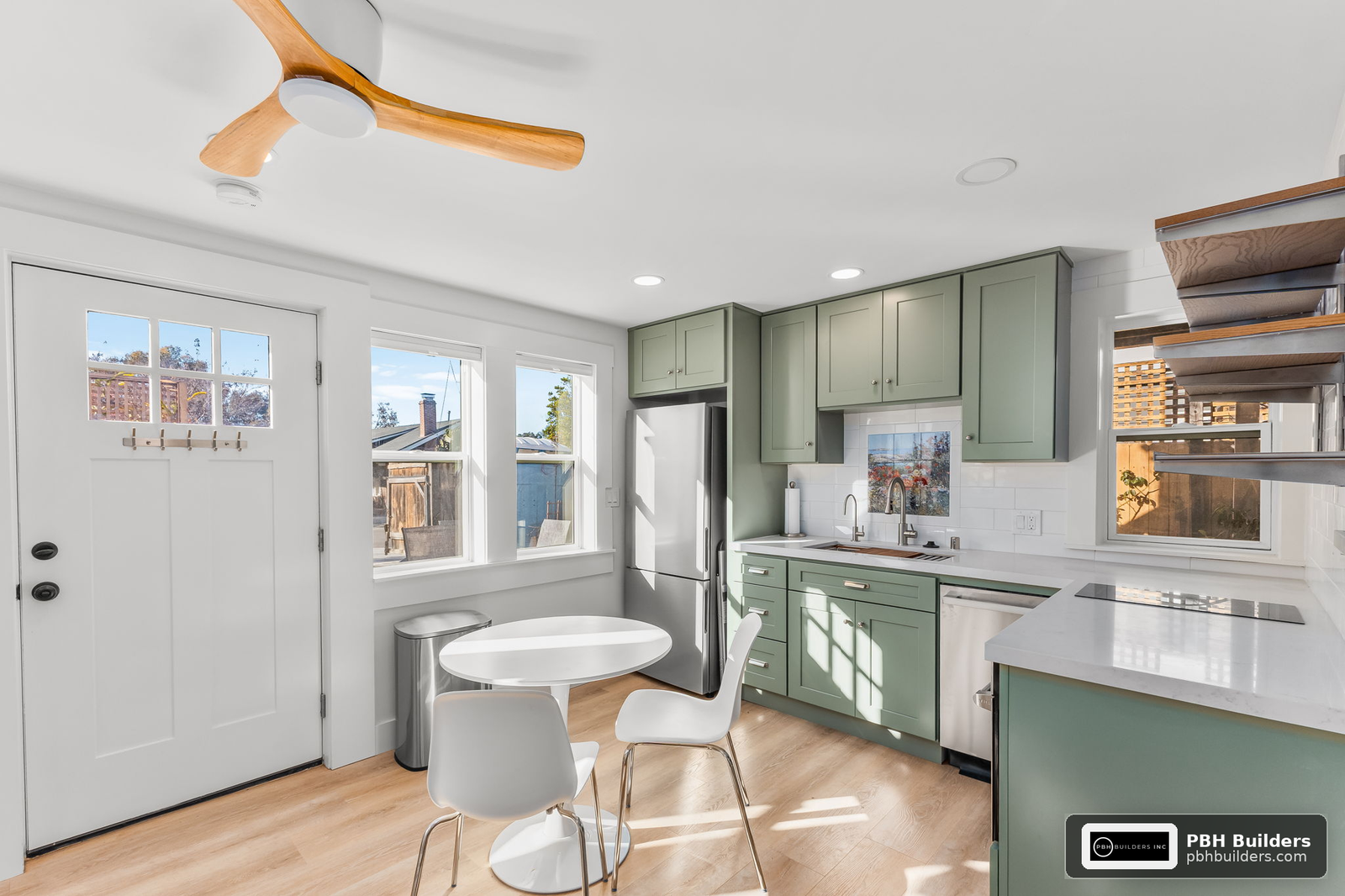
That distinction matters because two kitchens of identical size can cost wildly different amounts. A 200-square-foot kitchen with stock cabinets and laminate counters might land near $20,000, while the same footprint with semi-custom cabinetry, quartz counters, and a moved sink could easily hit $75,000 or more. A calculator that only asks “how big is your kitchen?” can’t capture that gap.
If you’re still in the early research phase, it helps to pair a cost calculator with a broader planning resource like our step-by-step kitchen remodel planning guide, which walks through sequencing decisions before you ever request a quote.
What Are the 2026 Kitchen Remodel Cost Benchmarks?
Before you trust any calculator output, it helps to know the published ranges it should be landing within. According to industry estimates for 2026, projects commonly fall between $15,000 and $75,000+, with high-end renovations exceeding $100,000, as outlined by Designing Idea’s 2026 kitchen remodel cost breakdown.
Houzz’s research draws a useful line between “minor” projects (replacing only select cabinets and appliances) and “major” projects (replacing everything), a distinction detailed in their 2026 kitchen remodeling trends report. That single word, minor versus major, probably swings your estimate more than any other input in a calculator.
Houzz median: $20,000
Includes semi-custom cabinets, upgraded finishes
Custom cabinetry, premium appliances
Modeled national averages tend to sit lower than reported medians because they blend smaller, cosmetic-only jobs into the data. One widely cited model puts the average near $32,090, with a typical spread of $28,755 to $35,682, according to aggregated kitchen remodeling statistics. Pricing on any real project varies based on your specific scope, materials, and local labor market, so treat these numbers as a starting reference point, not a quote.
How Does a Reliable Calculator Actually Calculate Your Number?
A well-built calculator doesn’t guess. It sums discrete line items using a formula similar to this:
Total project cost = Cabinets + Countertops + Appliances + Labor + Surfaces + Plumbing/Electrical + Permits + Contingency
Each component is calculated from a measurable input rather than a flat assumption:
- Cabinets: linear cabinet feet multiplied by an installed price per linear foot.
- Countertops: square footage multiplied by material price per square foot.
- Flooring: floor area multiplied by an installed flooring rate.
- Backsplash: backsplash area multiplied by an installed tile rate.
- Appliances: individual allowances per appliance category.
- Labor: either a percentage of total materials cost or trade-specific hourly/flat rates.
- Layout changes: added plumbing, electrical, framing, demolition, and engineering costs when walls move or fixtures relocate.
- Contingency: typically 10% to 20% built in for hidden damage or mid-project design changes.
This component-based structure mirrors what CalcBuilt’s kitchen remodel cost calculator model uses: cabinets by linear feet, countertops by square feet, surfaces by area, plus separate allowances for appliances, fixtures, layout changes, and wall removal. Homewyse applies a comparable item-by-item approach in its kitchen remodel cost estimating data, which breaks labor and material costs out separately by category instead of bundling them.
How Should Your Budget Be Allocated by Category?
Once a calculator gives you a total, it helps to sanity-check how that number should break down by category. A useful starting allocation looks like this:
| Category | Share of Total Budget |
|---|---|
| Cabinetry | 30%–40% |
| Labor | 20%–25% |
| Countertops | 10%–15% |
| Appliances, flooring, backsplash, lighting, plumbing, permits, demolition, waste | Remaining balance |
For a same-layout, mid-range kitchen, a typical itemized example runs roughly: stock cabinets around $6,300 at about $250 per linear foot installed, quartz countertops near $2,750 at roughly $110 per square foot, and mid-range appliances around $6,000, with the balance covering backsplash, flooring, sink, faucet, demolition, electrical, and plumbing work. If countertops are a major unknown in your plan, our full countertop materials and cost guide breaks down pricing by material type. For backsplash specifics, see what actually drives backsplash installation pricing.
Which Inputs Change Your Estimate the Most?
Not all calculator inputs carry equal weight. Three variables move the total more than anything else:
- Layout changes. Keeping plumbing and electrical in place is dramatically cheaper than relocating a sink, range, or load-bearing wall. Moving a single gas line or drain can add thousands before any finish materials are chosen.
- Cabinetry tier. Stock, semi-custom, and full-custom cabinets can differ by two to three times the price per linear foot, and cabinetry typically represents the single largest line item in the whole project.
- Labor market. Regional labor rates vary significantly, and coastal metro markets often run well above the national averages cited in broad studies.
Permits and inspections are a smaller line item by dollar amount but a frequent source of underestimation, especially when a remodel adds square footage or new electrical circuits. If your project is closer to an expansion than a refresh, it’s worth reviewing how home additions are scoped and permitted before finalizing a budget. Homeowners adding a kitchen island often underestimate the plumbing and electrical rerouting involved, which is covered in our kitchen island addition cost and safety guide.
Why Do Online Calculators Get It Wrong?
Most free calculators default to national averages because they can’t see your specific kitchen. That’s not a flaw so much as a built-in limitation: a tool that asks only for square footage has no way to know if you’re removing a wall, upgrading to a 48-inch range, or discovering outdated knob-and-tube wiring once demolition starts.
Financing calculators compound this problem. Tools like the U.S. Bank home improvement loan calculator are useful for modeling monthly payments, but they still require an accurate project cost input first. If that number is off by 20%, the financing plan built on top of it will be too. Before locking in a loan amount, it’s worth reading how kitchen remodel financing and loan options actually work so the numbers you plug in reflect realistic contingency buffers.
Timeline also affects cost more than most calculators account for. Projects that stretch longer due to custom cabinet lead times or permit delays often carry higher soft costs, a dynamic explored in our guide to how remodel timelines affect final budgets.
How Should You Use a Calculator Before Calling a Contractor?
Treat any calculator output as a planning range, not a quote. The National Association of Realtors’ remodeling impact research, summarized in the 2022 Remodeling Impact Report, found that kitchen upgrades consistently rank among the renovations homeowners report the highest satisfaction with, which is one reason getting the budget planning phase right matters so much before work begins.
A smart sequence looks like this:
- Use a calculator to establish a realistic range based on your square footage, cabinet tier, and whether the layout changes.
- Add a 10%–20% contingency on top of whatever total the calculator produces.
- Bring that range, along with your must-have list, to a contractor for a detailed, in-person estimate.
- Compare the contractor’s line-item breakdown against the calculator’s categories to spot anything missing, like permit fees or demolition disposal.
If you’re weighing a full gut remodel against smaller phased upgrades, our guide on sustainable kitchen remodeling costs by feature shows how targeted, feature-by-feature upgrades can stretch a budget further than a full teardown. And if flooring is part of your scope, our flooring installation services page outlines what’s typically included in an installed rate.
A calculator gets you within range. A contractor walkthrough gets you an accurate number. Both steps matter, and skipping the second one is the most common reason remodels go over budget.
Key Takeaways
- A kitchen remodel cost calculator tool should price out cabinets, countertops, appliances, labor, surfaces, plumbing/electrical, permits, and contingency separately, not estimate from square footage alone.
- 2026 estimates commonly range from $15,000 to $75,000+, with high-end full-gut remodels exceeding $100,000.
- Cabinetry typically represents 30%–40% of total budget, making it the single biggest lever in any estimate.
- Layout changes, like moving plumbing or removing walls, move the total more than any finish-level choice.
- Always build in a 10%–20% contingency for concealed damage and mid-project changes.
- Calculator outputs are planning ranges, not quotes; pricing varies based on your specific project, materials, and local labor market.
- Pair a calculator estimate with a detailed contractor walkthrough before finalizing financing or design decisions.
People Also Ask
How much should I budget for a kitchen remodel in 2026?
Most 2026 projects fall between $15,000 and $75,000 or more, depending on whether it’s a cosmetic refresh or a full gut remodel. High-end projects with custom cabinetry and premium appliances can exceed $100,000. Pricing varies based on your kitchen’s size, materials chosen, and local labor rates.
Is a kitchen remodel cost calculator accurate?
A well-built calculator is accurate as a planning range, not as a final quote, because it uses national average rates for materials and labor. The best calculators let you input specifics like linear cabinet feet, countertop square footage, and whether the layout changes, which improves accuracy significantly over a simple square-footage tool.
What percentage of a kitchen remodel budget goes to cabinets?
Cabinetry typically accounts for about 30% to 40% of the total kitchen remodel budget, making it the largest single category. Countertops usually run 10% to 15%, and labor accounts for roughly 20% to 25% of the total.
Why do kitchen remodels go over budget?
Overruns usually come from concealed issues found during demolition, mid-project design changes, or underestimating layout change costs like moving plumbing and electrical. Building in a 10% to 20% contingency from the start helps absorb these surprises without derailing the overall budget.
Does moving the kitchen layout really cost that much more?
Yes. Relocating plumbing, gas lines, or electrical circuits requires additional labor, permits, and sometimes structural or engineering work, which can add thousands of dollars beyond a same-footprint remodel. Keeping the existing layout is one of the most effective ways to control costs.
Frequently Asked Questions
What inputs does a good kitchen remodel cost calculator need?+
A reliable calculator needs linear cabinet feet, countertop square footage, flooring and backsplash area, appliance tier, whether plumbing or electrical will move, and your local labor market. The more specific the inputs, the closer the output gets to a real-world quote.
What’s the difference between a minor and major kitchen remodel?+
A minor remodel replaces only select cabinets and appliances, keeping most of the existing layout and infrastructure intact. A major remodel replaces all cabinets and appliances and often involves layout changes, which significantly increases both material and labor costs.
How much contingency should I add to my calculator estimate?+
Most industry guidance recommends adding 10% to 20% on top of your calculated total to cover concealed damage, code upgrades, or mid-project design changes. Older homes or kitchens with visible plumbing or electrical issues should lean toward the higher end of that range.
Can I use a calculator to apply for a renovation loan?+
A cost calculator gives you the project total needed to size a loan request accurately, which you can then run through a financing calculator to estimate monthly payments. It’s best to add your contingency buffer before applying so you’re not under-financed if costs shift.
Why does my contractor’s quote differ from the calculator estimate?+
Calculators use national or regional average rates, while contractors price based on your home’s specific conditions, local permitting requirements, and current material availability. A quote that differs by 10% to 20% from a calculator estimate is normal and expected.
Does kitchen size alone determine the final cost?+
No. Square footage affects material quantities, but cabinet tier, countertop material, appliance package, and whether the layout changes typically have a bigger impact on final cost than size alone. Two identically sized kitchens can differ by tens of thousands of dollars based on these choices.
Ready to turn an estimate into an actual plan? The team at PBH Builders has guided San Diego homeowners through kitchen remodels at every budget level, from focused cosmetic refreshes to full custom rebuilds. Reach out for a custom quote built around your exact layout, materials, and timeline, or meet the team behind the numbers before your project begins.