Quick Answer
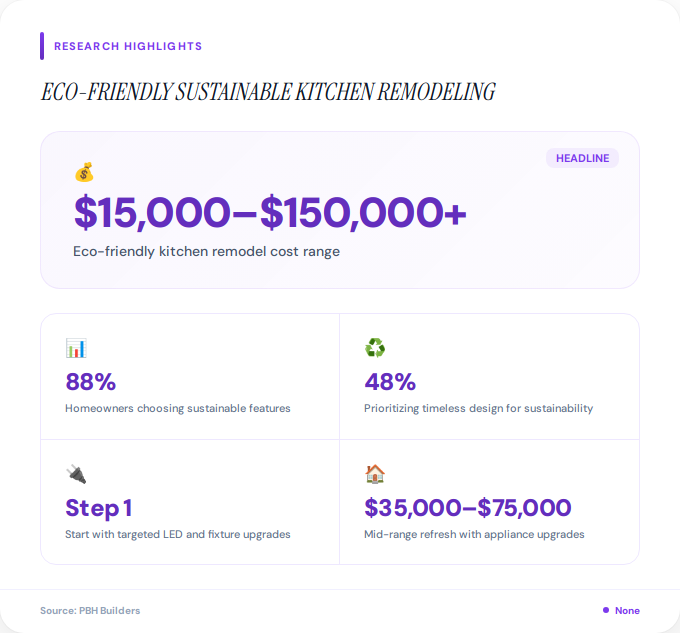
Eco-friendly sustainable kitchen remodeling typically ranges from $15,000 to over $150,000, depending on the scope of layout changes, appliance tier, cabinet materials, and system upgrades. Entry-level sustainable swaps like LED lighting and water-efficient fixtures add modest cost, while full green remodels with energy-efficient appliances, reclaimed wood cabinetry, and electrical or ventilation upgrades command the higher end. Pricing always depends on your home’s existing systems, material choices, and local labor rates, so a custom quote is the only way to get an accurate number.
How much more does it actually cost to go green in the kitchen? That’s the question we hear most often, and the honest answer is: it depends less on “eco-friendly” labels and more on which features you choose. Eco-friendly sustainable kitchen remodeling has moved from a fringe request to a default expectation: 88% of renovating homeowners now select at least one sustainable feature in their kitchen project, according to the 2026 Houzz U.S. Kitchen Trends Report. Yet pricing for these projects spans an enormous range, from a few thousand dollars in targeted upgrades to a six-figure full gut renovation with premium green systems.
This guide breaks down real cost ranges by feature, explains what pushes a budget higher or lower, and shows where sustainable choices actually save money over time rather than just adding expense upfront.
What Is a Sustainable Kitchen Remodel?
A sustainable kitchen remodel reduces environmental impact across the entire life of the space, not just at installation. That means lower energy use, lower water use, reduced material waste, and better indoor air quality, combined with a design built to last rather than be replaced in a few years.
- Energy reduction: efficient appliances, induction cooktops, LED lighting, daylighting, and smarter ventilation.
- Water reduction: efficient faucets, leak-resistant plumbing, and water-conscious dishwashers.
- Material impact: recycled, reclaimed, rapidly renewable, and responsibly sourced materials that are built to last.
- Indoor air quality: low- or zero-VOC paints and finishes, formaldehyde-free panels, and effective exhaust systems.
- Waste reduction: reusing existing cabinet boxes, donating usable fixtures, and recycling demolition debris.
- Longevity: timeless design choices that avoid costly trend-driven replacements down the road.
Notably, 48% of homeowners cite timeless design as their sustainability strategy, meaning the greenest choice is sometimes simply not remodeling again in five years. That’s a mindset shift documented in the NKBA’s kitchen trends summit findings, which point to durability and adaptability as core design values, not just aesthetics.
What Does an Eco-Friendly Kitchen Remodel Cost?
There is no single number that applies to every kitchen, and anyone who quotes you one figure without seeing your space is guessing. Costs for sustainable kitchen remodeling generally fall into a few tiers based on scope:
| Remodel Tier | Typical Scope | Estimated Cost Range |
|---|---|---|
| Targeted upgrades | LEDs, dimmers, low-VOC paint, efficient faucet | $15,000 to $35,000 |
| Mid-range refresh | Refaced cabinets, efficient appliances, new windows | $35,000 to $75,000 |
| Full sustainable remodel | Layout change, reclaimed wood cabinetry, system upgrades | $75,000 to $150,000+ |
These ranges reflect national variation in labor, permitting, and material sourcing. Pricing varies based on your specific project, your home’s existing electrical and plumbing condition, and the quality tier of materials you select, so treat these figures as planning benchmarks rather than quotes.
What Moves the Price Up or Down?
Several factors consistently separate a modest sustainable refresh from a premium green remodel. Understanding these helps you prioritize where your dollars make the biggest environmental and financial difference.
Layout Changes
52% of renovating homeowners modify their kitchen layout, and this is often the single biggest cost driver, far more than material choice. Moving plumbing, gas lines, or load-bearing walls adds labor and permitting costs quickly. The most sustainable approach is frequently to keep existing plumbing and gas locations where practical and invest savings into higher-quality, longer-lasting materials instead.
System Upgrades
42% of homeowners upgrade home systems such as electrical, plumbing, or ventilation during a kitchen remodel, per Houzz’s 2026 kitchen trends coverage. Older homes often need panel upgrades to support induction cooktops or additional circuits for efficient appliances, which adds cost but pays off in both safety and energy performance.
Accessibility and Aging-in-Place Needs
About 53% of homeowners address current or future special needs in their kitchen remodel, which can mean lower counters, wider pathways, or lever-style fixtures. Building these in during a sustainable remodel avoids a second disruptive renovation later, which is itself a waste-reduction strategy.
Material Tier
Reclaimed or FSC-certified wood, recycled-content countertops, and non-toxic cabinet construction cost more upfront than conventional materials but often last longer and require less maintenance. Wood cabinets are chosen by 29% of renovating homeowners, up 6 percentage points year over year, reflecting a shift toward durable, repairable materials over laminate alternatives that wear out faster.
How Much Does Each Sustainable Feature Cost?
Breaking the remodel down by individual feature helps you see where small investments deliver outsized impact, and where premium choices require a bigger budget commitment.
Cost range: $500 to $5,000
Best for: Every budget tier
Cost range: $3,000 to $25,000+
Best for: Mid-range to full remodels
Cost range: $300 to $3,500
Best for: Any remodel scope
Cost range: $1,500 to $12,000
Best for: Layout change projects
Cost range: $500 to $4,000
Best for: Any budget tier
Cost range: $8,000 to $45,000+
Best for: Full remodels
These figures, drawn from the Houzz 2026 kitchen remodeling trends analysis, show that the cheapest sustainable upgrades (lighting, fixtures, paint) are also the most widely adopted, while structural material choices like non-toxic cabinetry require a bigger investment but deliver the most durable, long-term payoff.
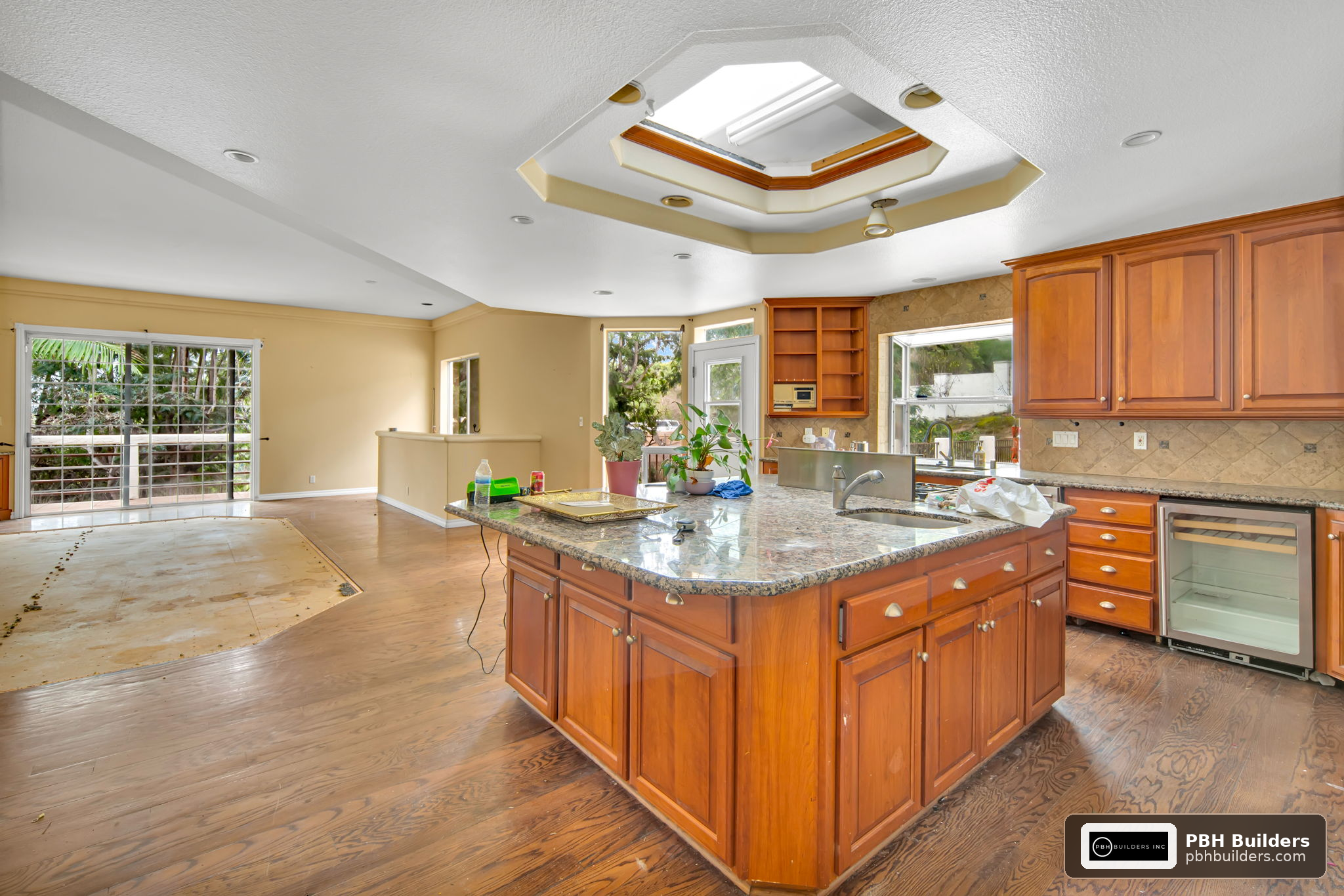
Why Are Homeowners Investing in Green Kitchens?
The motivation behind sustainable remodeling has shifted from purely ethical to deeply financial. 72% of sustainability-minded remodelers cite long-term cost savings as their top reason, outpacing the 53% who cite environmental benefit. This is a practical calculation: efficient appliances and fixtures lower monthly utility bills, and durable materials reduce the odds of a repeat remodel within a decade.
Industry coverage from Contractor magazine’s 2026 bath and kitchen trends report confirms that green building practices are no longer a premium add-on reserved for luxury projects. They’re becoming a baseline expectation across nearly every budget tier, which is reshaping how contractors price and scope projects from the first consultation.
How Should You Budget for a Sustainable Remodel?
Start by separating “must-have” sustainability features from “nice-to-have” upgrades, then sequence your budget around the highest-impact items first.
- Audit your layout first. Determine if plumbing and gas lines can stay in place before pricing anything else.
- Prioritize appliances and lighting. These deliver the fastest payback through reduced utility bills.
- Budget for system checks. Have electrical and ventilation inspected early so surprises don’t blow your budget mid-project.
- Choose durable materials over trendy ones. A reclaimed wood or solid surface countertop installed once beats replacing laminate every few years.
- Request a detailed, itemized quote. Because pricing varies based on your specific project, a line-item estimate lets you see exactly where your sustainability dollars are going.
- 88% of homeowners now include at least one sustainable feature in kitchen remodels.
- Layout changes, not material choice, are usually the biggest driver of total project cost.
- LED lighting and water-efficient fixtures offer the lowest-cost entry point into sustainable remodeling.
- Energy-efficient appliances and non-toxic cabinetry require bigger upfront investment but the strongest long-term payoff.
- 72% of homeowners choose sustainable features primarily to save money long-term, not just for environmental reasons.
- System upgrades (electrical, plumbing, ventilation) are common and should be budgeted for even if not initially planned.
- A custom, itemized quote is essential since no two sustainable kitchen remodels cost the same.
People Also Ask
Does a sustainable kitchen remodel cost more than a standard one?
Not necessarily. Low-cost swaps like LED lighting, dimmers, and low-VOC paint add minimal expense, while premium materials like reclaimed wood cabinetry cost more upfront but reduce lifetime replacement and utility costs.
What is the most cost-effective sustainable kitchen upgrade?
LED lighting and water-efficient fixtures offer the best return for the lowest cost, which is why they’re the most widely adopted sustainable features among renovating homeowners.
Are energy-efficient appliances worth the extra cost?
Yes for most households, since lower utility bills over the appliance’s life often offset the higher purchase price. They’re also the second most popular sustainable feature nationally, chosen by 56% of renovating homeowners.
How long does a sustainable kitchen remodel take?
Timeline depends on scope: targeted upgrades may take two to four weeks, while full remodels with layout changes and system upgrades typically run eight to sixteen weeks.
What materials are considered sustainable for kitchen cabinets?
FSC-certified or reclaimed solid wood, formaldehyde-free panels, and non-toxic finishes are considered sustainable. Solid wood cabinetry adoption rose to 29% of renovating homeowners, reflecting growing demand for durable, repairable materials.
Frequently Asked Questions
How much does an eco-friendly kitchen remodel cost?+
Costs typically range from $15,000 for targeted sustainable upgrades to $150,000 or more for a full remodel with layout changes, premium materials, and system upgrades. Your final cost depends on scope, material tier, and local labor conditions, so a custom quote is recommended.
What sustainable features do most homeowners choose first?+
LED lighting leads at 64% adoption, followed by energy-efficient appliances at 56% and light dimmers at 47%. These lower-cost features typically get prioritized before larger investments like non-toxic cabinetry.
Can I make my kitchen sustainable without a full remodel?+
Yes. Swapping lighting, upgrading faucets, applying low-VOC paint, and refacing existing cabinets instead of replacing them are all effective, lower-cost ways to make a kitchen greener without a full gut renovation.
Do sustainable kitchen upgrades increase home value?+
Energy-efficient appliances, durable materials, and updated systems are increasingly expected by buyers, and 72% of homeowners cite long-term cost savings as their top motivation, suggesting these upgrades support resale value as well as monthly utility savings.
What drives the price difference between a basic and premium sustainable remodel?+
Layout changes, system upgrades to electrical and plumbing, and material tier (reclaimed wood versus laminate, for example) are the biggest cost drivers. Projects that keep existing plumbing locations and reuse cabinet boxes tend to cost significantly less.
Are water-efficient fixtures worth including in a kitchen remodel?+
Yes, especially given their low relative cost. About 30% of renovating homeowners already include water-efficient fixtures, and they offer measurable water savings without a significant upfront investment.