Why Homeowners Are Choosing Interlocking Pavers for Their Driveways
Driveway interlocking pavers are individual stone or concrete units that fit together to create a durable, attractive surface. They are installed over a layered base of compacted gravel and sand, with sand-filled joints and edge restraints holding them in place. This system allows pavers to withstand up to 12,000 PSI and last 50+ years with proper care.
How They Differ from Traditional Materials:
- vs. Poured Concrete: Pavers flex with ground movement instead of cracking and are easily replaced if damaged.
- vs. Asphalt: Pavers are more durable, slip-resistant, and aesthetically versatile. They don’t soften in heat or crack as easily in freeze-thaw cycles.
The key to interlocking pavers is their flexibility. Unlike rigid concrete slabs that crack under stress, pavers work as a system. Sand-filled joints allow the surface to disperse weight and move with the ground, preventing the damage common with poured surfaces.
For San Diego homeowners, this means a driveway that handles heavy traffic while enhancing curb appeal through endless design possibilities in colors, patterns, and textures.
Quick look at Driveway interlocking pavers:
Why Choose Driveway Interlocking Pavers for Your Home?
Your driveway is a major part of your home’s character and the first thing guests see. Driveway interlocking pavers offer a combination of beauty, performance, and long-term value that traditional materials like poured concrete or asphalt can’t match.
Best Durability and Longevity
With a lifespan of 50 years or more, interlocking pavers are a long-term investment. Their longevity comes from a flexible, interlocking system. Unlike rigid concrete slabs that crack under pressure from ground movement or temperature changes, pavers can shift independently. This prevents cracking and allows the surface to adapt.
Their strength is also superior. While standard concrete handles around 4,000 PSI, pavers can withstand up to 12,000 PSI. This makes them ideal for supporting heavy vehicles like RVs or delivery trucks. Our experience with Pavers and Driveway Work in Santee CA confirms their ability to stand up to decades of use.
Superior Aesthetics and Design Flexibility
Pavers offer design possibilities that poured concrete and asphalt lack. You can customize your driveway with a vast selection of colors, from natural earth tones to bold hues. Shapes range from traditional rectangles to modern hexagons, while textures can be smooth, tumbled for a rustic look, or made to mimic natural stone. The pattern—such as herringbone, basket weave, or running bond—adds another layer of customization. This design freedom allows you to create a welcoming entrance that reflects your style, complements your home’s architecture, and increases property value. As detailed in How to Choose and Install Pavers for Your Home, the right choice improves your property’s personality and fits your budget.
Low Maintenance and Easy Repairs
One of the biggest advantages of pavers is their low maintenance. Regular sweeping and an occasional wash are usually all that’s needed. Sealing them every few years helps resist stains and oil spills.
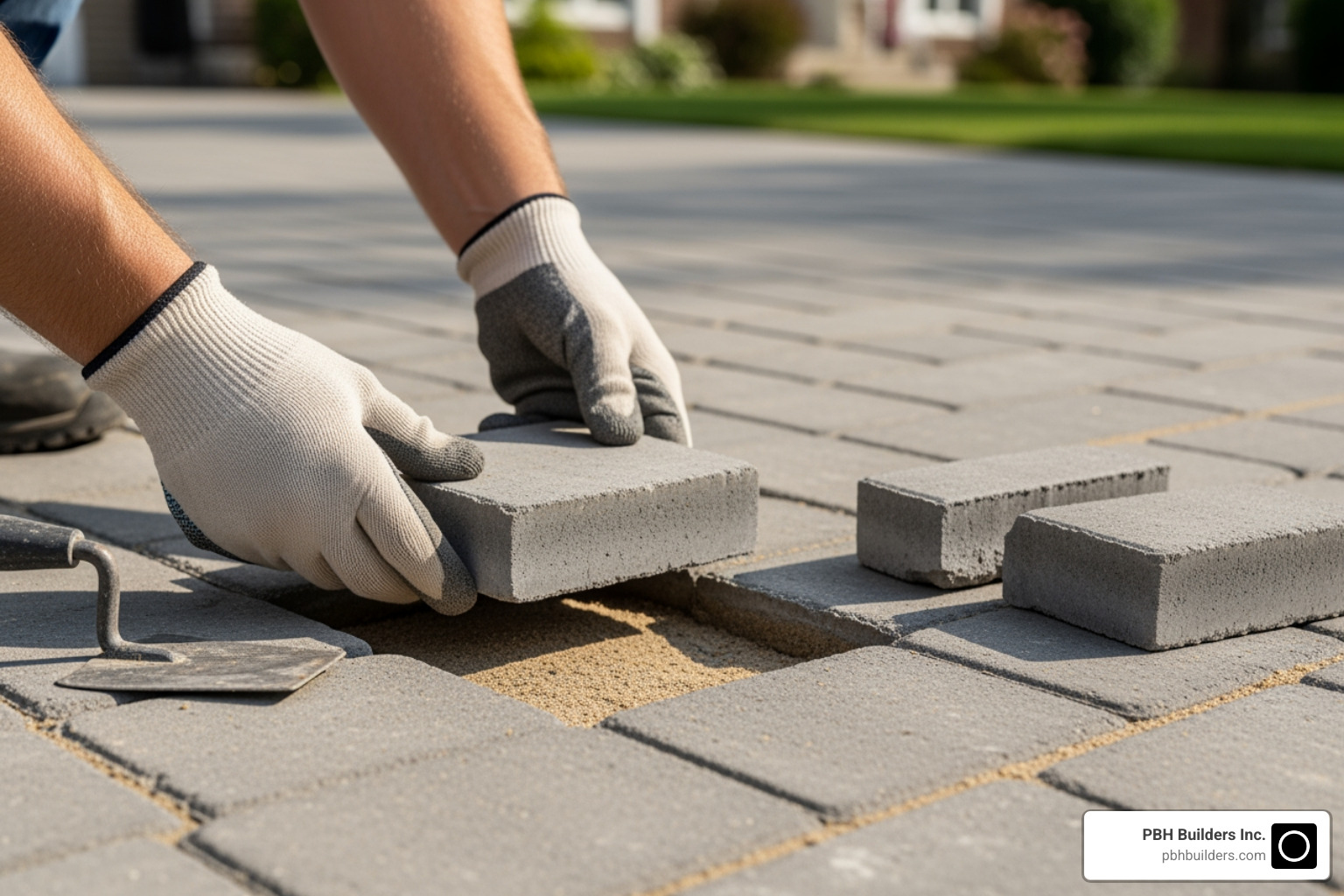
If a paver ever gets damaged or stained, repairs are simple. You don’t need to replace the entire driveway; just pop out the single damaged paver and replace it. This avoids the costly, messy process of jackhammering and re-pouring concrete.
Safety and Weather Resistance
The textured surface of interlocking pavers provides excellent traction, reducing the risk of slips, even when wet. This is an important safety feature for families. In San Diego’s climate, the ground still shifts and settles. The flexibility of pavers allows them to accommodate these natural movements without developing the cracks that plague traditional driveways.
Exploring Paver Materials and Design Possibilities
Choosing the look of your new driveway is an exciting process. With driveway interlocking pavers, you have a wide palette of materials, colors, shapes, and patterns to create a unique design.
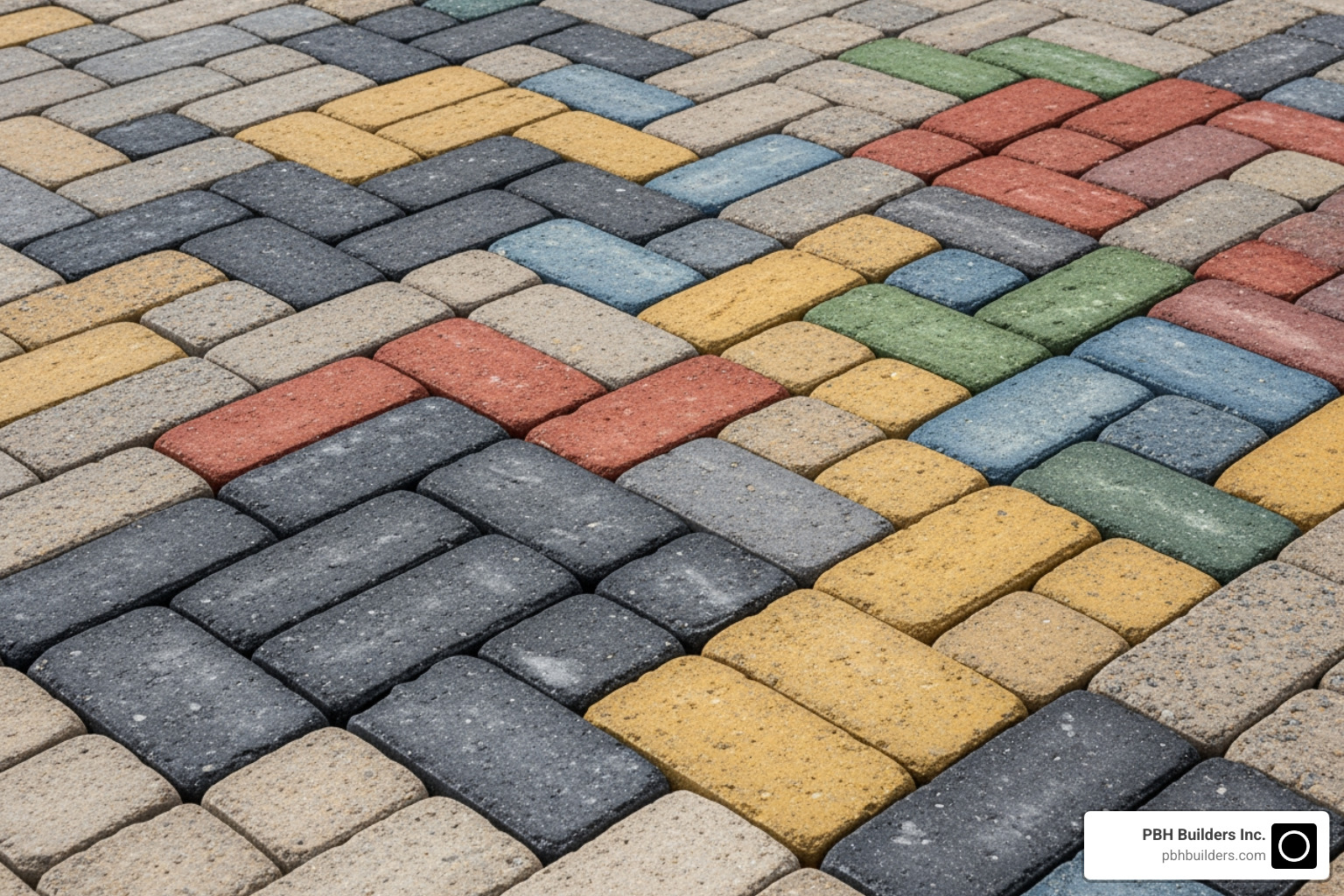
The pattern you select transforms your driveway’s character and adds structural integrity. For driveways, patterns must withstand the weight and movement of vehicles.
Popular patterns for driveways include:
- Running Bond: A classic, clean layout that is structurally sound for daily traffic.
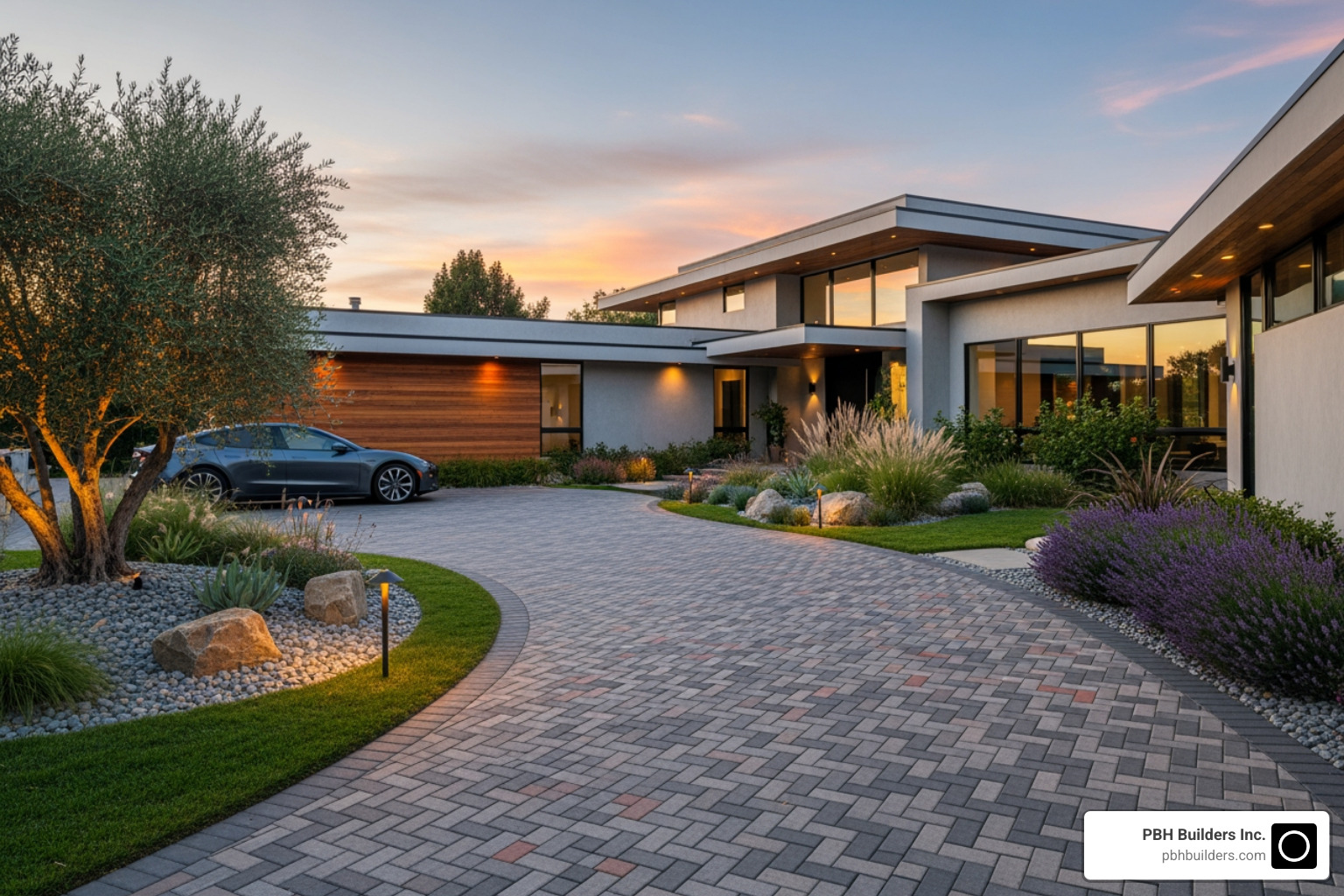
- Herringbone: One of the strongest interlocking patterns, arranging pavers in a V-shape. The 90-degree version is recommended for driveways to minimize movement. Learn more in our guide to the Herringbone Paver Pattern.
- Basket Weave: Creates a charming, woven appearance with a vintage feel.
- Stack Bond: A minimalist aesthetic with pavers laid in straight grid lines, ideal for modern architecture.
- Modular: Uses pavers of different sizes for a more organic, less repetitive look.
Borders and accents, such as a soldier course (a single row of pavers laid side-by-side), can frame your driveway and add a finishing touch.
Types of Interlocking Pavers
The main choices for driveways are concrete and permeable pavers. Concrete pavers are the industry standard, manufactured to handle 8,000 to 12,000 PSI. They offer the widest range of styles and are the most cost-effective choice at $8 to $15 per square foot. See examples in projects like Pavers 11594.
Permeable concrete pavers provide the same benefits with an added environmental advantage, allowing rainwater to filter through the surface. This helps manage stormwater and meets local drainage requirements. They typically cost $10 to $20+ per square foot due to the specialized base required.
While beautiful, natural stone is less dense and more expensive (up to $50/sq. ft.), making it less suitable for driveways. Brick pavers offer a classic look and good strength but can develop a chalky white substance (efflorescence) over time.
Here’s a quick comparison:
| Feature | Concrete Pavers | Permeable Concrete Pavers |
|---|---|---|
| Pros | Highly durable (8,000-12,000 PSI); Wide range of colors, shapes, textures; Cost-effective; Low maintenance | All benefits of concrete pavers; Excellent stormwater management; Reduces runoff and standing water; Environmentally friendly |
| Cons | Can be impermeable, requiring drainage solutions; Prone to efflorescence without sealing | Slightly higher initial cost; Requires specific base layers for proper function |
| Cost Range | $8 – $15 per square foot | $10 – $20+ per square foot |
| Driveway Suitability | Excellent for all residential and commercial driveways | Excellent, especially where drainage is a concern or required by code |
Eco-Friendly Permeable Pavers
Permeable pavers are an innovative solution for managing water on your property. They are designed with larger joints that let rainwater pass through to a prepared aggregate sub-base. This system stores and filters water before releasing it into the ground.
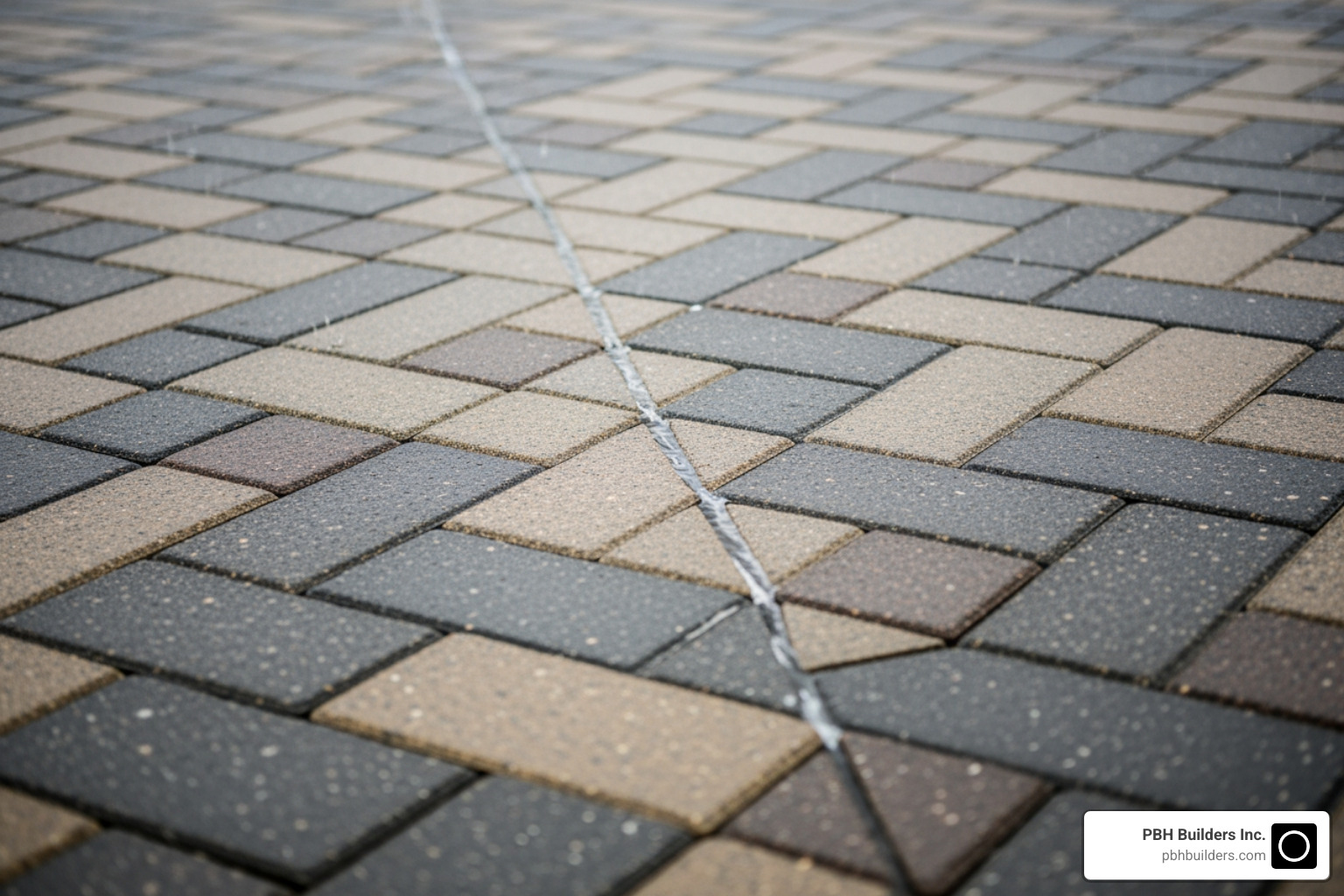
This process mimics natural infiltration, recharging groundwater and reducing strain on municipal storm drains. It also prevents water from pooling on your driveway. By filtering pollutants and reducing runoff, permeable pavers improve water quality. In drought-conscious San Diego, they support local ecosystems and can reduce irrigation needs. For more details, see this guide from Permeable Pavers for Driveways, Patios, and Walkways – Unilock.
The Installation and Maintenance Lowdown
High-quality driveway interlocking pavers require expert installation and routine care to perform correctly. While DIY installation is tempting, a paver driveway is a demanding project that requires specialized equipment and experience to avoid issues like sinking, shifting, and poor drainage.
We recommend working with experienced San Diego Paver Installers who understand local soil conditions. The longevity of a paver driveway depends on the foundation beneath it, making proper excavation, base compaction, and drainage planning critical.
Once professionally installed, maintenance is simple. Regular sweeping removes debris, and an occasional wash with a garden hose keeps the surface clean. Sealing the pavers every few years is the most important step, as it improves color, protects against stains, and stabilizes the joint sand to prevent weeds.
The Installation Process for Driveway Interlocking Pavers
A methodical installation process ensures your paver driveway will last for decades. Each step builds upon the last to create a durable foundation.
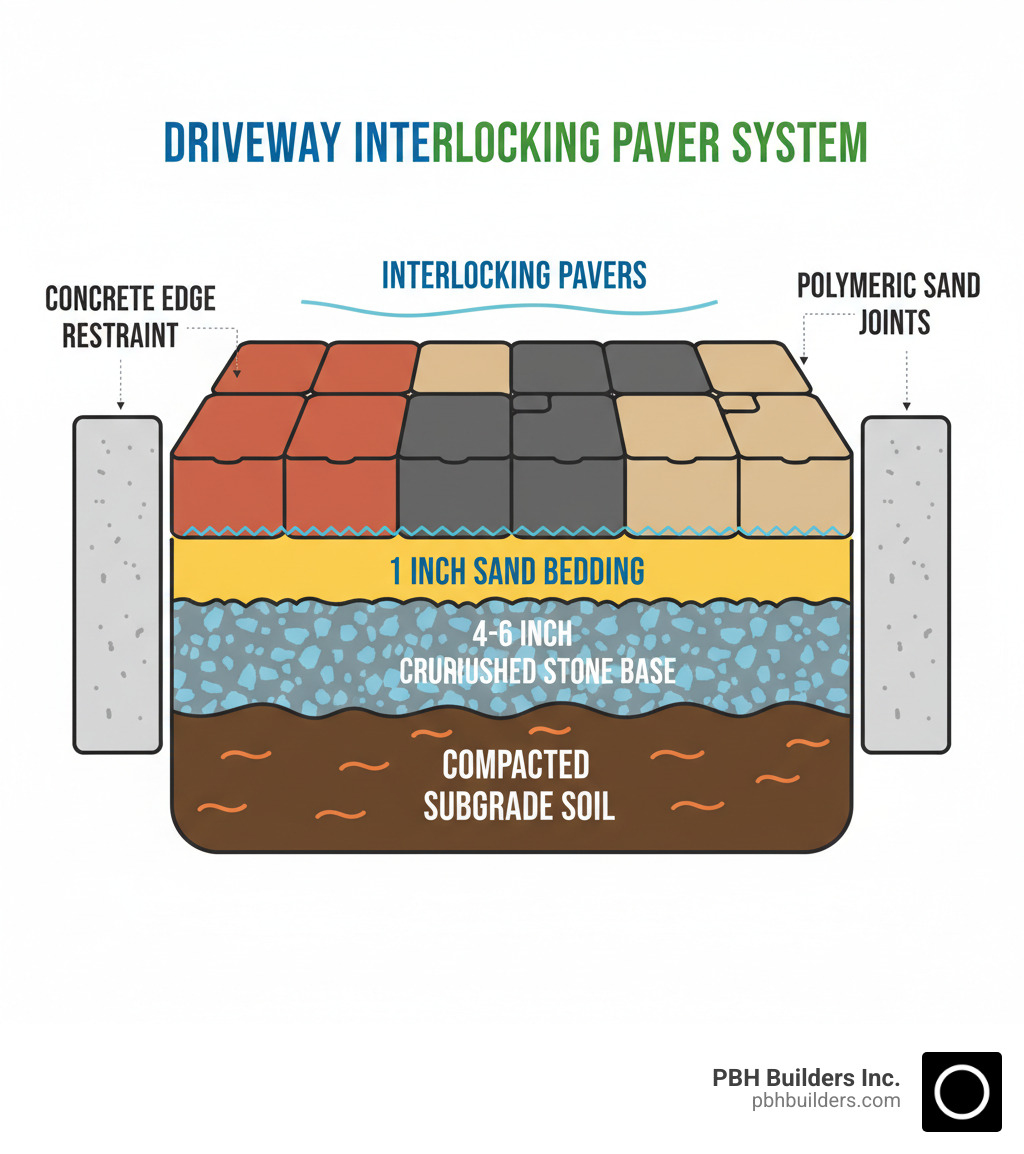
- Excavation: We remove soil to a depth of about 9 inches for driveways, which is necessary to build a robust base. Any existing concrete or asphalt is completely removed.
- Base Preparation: A 6-inch layer of compacted class II road base is laid. For San Diego’s common clay soils, we first add a geosynthetic fabric to prevent the base from mixing with the clay and compromising stability.
- Compaction: Each layer of the base is compressed with heavy-duty plate compactors until it is rock-solid. This dense foundation prevents sinking.
- Sand Bedding: A 1-inch layer of masonry sand is spread over the base to create a smooth, level surface for laying the pavers.
- Laying the Pavers: We place each paver according to the chosen pattern, ensuring tight joints and proper alignment.
- Edge Restraints: Concrete edge beams, often reinforced with rebar, are installed around the perimeter to prevent pavers from spreading outward under vehicle weight.
- Joint Sand: Polymeric sand, which contains binding additives, is swept into the joints. When activated with water, it hardens to resist weeds and erosion while allowing for flexibility.
- Final Compaction and Sealing: A final pass with a vibratory plate settles the pavers and sand. We finish by cleaning the surface and applying a high-quality sealer to protect the driveway and improve its appearance.
Common Issues with Driveway Interlocking Pavers and How to Prevent Them
Most common paver issues are preventable with proper installation and maintenance.
- Weed Growth: Using polymeric sand and sealing the joints creates a strong barrier against weeds. Regular sweeping also helps.
- Sinking or Shifting Pavers: This is almost always caused by an improper base or inadequate edge restraints. Professional installation with sufficient compaction and robust restraints is the best prevention.
- Efflorescence: This temporary, chalky white haze is a natural occurrence as mineral salts migrate to the surface. It typically fades with time and weather, but can be cleaned. Sealing helps minimize it.
- Stains: Oil, tire marks, and rust can be prevented by acting quickly. Many modern pavers are stain-resistant, and applying a sealer provides an additional protective barrier.
Our experience as a Patio Paver Contractor shows that proper installation is the key to preventing these problems from the start.
Understanding the Costs and Long-Term Value
The typical investment for driveway interlocking pavers is $8 to $25 per square foot. The final cost depends on several factors:
- Material Type: Standard concrete pavers range from $8 to $15 per square foot, while permeable or specialty pavers are at the higher end. Natural stone can exceed $50 per square foot and is less recommended for driveways.
- Project Size: Larger driveways may have a lower per-square-foot cost due to economies of scale.
- Labor Costs: Professional installation is a significant part of the investment but is crucial for a long-lasting result. It covers excavation, base preparation, precise laying, and finishing.
- Site Preparation: Costs can increase with the need for extensive grading, drainage solutions, or removal of an existing driveway.
- Design Complexity: Intricate patterns, borders, and multiple colors require more time and skill, influencing the final price.
While the initial cost of pavers may be higher than basic concrete or asphalt, their long-term value is far greater. A paver driveway can last 50 years or more, whereas concrete may need replacement in 15-25 years and asphalt requires resurfacing every 5-10 years. When you factor in these replacement costs, pavers often have a lower total cost of ownership.
Repairs are also more affordable. A single damaged paver can be replaced easily, unlike a cracked concrete slab that requires costly and unsightly patchwork. The minimal maintenance of sweeping, washing, and occasional sealing also saves money over time.
Finally, a well-designed paver driveway significantly increases property value and curb appeal, making your home stand out. It’s a smart financial decision that delivers a strong return on investment. Projects like Pavers 10875 showcase this combination of lasting value and beauty.
Frequently Asked Questions about Interlocking Paver Driveways
Here are answers to the most common questions we receive about driveway interlocking pavers.
How long do interlocking paver driveways last?
With proper installation and routine care, a paver driveway can last 50 years or more. Their flexible, interlocking design allows them to adapt to ground movement without cracking, unlike rigid materials. This ensures a durable surface that can serve your family for generations.
Can you plow snow from a paver driveway?
Yes. While not a common concern in San Diego, paver driveways handle snow removal well. You can plow, shovel, or use a snow-blower without issue. The beveled edges on quality pavers prevent snagging, and de-icing products like rock salt will not damage the surface.
Can you install pavers over an existing concrete driveway?
While some companies offer this “overlay” service, we do not recommend it for driveways. A paver installation is only as stable as its foundation. Any cracks or instability in the old concrete will eventually transfer to the new paver surface, compromising its longevity.
For a durable driveway that lasts 50+ years, we remove the existing surface completely. This allows us to build a properly compacted base from the ground up, ensuring a stable, long-lasting foundation for your investment.
Transform Your Driveway with Expert Paver Installation
Driveway interlocking pavers offer an best combination of strength, longevity, and beauty. With a 50+ year lifespan, incredible design flexibility, and low maintenance needs, they provide superior long-term value compared to concrete or asphalt. A paver driveway is more than just a surface—it’s a lasting investment in your home’s curb appeal and functionality.
Your driveway is the entrance to your home; it should be beautiful, welcoming, and built to last.
At PBH Builders Inc., we specialize in crafting stunning outdoor spaces for San Diego homeowners. We don’t just lay pavers; we build durable, beautiful entrances designed to perform flawlessly for generations. Our team understands San Diego’s unique soil and climate conditions, ensuring every installation is done right, from the base preparation to the final seal.
Browse our Projects Category: Pavers to see how we’ve transformed driveways across San Diego.
Ready to design your dream outdoor living space? Let’s discuss the possibilities for your home and create an entrance that welcomes you in style for years to come.