Why San Diego Homeowners Are Embracing Water-Wise Landscaping
In San Diego, drought tolerant landscaping is changing outdoor spaces. With recurring droughts and about 50% of residential water used on gardens, creating beautiful landscapes that thrive with minimal water isn’t just smart—it’s essential.
Key Benefits of Drought-Tolerant Landscaping in San Diego:
- Water Savings: Reduce outdoor water use by up to 50%
- Cost Reduction: Lower water bills and maintenance expenses
- Low Maintenance: Less mowing, pruning, and plant replacement
- Year-Round Beauty: Plants adapted to San Diego’s Mediterranean climate
- Increased Property Value: Sustainable landscapes improve home value
- Environmental Impact: Support local ecosystems and wildlife
San Diego’s 260+ sunny days and USDA Hardiness zones 8-10 are perfect for xeriscaping. This water-wise approach uses drought-tolerant plants and smart hardscaping to create yards that thrive in dry conditions.
Forget the myth that drought-tolerant means boring. These landscapes can be lush and colorful, featuring vibrant California poppies, fragrant lavender, and stunning agaves that use a fraction of the water. Many of these plants have clever survival traits: heat-reflecting gray leaves, water-storing succulent stems, or small leaves that limit water loss. Some even go dormant in the heat, reviving in cooler weather.
Once established, these plants need minimal watering and occasional pruning, giving you more time to enjoy your yard instead of maintaining it.
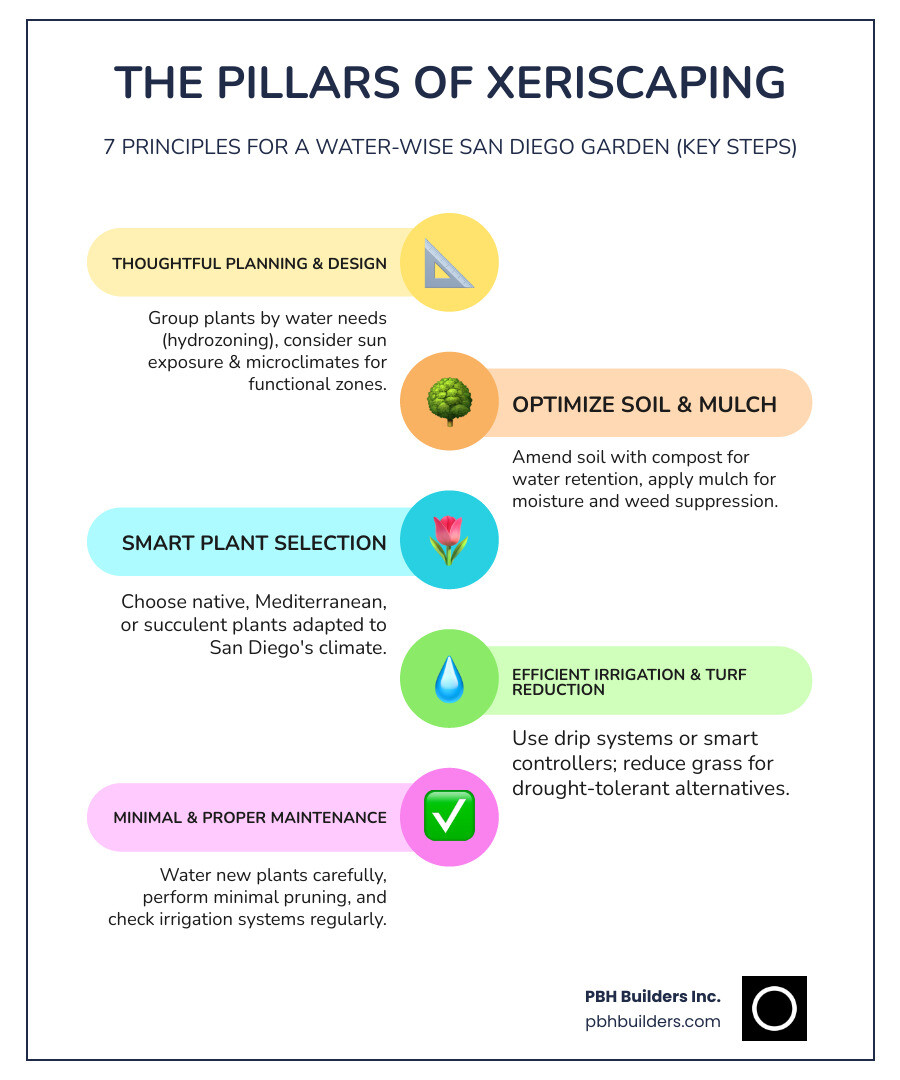
The Pillars of Xeriscaping: 7 Principles for a Water-Wise San Diego Garden
Xeriscaping (from the Greek ‘xeros’ for dry) is more than just planting cacti. It’s a thoughtful approach to creating stunning, functional gardens that dramatically reduce water use. It requires more upfront planning than traditional gardening, but the payoff is a low-maintenance, beautiful landscape that thrives year-round.
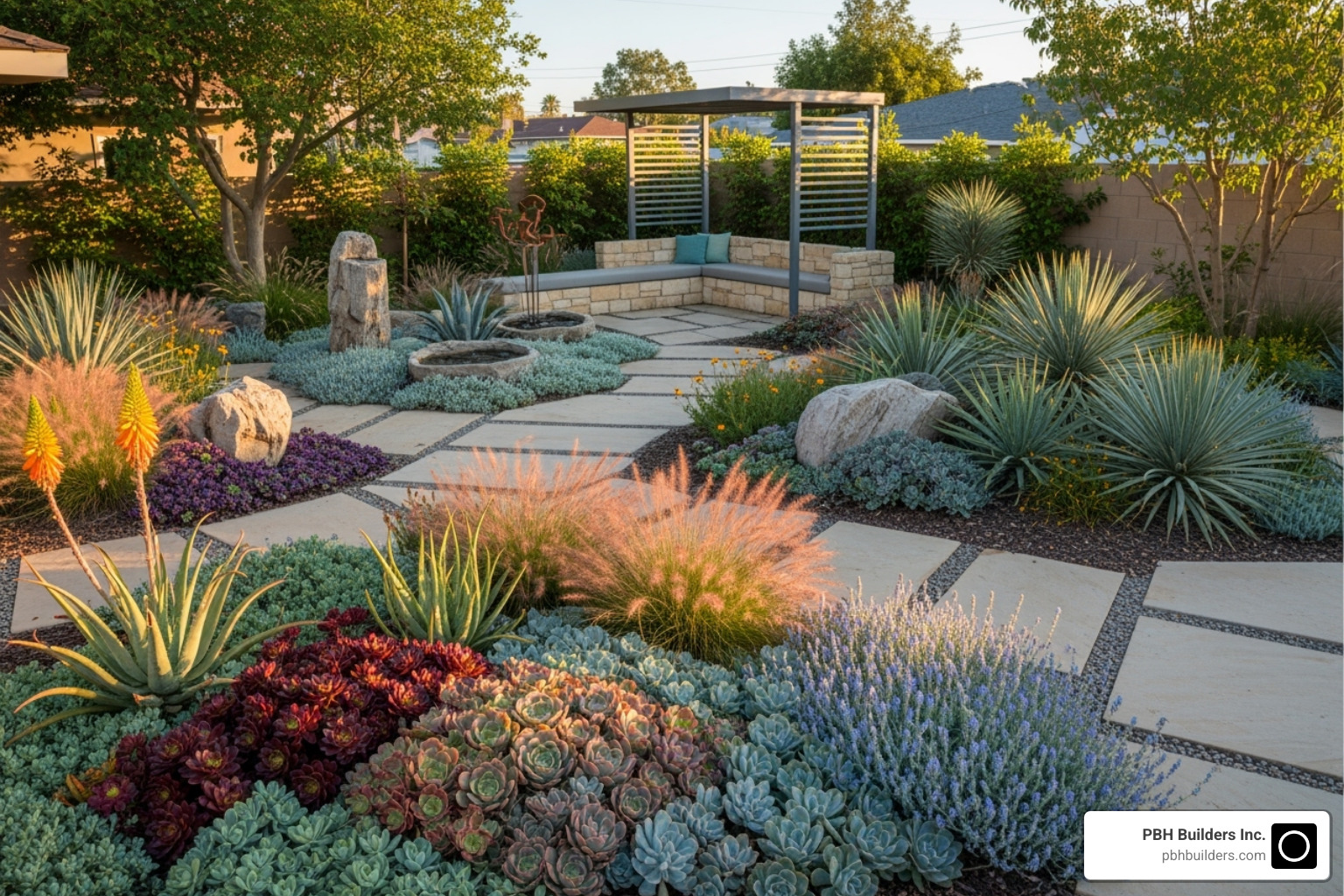
At PBH Builders Inc., we’ve seen how these seven core principles transform ordinary San Diego yards into water-wise wonderlands. The secret is understanding that every successful xeriscape starts with smart design decisions that work with our Mediterranean climate. Explore our landscape design services to see how we bring these principles to life.
Thoughtful Planning and Design
Smart xeriscaping begins with a plan that considers your yard’s sun exposure, microclimates, and your family’s lifestyle. We map sun patterns to place plants correctly and design functional zones, like a durable play area for kids or a quiet coffee nook. A key technique is hydrozoning—grouping plants with similar water needs together to ensure efficient irrigation. This planning creates a water-wise space you’ll love.
Soil Improvement
San Diego soils vary from heavy clay to fast-draining sand. The goal is to create soil that retains moisture without becoming waterlogged. Amending the soil with compost is the solution for both soil types, as it improves drainage in clay and water retention in sand. Mulch further enriches the soil as it decomposes. Healthy soil promotes deep root growth, making plants more drought-resistant.
Practical and Reduced Turf Areas
Traditional lawns can consume up to half of your home’s outdoor water. Consider if you use all your grass; if it’s just for looks, stunning, low-water alternatives exist. Focus turf on functional play areas and replace decorative strips with beautiful, low-water planting beds, hardscaping, or ground covers like creeping thyme. For more ideas, check out our guide to low maintenance landscaping.
Efficient Irrigation
Even drought-tolerant plants need water to get established. The key is efficient delivery directly to the roots. Drip irrigation and soaker hoses are ideal, minimizing evaporation. Smart controllers automate watering based on weather and soil moisture, preventing waste. Watering deeply and infrequently promotes strong, deep roots. The best time to water is early morning to reduce evaporation and prevent fungal diseases.
Appropriate Plant Selection
Plant selection is an exciting part of xeriscaping. San Diego’s climate supports a wide variety of beautiful plants that prefer our dry summers and mild winters. Water-wise plants have clever adaptations, such as reflective gray leaves, water-storing succulent stems, and small leaves that reduce evaporation. Besides California natives, plants from other Mediterranean climates like Australia and South Africa also thrive here. For detailed recommendations, dive into our resource guide on drought tolerant plants San Diego.
The Benefits of Mulching
Mulch is an unsung hero in a water-wise garden. A thick layer suppresses weeds, saving you time and effort. It also significantly reduces water evaporation from the soil, allowing for less frequent watering, and regulates soil temperature, protecting roots from extreme heat and cold. Organic mulches (wood chips) improve soil over time, while inorganic mulches (gravel) offer a permanent, modern look. Apply a 3-inch layer, keeping it away from plant stems and trunks.

Proper Maintenance
While not ‘no maintenance,’ water-wise landscapes require far less work than traditional gardens. Most drought-tolerant plants need only minimal pruning to remove dead growth and encourage new blooms. Mulch makes weeding much easier, and regular checks of your irrigation system prevent clogs. New plants need regular deep watering for the first year to establish strong roots. This initial care is an investment in long-term, low-maintenance beauty.
The Living Elements: Choosing the Right Plants for Your Drought Tolerant Landscaping in San Diego
Choosing the right plants is key to a successful drought tolerant landscaping San Diego project. Our Mediterranean climate supports a vast palette of plants that thrive with minimal water and care, offering beauty throughout the seasons.
Best Native and Drought-Tolerant Plants
The secret to a successful water-wise garden lies in choosing plants naturally adapted to our climate. These hardy performers have perfected their ability to handle our hot, dry summers.
- California Lilac (Ceanothus): This native shrub offers spectacular blue or white spring flowers. Available in various sizes, it’s extremely drought-tolerant once established.
- Agave: These bold, sculptural succulents create stunning focal points and are perfect for dry spots, as they store water in their leaves.
- Bougainvillea: This vibrant, thorny vine provides an explosion of color (magenta, purple, orange, white) and is a classic choice for San Diego gardens.
- Lavender: French and Spanish varieties are well-suited to our climate, offering beauty, fragrance, and attracting pollinators.
- California Poppy: Our state flower creates cheerful orange blooms that reseed annually, embodying the spirit of low-maintenance California gardening.
- Sage (Salvia species): The Salvia family offers a huge variety of colors and sizes, with many types attracting hummingbirds.
- Manzanita (Arctostaphylos species): This tough native provides year-round interest with its distinctive reddish bark and delicate flowers, adding a sculptural element to the landscape.
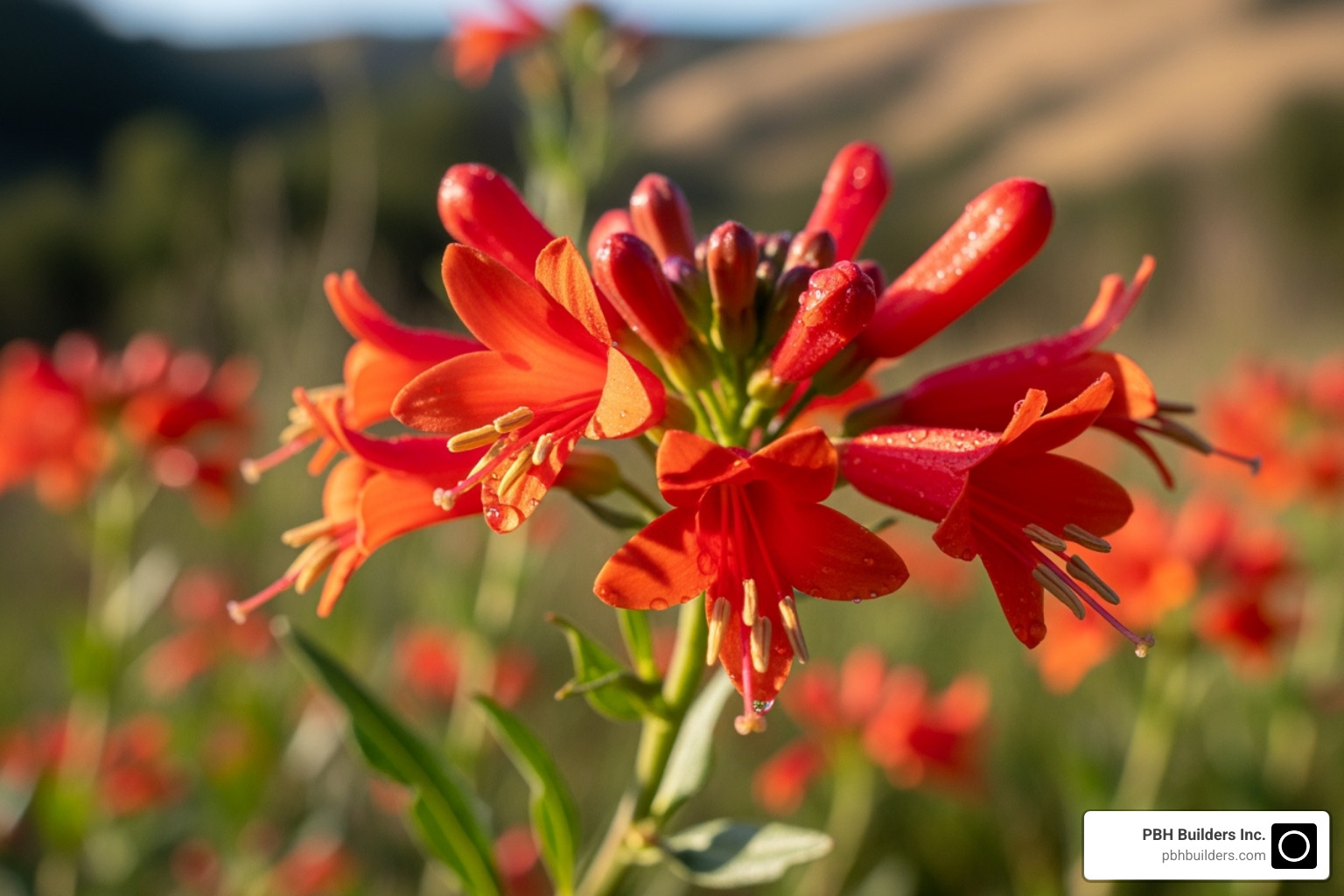
Curtis Clark Photo Credit:Curtis Clark/ Wikimedia Commons /CC BY-SA 2.5
Creating a Pollinator Paradise
Turn your garden into a pollinator paradise by choosing plants that support the local ecosystem. Native plants are especially effective as they have co-evolved with local wildlife.
- Hummingbird Sage (Salvia spathacea): Its bright magenta flowers are a magnet for hummingbirds.
- Yarrow (Achillea millefolium): This tough plant has delicate, feathery foliage and flower clusters that attract beneficial insects.
- Bush Monkeyflower (Mimulus aurantiacus): Its cheerful orange, yellow, or red tubular flowers attract both bees and hummingbirds.
Creating a pollinator habitat contributes to the health of the entire regional ecosystem.
Low-Maintenance Ground Covers
Replace your lawn with beautiful, water-wise ground covers. These living carpets offer a green look with a fraction of the water and maintenance.
- Creeping Thyme (Thymus serpyllum): This fragrant, low-growing ground cover handles moderate foot traffic and releases a pleasant scent when stepped on.
- Dwarf Coyote Brush (Baccharis pilularis ‘Twin Peaks’): A tough native, this plant forms a dense green mat that is perfect for slopes and large areas, requiring little care once established.
- Succulent ground covers: Varieties of Sedum and Ice Plant offer unique textures and flowers, creating living tapestries in the driest parts of your garden.
Designing a Drought-Tolerant Edible Landscape
Your water-wise garden can also be an edible one, combining beauty with bounty. Raised garden beds offer control over soil and make irrigation highly efficient. Mediterranean herbs like rosemary, thyme, oregano, and sage thrive in our climate and provide year-round harvests. Drought-tolerant fruit trees like figs and pomegranates are also well-suited to San Diego. Focus on water-wise vegetables with shorter growing seasons or lower water needs, such as certain varieties of tomatoes and peppers.
Smart Hardscaping, Technology, and Design Trends
Modern drought tolerant landscaping San Diego integrates sustainable hardscaping, smart technology, and current design trends to create stunning, eco-friendly outdoor spaces. Smart hardscaping serves a dual purpose: creating beautiful, functional areas while actively conserving water.
Sustainable Hardscaping Materials for Water Conservation
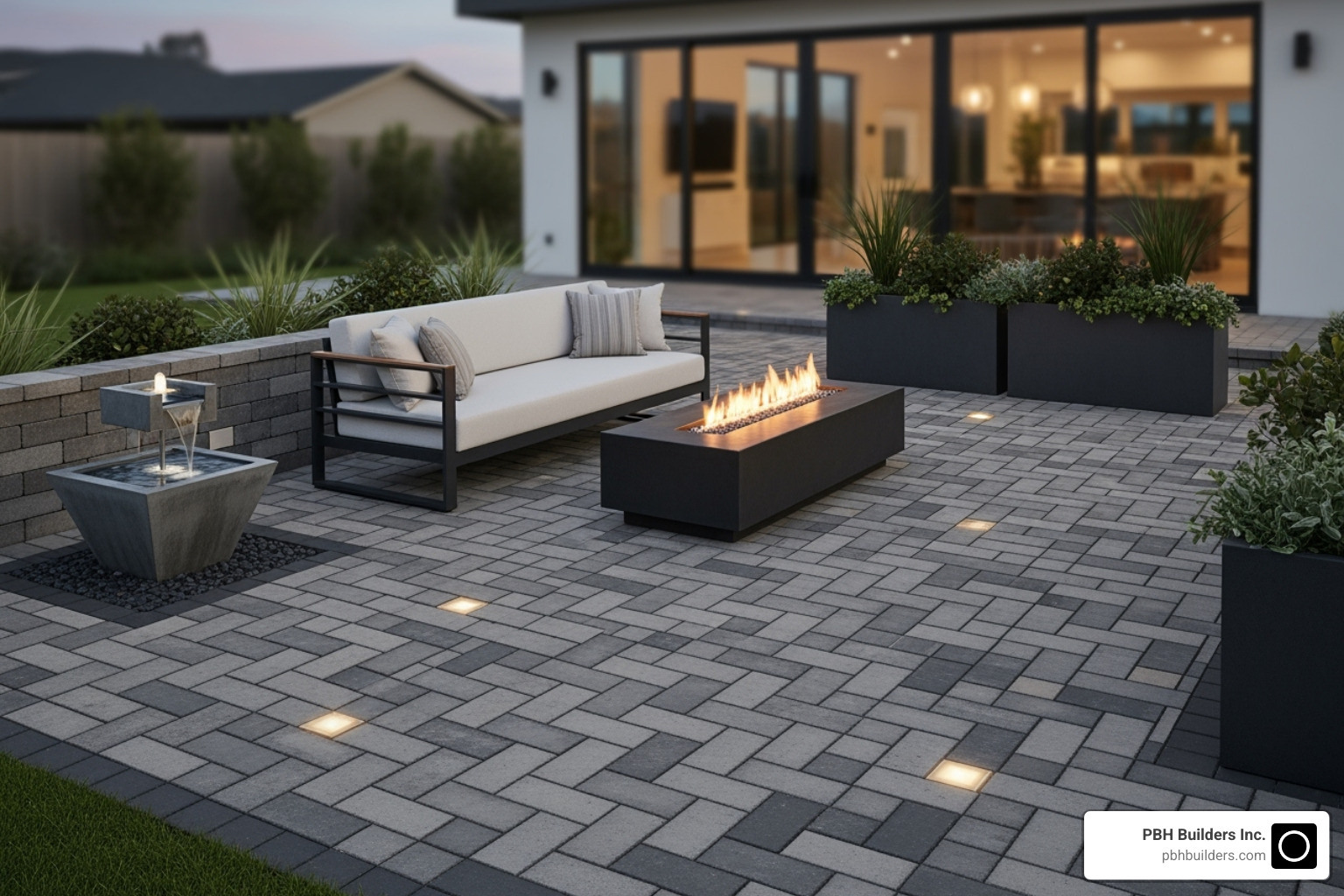
Your hardscaping choices matter. Traditional concrete creates runoff, while sustainable options allow rainwater to soak into the ground. Permeable pavers have gaps that let rainwater filter into the soil, reducing runoff and recharging groundwater. Decomposed granite is a natural-looking, permeable material ideal for pathways and patios. Gravel paths and spaced flagstones also provide excellent drainage and add texture. At PBH Builders Inc., we specialize in selecting and installing sustainable materials, including intricate pavers and driveways.
Integrating Smart Technology and Eco-Friendly Lighting
With over 260 sunny days a year, San Diego is perfect for integrating smart technology and solar power into your landscape. Smart irrigation controllers are a key investment, using weather data and soil moisture sensors to automatically adjust watering schedules and ensure no water is wasted. Modern solar-powered lighting uses our abundant sunshine to create beautiful evening ambiance with no electricity cost. For more consistent light, low-voltage LED fixtures are an energy-efficient option.
Popular Design Trends for Drought Tolerant Landscaping in San Diego
Current design trends blend aesthetics with environmental responsibility, creating outdoor spaces that improve your quality of life.
- Biophilic design strengthens the connection between indoors and outdoors. It uses elements like large glass doors and continuous flooring materials to blur the lines, creating integrated living spaces with natural views.
- The modern meadow look uses naturalistic drifts of drought-tolerant grasses and wildflowers instead of rigid planting beds. This style mimics nature, supports pollinators, and is low-maintenance.
- Integrated outdoor living spaces are a popular trend in San Diego’s climate. These include outdoor kitchens, dining areas, and fire pits, effectively extending your home’s living area.
At PBH Builders Inc., we specialize in creating these captivating outdoor living spaces that are both on-trend and timelessly functional.
The Great Debate: Drought-Tolerant Natural Landscaping vs. Traditional Lawns
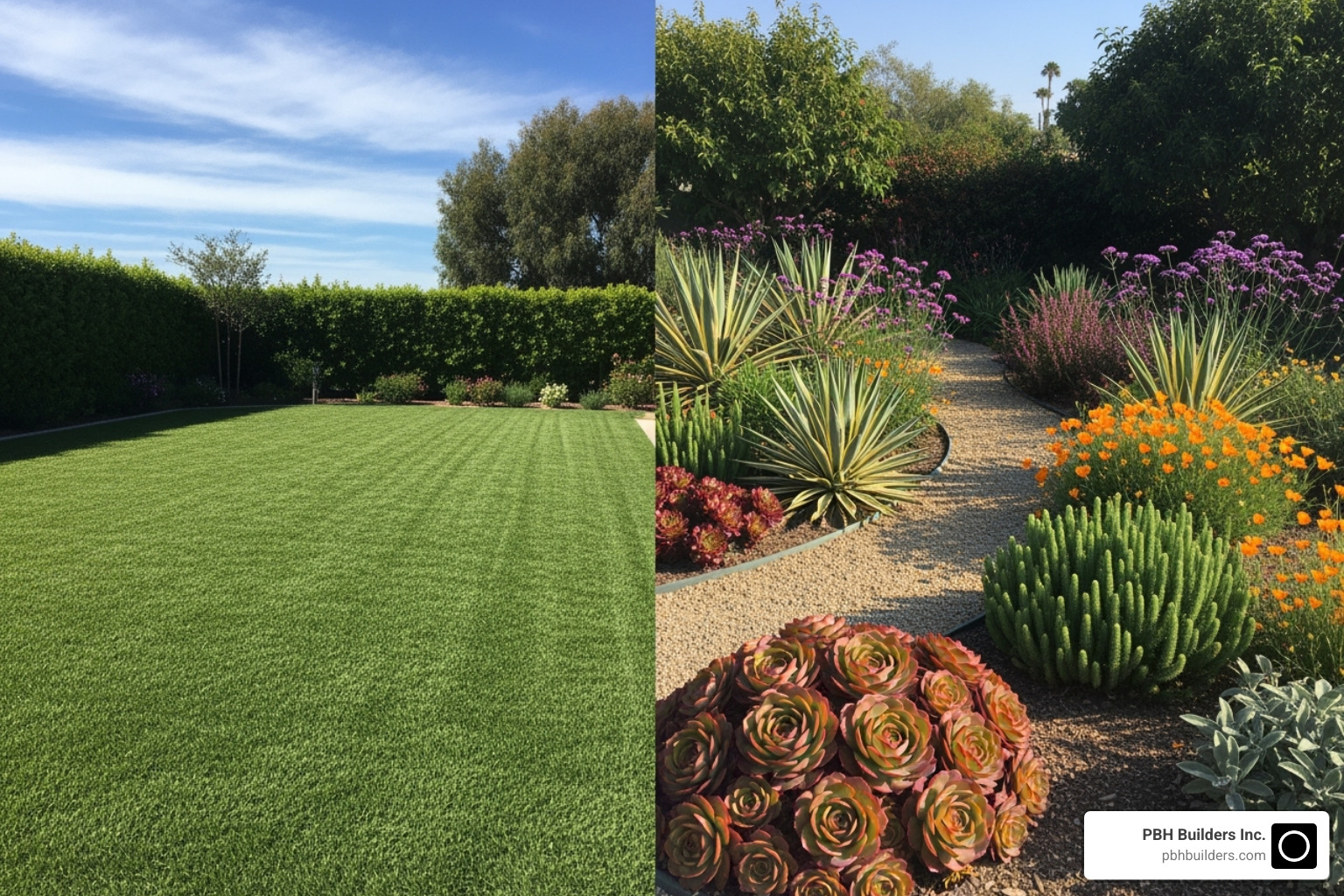
For many San Diego homeowners, the biggest landscaping question is what to do about the lawn. The choice between a traditional lawn and a drought tolerant landscaping San Diego alternative impacts your water bill, free time, and environmental footprint.
Key Considerations for Your San Diego Home
The best choice depends on your lifestyle, budget, and priorities. Traditional lawns provide a classic look but are water-intensive and require constant, costly maintenance. Drought-tolerant landscaping has a higher initial investment but offers significant long-term savings on water and maintenance, plus year-round visual interest. Artificial turf provides a no-maintenance green look but has a high upfront cost and offers no ecological benefits.
A well-designed, drought-tolerant landscape can increase property value by appealing to modern buyers, while a struggling lawn can be a detriment.
| Feature | Traditional Lawn | Drought-Tolerant Natural Landscaping | Artificial Turf |
|---|---|---|---|
| Initial Cost | Relatively low (seed/sod) | Moderate to high (design, plants, soil amendments, hardscaping), potentially $10,000+ for materials | High ($5.50 to $18.75 per square foot installed) |
| Long-Term Maintenance | Very High (mowing, watering, fertilizing, weeding, pest control) | Low (minimal watering once established, occasional pruning, less weeding with mulch) | Very Low (no mowing, watering, fertilizing; occasional rinsing) |
| Water Usage | Very High (up to half of outdoor residential water use) | Very Low (can reduce water bills by 50% or more) | None (for the turf itself) |
| Environmental Impact | High (water waste, chemical use, carbon emissions from mowers) | Highly Positive (water conservation, supports biodiversity, reduced chemical use) | Mixed (plastic production, heat island effect, no habitat) |
| Aesthetics | Uniformly green (if well-maintained), classic look | Diverse, natural, vibrant, unique textures and colors | Uniformly green, can appear artificial, may fade over time |
| Property Value | Neutral or potentially negative if poorly maintained | Increases property value, appeals to eco-conscious buyers | Can increase value for some, but not universally desired |
Your choice depends on your priorities. For sustainability and low long-term costs, natural landscaping is ideal. For a play surface, a small lawn might work. For a no-maintenance green look, artificial turf is an option. In San Diego’s unique climate, working with nature rather than against it usually proves to be the smartest long-term strategy.
Frequently Asked Questions about San Diego Xeriscaping
When homeowners first consider drought tolerant landscaping San Diego, they often have practical questions about costs, timelines, and what to expect. Here are some common questions and answers.
What are the primary cost-saving benefits of drought-tolerant landscaping?
The financial benefits are significant and accrue over time. Homeowners typically see outdoor water use drop by 50% or more, leading to substantial savings on water bills. Costs are also lower due to reduced mowing, fertilizing, and chemical treatments. Finally, you’ll save on plant replacements, as native and adapted plants are long-lived in our climate, unlike many traditional plants that struggle.
How long does it take for drought-tolerant plants to become established?
Even drought-tolerant plants need consistent watering for their first year to establish a deep root system. This initial care is an investment in long-term water savings. Watering deeply but infrequently is more effective than frequent, shallow watering. Signs of establishment, like new growth, typically appear after one to two years. After the first year, you can gradually reduce watering frequency. A helpful tip is to watch for the first signs of stress in a ‘canary’ plant to know when it’s time to water the zone.
What are the USDA Hardiness Zones for San Diego County?
San Diego County spans USDA Hardiness Zones 8 to 10, reflecting our diverse microclimates from the coast (Zone 10) to inland mountains (Zone 8). Our mild Mediterranean climate, with its warm, dry summers and cool, wet winters, is ideal for a vast array of drought-tolerant species from California and similar climates worldwide. This allows for a long growing season with incredible plant diversity and year-round interest. For more details, the USDA Hardiness zones explained website provides comprehensive guidance.
Conclusion: Create Your Sustainable San Diego Oasis
Drought tolerant landscaping San Diego is about creating a beautiful outdoor space that works with our climate. The benefits are clear: dramatic water conservation (up to 50% reduction), significant financial savings, and less maintenance. This improved lifestyle is a major draw for San Diego homeowners.
You’ll also have a landscape that supports local wildlife, reduces chemical runoff, and preserves water. A beautiful, thriving garden is achievable with less water, often surpassing traditional gardens in year-round interest and natural beauty.
At PBH Builders Inc., we specialize in creating custom, sustainable outdoor environments that blend beauty with water-wise practices. Our team understands San Diego’s unique conditions and has the expertise in plant selection, irrigation, and hardscaping to create a landscape that thrives.
Whether you envision a pollinator paradise, an outdoor kitchen, or a modern succulent garden, we can bring your vision to life. We manage the entire process from design to installation, ensuring a beautiful and functional result. Ready to transform your yard into a stunning, sustainable landscape that conserves our most precious resource? Start designing your outdoor living space today!