Transform Your Sloped Landscape into Functional Outdoor Living Space
A custom retaining wall is a professionally designed structure that holds back soil on sloped terrain, creating usable outdoor space and enhancing your property’s appearance. Whether you’re dealing with erosion, water runoff, or want to maximize your yard’s potential, a custom retaining wall offers both structural support and aesthetic value for your San Diego property.
Quick Guide: When to Hire a Retaining Wall Contractor
- Height matters: Walls over 2-4 feet typically require professional engineering and permits
- Structural concerns: If you’re building near foundations, driveways, or pools
- Drainage issues: Poor water management is the #1 cause of wall failure
- Material expertise: Choosing between concrete blocks, natural stone, or modular systems
- Local regulations: San Diego building codes and permit requirements vary by location
Retaining walls do more than hold back soil; they create new possibilities by turning challenging slopes into terraced gardens, level patios, and functional outdoor living areas. For San Diego homeowners, a well-designed wall manages water drainage during heavy rains, prevents soil erosion, and protects nearby structures.
The stakes are high with retaining walls, as they handle significant force from soil and water. Poor drainage, improper foundations, or wrong materials can lead to failure within years. Choosing an experienced contractor who understands local conditions like slope, soil, and water flow is critical for a wall that remains sturdy and beautiful for decades.
Related resources for deeper reading:
- Wood retaining wall: pros, cons, and when a timber wall makes sense
- retaining wall contractor: how to choose the right pro and what to expect
Why Invest in a Custom Retaining Wall?
A sloped yard in San Diego presents challenges like rainwater runoff carrying away topsoil, unusable steep space, and seasonal erosion threatening your foundation. A custom retaining wall solves these problems. More than a decorative border, it’s an engineered structure holding back tons of soil and managing immense pressure. A correctly built wall controls water drainage during heavy rains, preventing erosion that can threaten your landscape and foundation.
The exciting part is how this protective wall creates new outdoor living areas. By turning steep slopes into level terraces, you add usable square footage to your yard—valuable real estate in San Diego. Aesthetically, a well-designed wall adds dimension and visual interest, complementing your home’s style with materials from natural stone to modern concrete blocks. This also boosts property value, as buyers see both the practical erosion control and the finished outdoor spaces as desirable amenities.
Maximizing Your Property’s Potential
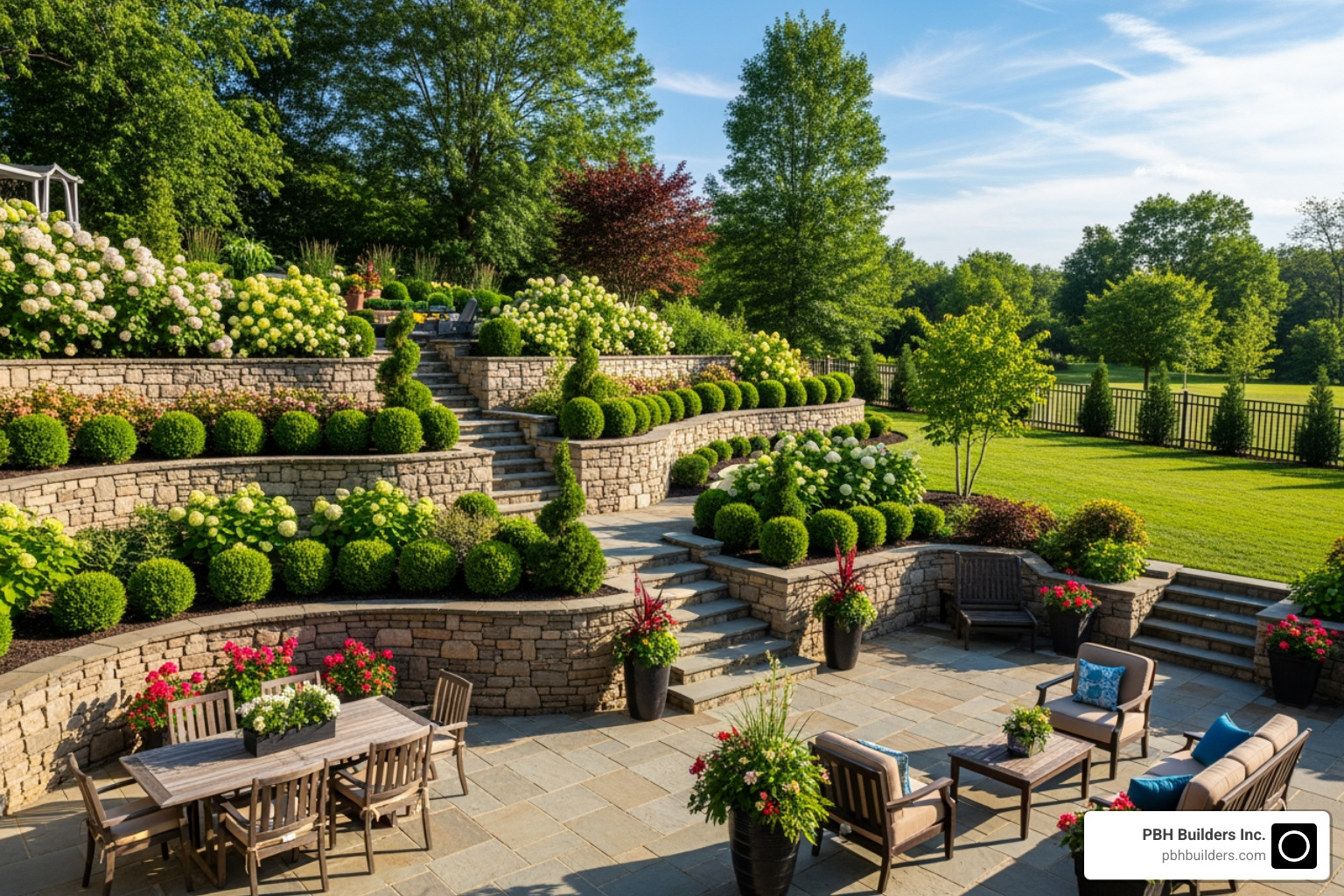
A steep, unusable hillside can become your favorite outdoor feature with a custom retaining wall. By building walls into the slope, we create level ground, carving out flat, usable areas for your dream projects.
Imagine a terraced garden with planting beds at different heights, making gardening easier and visually stunning. A retaining wall can also provide the stable, level base needed for a patio or pool deck, turning a slope into an entertainment area. We can also use walls to define outdoor living rooms—distinct spaces for seating, dining, or a fire pit. Even practical needs like play areas for kids or expanded lawn space become possible. We help San Diego families reclaim their sloped yards for better use.
More info about our Retaining Walls services
Retaining Walls vs. Freestanding Walls: Understanding the Difference
Knowing the difference between wall types is key for your budget and safety. A custom retaining wall is an engineered structure built to hold back soil on a slope. It faces enormous lateral pressure from soil and water, especially after rain. This force requires substantial footings buried deep in the ground for anchoring. Taller walls require more engineering; walls over 2 to 4 feet (depending on local codes) typically need a civil engineer’s design review to ensure they stand for decades.
Freestanding walls, in contrast, are built on flat ground to divide spaces, create privacy, or add visual interest. They don’t hold back soil, so they don’t face intense lateral forces. Their foundation requirements are simpler and they don’t need the same level of engineering. A retaining wall braces against pressure, while a freestanding wall simply needs to stand upright.
Here’s how they compare:
| Attribute | Retaining Walls | Freestanding Walls |
|---|---|---|
| Purpose | Retain soil, prevent erosion, create level areas | Divide space, decorative, privacy |
| Foundation | Deep footings, engineered to resist lateral pressure | Shallower foundation, primarily for vertical stability |
| Location | On slopes, at changes in elevation | On flat ground |
| Forces Handled | Significant lateral pressure from soil and water | Primarily vertical loads, less lateral pressure |
Understanding this distinction helps you communicate clearly with contractors and ensures you get the right structure for your specific needs. If you’re dealing with any kind of slope or elevation change, you need a properly engineered retaining wall—there’s simply no substitute.
Designing Your Perfect Custom Retaining Wall
Designing a custom retaining wall is about more than holding back dirt; it’s about creating a feature that feels like a natural extension of your home and landscape. At PBH Builders Inc., our process begins with a site analysis, where we assess the slope, soil, and water flow to ensure the design is both functional and durable.
A retaining wall must perfectly blend form and function. It needs to be structurally sound while also matching your aesthetic vision. Should it blend in or make a statement? Should it be modern or rustic? We help you answer these questions. The best walls improve the landscape, not fight it. We’ll guide you through material and style choices—from Mediterranean stone to contemporary blocks—that fit your vision and the character of your San Diego property.
A Guide to Retaining Wall Materials and Styles
The material you choose for your custom retaining wall impacts its look, longevity, and cost. Let’s review the main options.
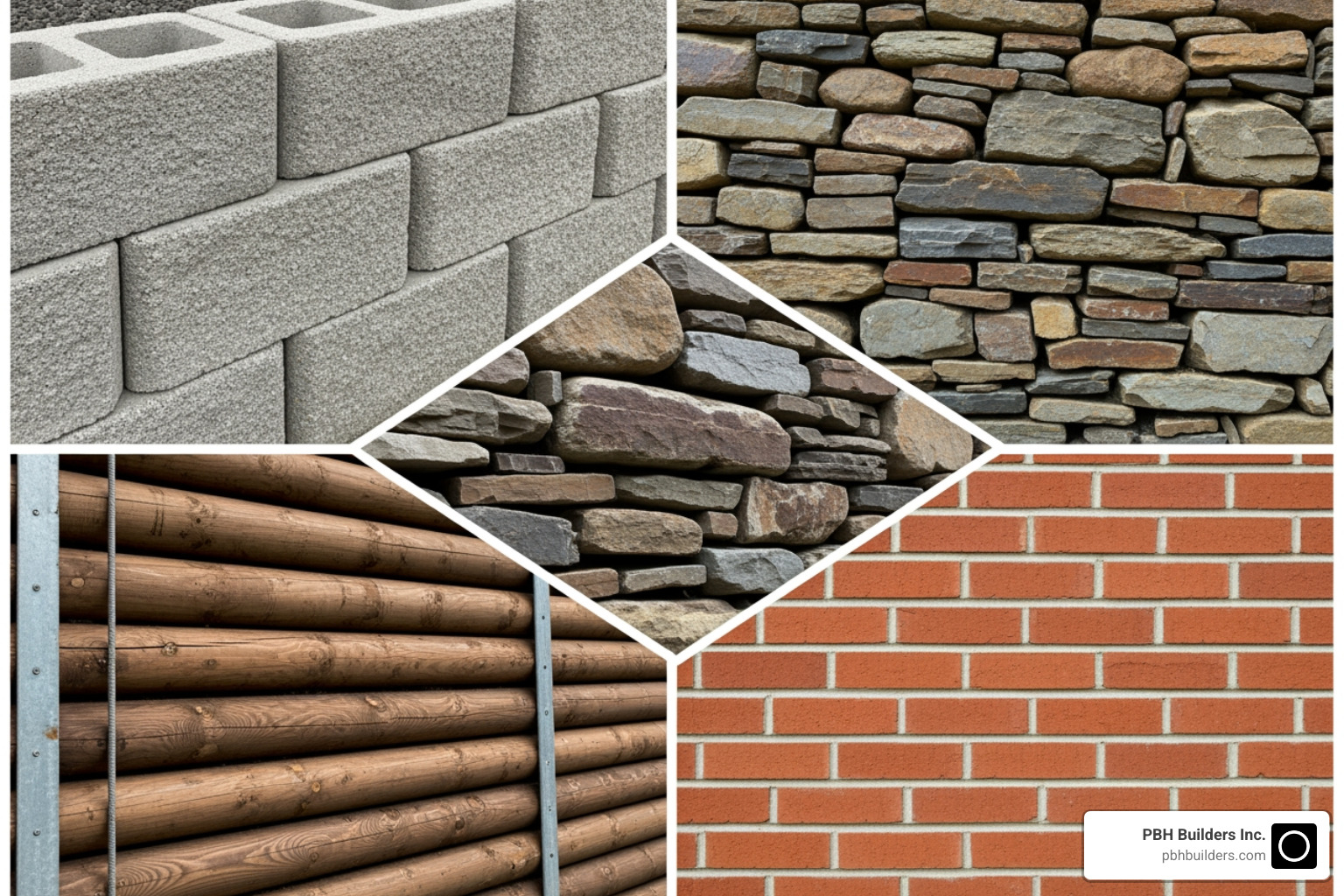
Modular concrete blocks are popular for good reason. Engineered systems like Unilock and Allan Block offer impressive strength and durability. Features like hollow-core designs aid drainage, while interlocking systems make installation fast and reliable. Available in a wide range of colors and textures, some mimic natural stone. They are a durable, long-lasting option for tall walls, and a designer can help select a style that avoids an artificial look.
Natural stone offers a timeless, high-end look with organic variations in color and texture. A skilled mason can build a wall that looks like it has been there for generations and can last for centuries. The tradeoff is higher cost and longer installation time due to the material’s weight and the craftsmanship required.
Poured concrete offers maximum design flexibility for custom shapes, curves, and finishes like stamping or staining. These walls are extremely strong, lasting 50-100+ years. While the initial cost and need for skilled formwork are higher, the design possibilities are endless. Proper drainage is critical as these walls are less permeable.
Wood sleepers are an economical, rustic option for smaller, lower walls and are popular for DIY projects. However, wood has a shorter lifespan of 10-20 years, even when treated, due to rot and insect damage. It’s not suitable for tall or load-bearing walls and will require eventual replacement. More info on wood walls
In San Diego, the best materials handle moisture and sun exposure well. While freeze/thaw cycles aren’t a concern, proper drainage is crucial for every material to manage our winter rains and ensure your wall’s longevity.
Key Factors Influencing Project Costs
Understanding these factors helps you make informed decisions about your custom retaining wall project.
Wall size is the most obvious factor. A taller, longer wall requires more materials and labor. Walls above 2-4 feet also require professional engineering and permits, adding to the cost for safety and compliance.
Material choice significantly impacts the budget. Natural stone and poured concrete are higher-end, modular blocks are mid-range, and wood is the most economical. Your choice affects upfront cost, long-term value, and maintenance.
Site accessibility is often overlooked. Easy access for machinery keeps costs down. Difficult sites requiring manual labor or specialized equipment will increase labor costs.
Soil conditions can be a wild card. Stable soil allows for straightforward construction, while poor soil may require extra excavation, better fill, or a more extensive foundation.
Drainage complexity adds cost but saves you money long-term. Proper drainage is essential to prevent wall failure. Complex water issues require more sophisticated solutions, which protects your investment.
Engineering and permit fees cover professional design and local permits for structural or tall walls, ensuring the job is safe and legal.
We provide transparent pricing, explaining all costs to help you balance your budget and goals. A well-built retaining wall is a long-term investment in your property’s value and usability.
The Anatomy of a Durable Wall: Construction and Integrity
A durable custom retaining wall requires a precise, professional process. Like a house’s foundation, every step is critical to ensure the wall withstands daily forces from soil and water, especially during San Diego’s heavy rains. What you don’t seethe drainage, compacted base, and reinforcementis what guarantees stability for decades. Improper execution leads to leaning, cracking, and costly failures.
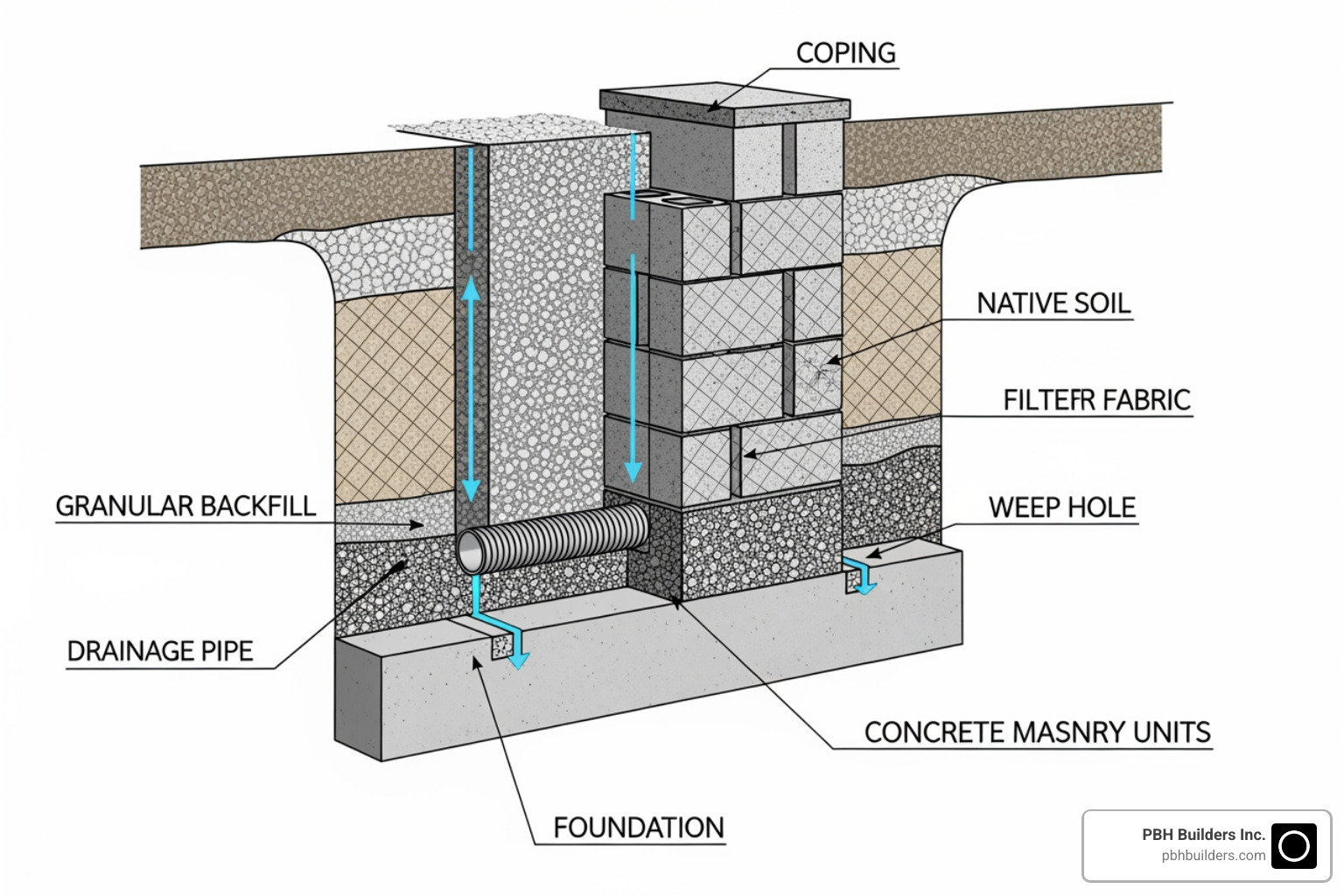
The Professional Construction Process for a Custom Retaining Wall
Our professional process for a custom retaining wall begins with a thorough site assessment, examining the slope, soil, drainage, and any surcharges (like driveways). We then mark the wall’s location.
- Excavation: We remove organic materials and dig to accommodate the base and drainage system.
- Base Preparation: This is critical. We dig and compact a trench to create a rock-solid foundation, replacing poor soil if necessary.
- Drainage: This is the #1 factor for wall longevity. We install a drain pipe and free-draining gravel in the base and behind the wall to prevent water pressure buildup.
- Material Placement: The base course must be perfectly level. Each subsequent course is offset for stability, with block cores and backfill filled with gravel.
- Backfilling: We backfill in compacted 8-inch lifts. For taller or load-bearing walls, we add geogrid reinforcement, which anchors the wall into the soil.
- Finishing Touches: We add caps for a polished look and topsoil for plantings.
Build a Durable and Attractive Retaining Wall with Allan Block
Engineering, Permits, and DIY Considerations
A key rule: if your custom retaining wall is over 2-4 feet tall (depending on local codes) or is structural, it requires a professional civil engineer’s design to prevent dangerous failures. San Diego’s building codes and permit requirements vary; we handle this entire process for you.
Surcharges from driveways or pools above the wall add pressure and also demand professional engineering. While DIY can work for small, non-structural garden walls, the risks are high for anything larger. Common DIY mistakes like poor materials, improper drainage, or incorrect inclination lead to costly and disastrous failures. Professional expertise is essential to build a safe, compliant, and durable wall that can handle the immense forces involved.
5 Critical DIY Retaining Wall Mistakes (video)
Warning Signs: When Your Retaining Wall Needs Repair
Even well-built walls can develop issues. Catching these warning signs early can prevent costly damage.
- Leaning or bulging: A visible tilt or bow indicates the wall is failing against soil pressure, likely due to poor drainage or design.
- Cracking: Large, growing cracks (vertical or horizontal) signal serious structural stress, unlike minor hairline cracks.
- Separation: If the wall is pulling away from adjacent structures like patios or stairs, it means the wall is moving.
- Water Issues: Pooling water, soggy soil, or water seeping through cracks all point to drainage failurethe top cause of wall failure.
- Erosion at the base: Soil washing away from the front of the wall undermines its foundation and stability.
If you see these signs, contact us immediately. Our team can assess the root cause and recommend a solution. Early intervention is far less expensive than dealing with a complete failure.
Find professional retaining wall installers
Beyond the Basics: Creative Applications for Retaining Walls
Here’s where things get exciting. While a custom retaining wall does the heavy lifting of holding back soil and managing slopes, it can do so much more for your outdoor space. Think of it as a blank canvas that combines serious structural work with creative design possibilities.
We’ve always believed that the best retaining walls are the ones you notice for their beauty, not just their function. They become part of your landscape’s story, creating spaces you didn’t know you needed and solving problems you didn’t realize had such neat solutions.
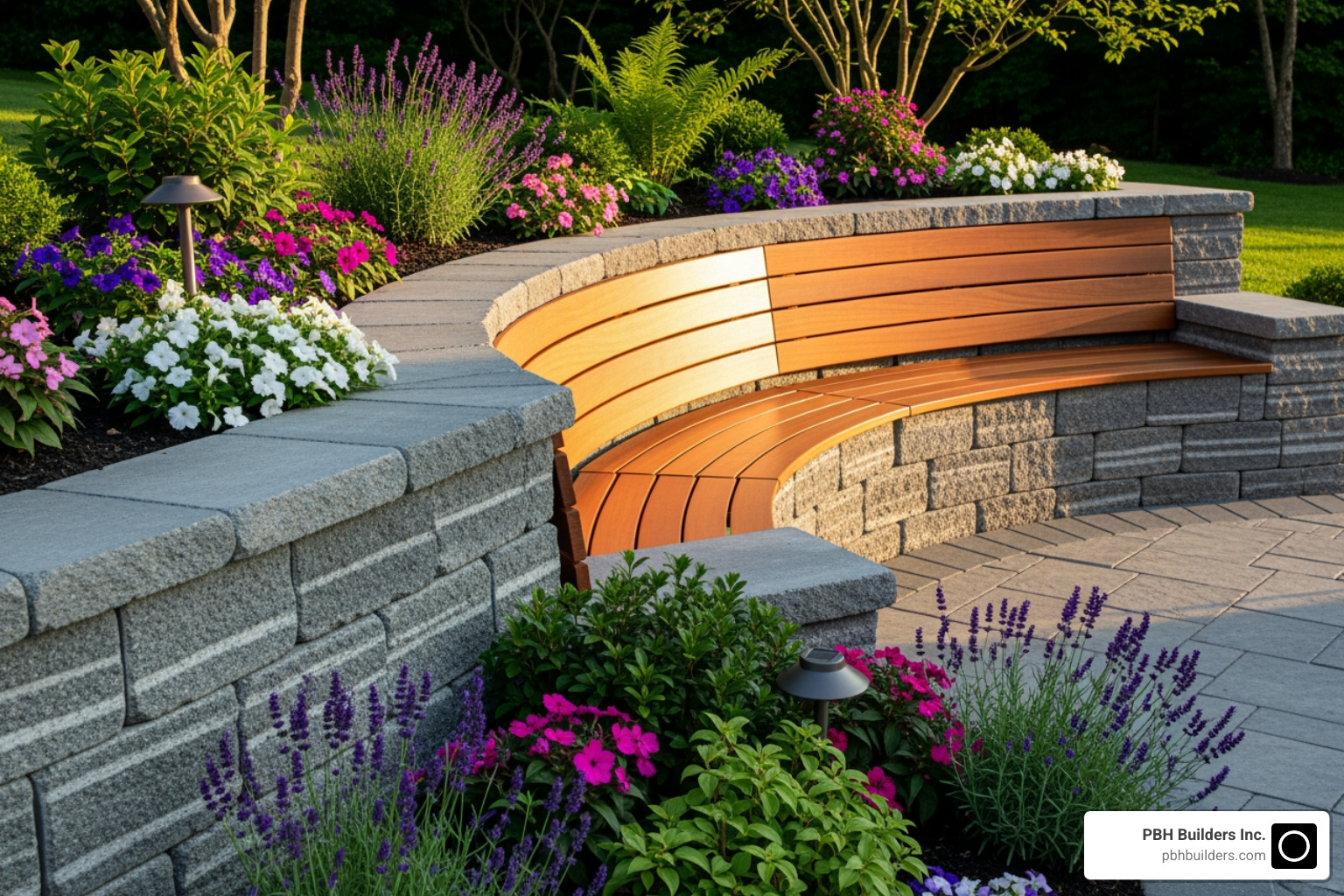
Integrating Functional and Aesthetic Features
A custom retaining wall can transform your outdoor living experience in surprising ways.
- Raised garden beds bring plantings to a comfortable height, improve drainage, and extend your growing season.
- Integrated staircases turn an awkward slope into a safe, beautiful architectural feature.
- Built-in seating is a space-saving solution for patios or fire pits, adding function without clutter.
- A wall can provide a stable foundation for an outdoor kitchen, creating a dedicated culinary zone.
- Frame ponds or waterfalls, using the elevation change to create a peaceful water feature.
- Define outdoor rooms for dining, lounging, or playing, making each space feel purposeful and intimate.
Our team loves exploring these creative possibilities with clients. We’ve built retaining walls that support outdoor pizza ovens, frame vegetable gardens, create amphitheater-style seating for backyard movie nights, and establish level spots for hot tubs with stunning views. The possibilities really do open up once you start thinking creatively.
Conclusion: Partner with San Diego’s Retaining Wall Experts
When you invest in a custom retaining wall, you’re not just building a structure—you’re solving problems and creating possibilities. These walls deliver on multiple fronts: they provide the structural muscle needed to hold back soil and prevent erosion, they manage water drainage to protect your property, and they transform unusable slopes into beautiful, functional spaces where you can actually live and play. The result? A significant boost to your property’s value and curb appeal that you’ll enjoy every day.
Here’s what makes the difference between a retaining wall that thrives and one that fails: professional installation. We’ve seen what happens when shortcuts are taken or when well-meaning DIYers tackle projects beyond their expertise. Poor drainage, inadequate foundations, and design flaws lead to leaning walls, cracks, and expensive repairs within just a few years. That’s why choosing experienced professionals who understand San Diego’s unique terrain, soil conditions, and climate is absolutely critical.
At PBH Builders Inc., we bring creativity, expertise, and meticulous attention to detail to every custom retaining wall project. We understand that your landscape is an extension of your home, and we’re committed to creating outdoor environments that are both captivating and harmonious. From the initial site assessment through final installation, we handle every aspect—including engineering, permits, and proper drainage systems—to ensure your wall is built right the first time.
Your sloped yard doesn’t have to be a limitation. With the right design and professional construction, it can become your property’s greatest asset. We’re here to help you see the potential and bring your vision to life, creating outdoor spaces that improve your lifestyle and stand strong for decades to come.
Ready to transform your landscape? Contact us for expert retaining wall services.