Why a Kitchen Remodel Planning Guide is Essential to Your Success
A Kitchen remodel planning guide is your roadmap to a successful project, turning a potentially chaotic process into a structured one. Proper planning helps you avoid budget overruns, timeline delays, and a final design that doesn’t fit your needs. This guide breaks down the process into four phases: Planning, Design, Hiring, and Construction.
Key takeaways before you begin:
- Define Goals: Assess your current kitchen’s flaws and separate must-haves from nice-to-haves.
- Budget Realistically: Plan to spend 5-15% of your home’s value, and include a 10-20% contingency fund for unexpected issues.
- Design for Function: Use proven concepts like the work triangle and ensure proper clearances (42-48 inches for walkways).
- Hire the Right Team: Thoroughly vet contractors by checking licenses, insurance, and references.
- Plan for Disruption: A temporary kitchen is essential, as construction averages 4.5 months, following about 8.3 months of planning.
Investing time in upfront planning saves money and frustration later. Whether you’re in San Diego or Chula Vista, a clear vision, a realistic budget, and the right professionals are crucial. This guide will walk you through defining goals, setting a budget, choosing materials, and surviving construction. A well-planned remodel creates a space that works for your lifestyle and adds lasting value to your home.
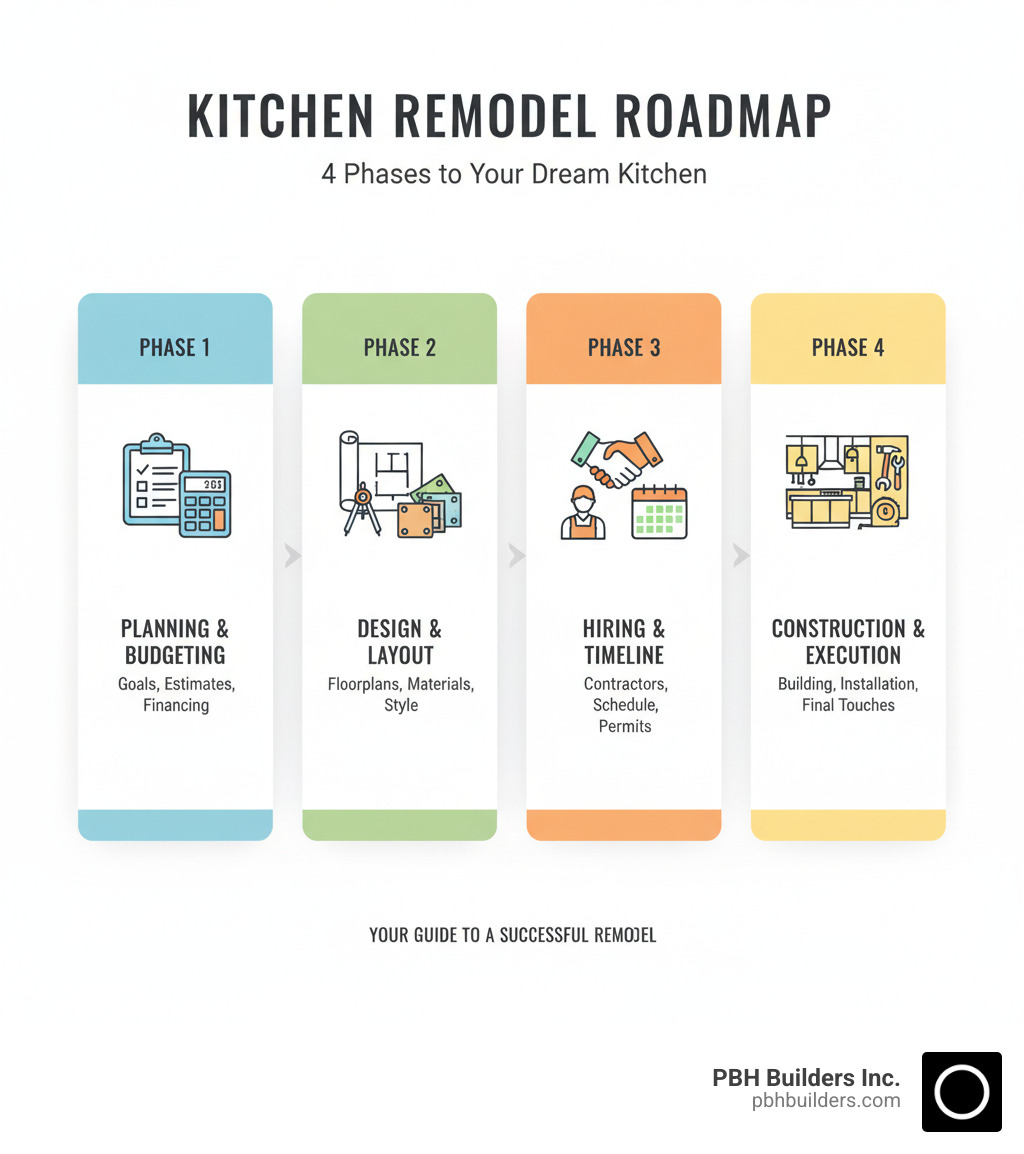
Quick look at Kitchen remodel planning guide:
Phase 1: Defining Your Vision and Budget
Before diving into design choices, you need a solid foundation. This first phase in your kitchen remodel planning guide is about defining what you want and how much you can comfortably spend. A successful remodel balances aesthetics with functionality to create a space you’ll love to use.

Defining Your Goals: The First Step in Your Kitchen Remodel Planning Guide
Start by analyzing your current kitchen. What are its biggest frustrations? Poor workflow, inadequate storage, or lack of space are common issues. These pain points provide valuable information on what needs to change.
Next, consider how you live. Do you host large gatherings, cook elaborate meals, or have young children? Your lifestyle dictates your design needs. An avid entertainer may need an open layout, while a serious chef requires ample prep space and pro-grade appliances.
Create two lists: must-haves and nice-to-haves. Must-haves are non-negotiable items that solve key problems. Nice-to-haves are extras you’d love but could live without if the budget is tight. This exercise will be your guide when making tough decisions later.
Want more insights on changing your space? Check out our guide on Unlocking Your Kitchen’s Potential: A Guide to Kitchen Remodeling.
How to Set a Realistic Kitchen Remodel Budget
The budget conversation can be daunting, but a realistic budget provides clear boundaries for decision-making. According to industry sources, a kitchen remodel costs $26,934 on average, with projects ranging from $14,600 to over $41,485. A good rule of thumb is to budget 5% to 15% of your home’s total value.
Here’s a typical cost breakdown:
- Cabinets: Roughly one-third of the budget.
- Labor & Installation: Another third, covering demolition, plumbing, electrical, and construction.
- Everything Else: The final third for appliances, countertops, flooring, lighting, and fixtures.
The most important budget rule is to add a 10% to 20% contingency fund. This covers unexpected issues like outdated wiring or hidden water damage that may be finded during demolition. This fund turns potential catastrophes into manageable adjustments.
To stretch your budget, consider keeping your existing layout to avoid moving plumbing and electrical lines. If your cabinet boxes are in good shape, refacing or repainting is a cost-effective alternative to full replacement. Splurge on high-touch items like faucets and save on decorative elements. Also, remember to factor in the cost of permits, which are required for most structural, plumbing, or electrical changes.
Ready to explore what’s possible for your kitchen? Visit our Kitchen Remodeling Services page to see how we can help bring your vision to life.
Phase 2: The Ultimate Kitchen Remodel Planning Guide to Design and Layout
With a vision and budget in place, it’s time to design your kitchen. This phase of our kitchen remodel planning guide turns your ideas into a tangible plan where form meets function.
Gather inspiration from magazines, Pinterest, or showrooms to create a mood board. Every design choice should serve a purpose, as a beautiful but impractical kitchen will lead to frustration.
For additional design inspiration, explore our article on 7 Design Tricks to Elevate Your Kitchen Remodel or download this Get Our Ultimate Kitchen Planning Guide.
Choosing the Right Kitchen Layout and Measurements
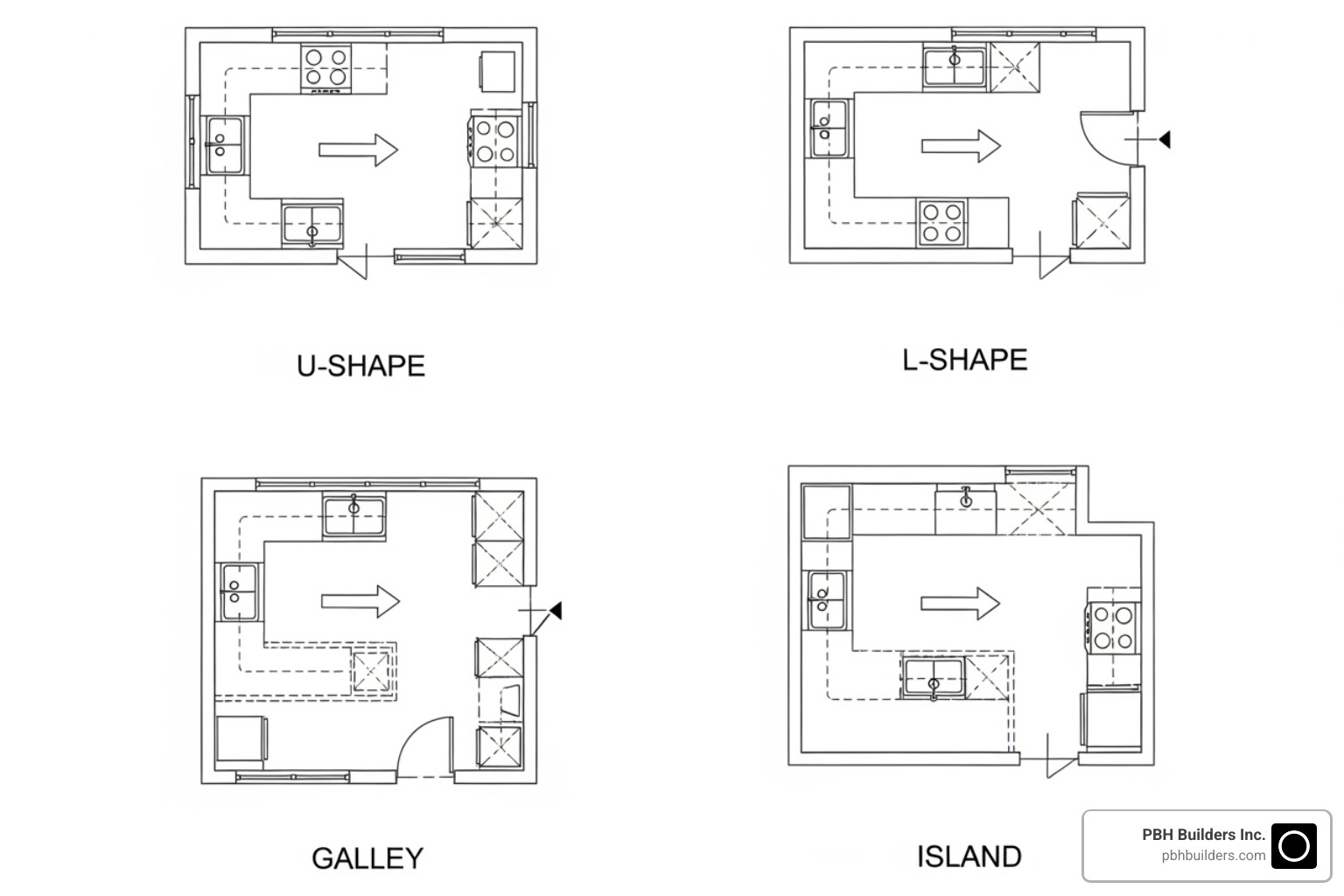
Your kitchen’s layout is the backbone of its functionality. Common layouts include the efficient U-shape, the open-concept friendly L-shape, the streamlined galley, and the versatile island layout. The classic work triangle—connecting the sink, refrigerator, and stove—remains a key principle for an efficient workflow. The total distance between these three points should not exceed 26 feet.
Proper spacing is critical. Main walkways should be at least 42 inches wide (48 inches for two cooks). Aim for at least 158 total inches of usable countertop, with landing areas of at least 24 inches next to the sink and 15 inches by the refrigerator. For island seating, allow 28-30 inches of space per person and 36 inches of clearance behind the seats.
For more insights custom to our local area, check out our resources on Kitchen Remodeling in San Diego.
Selecting Materials, Finishes, and Appliances
This is where your kitchen’s personality emerges. Choose materials that balance beauty with durability.

- Cabinets: As the largest investment, choose between custom, semi-custom, or stock options. Consider material (solid wood, MDF) and door style (Shaker, flat-panel). Our guide to Kitchen Cabinets in San Diego can help.
- Countertops: Quartz offers durability and low maintenance, while granite and marble provide timeless beauty but require sealing. Laminate is a budget-friendly option that can mimic pricier materials.
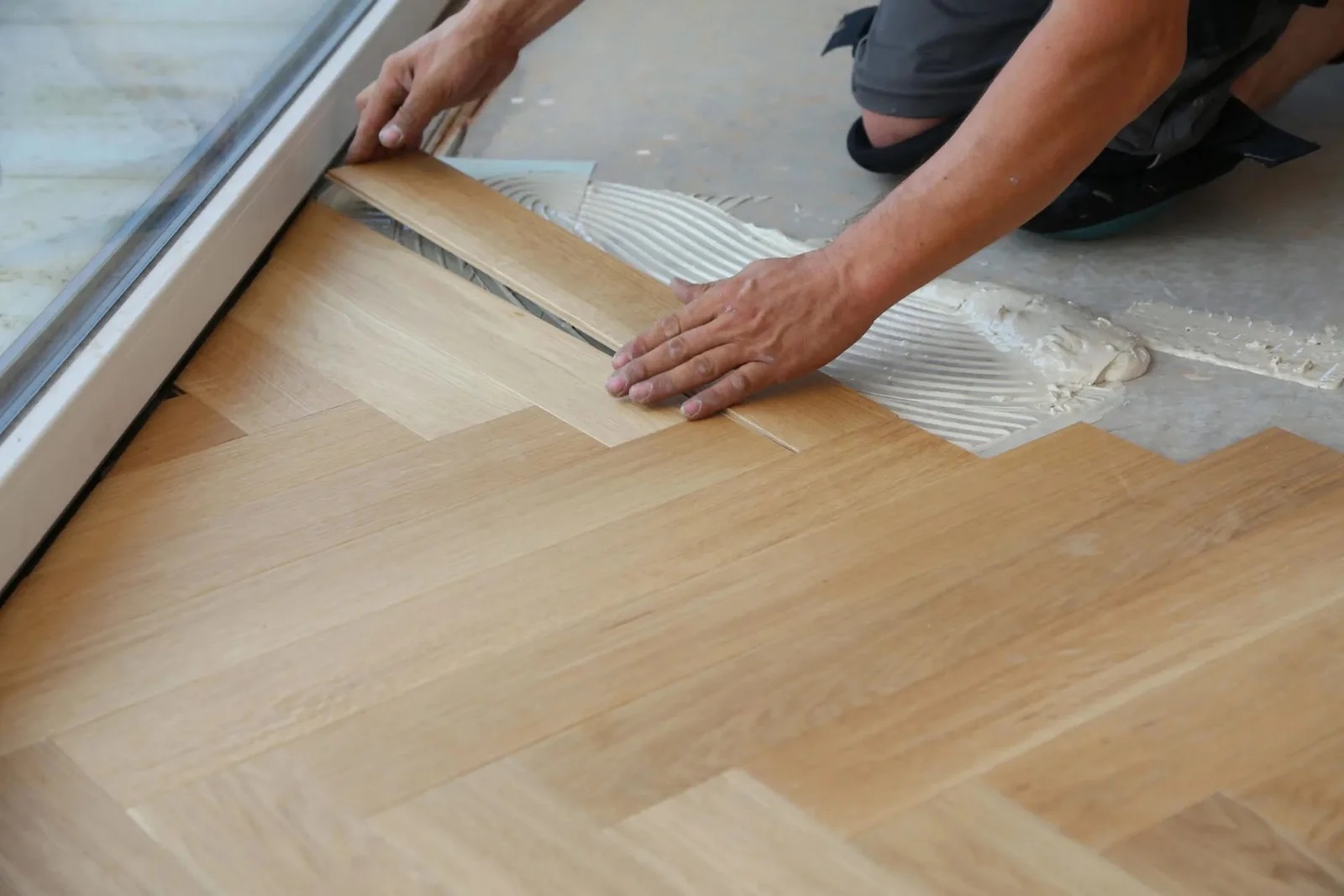
- Flooring: Durability is key. Luxury vinyl plank (LVP) and porcelain tile are popular for being water-resistant and tough. Hardwood is beautiful but requires more care.
- Backsplash: This is your chance to add personality with classic subway tile, bold patterns, or natural stone.
- Appliances: Select appliances early in the design phase to ensure your cabinet layout is accurate. Choose models that fit your cooking style and look for Energy Star ratings to save on utilities.
Planning for Storage, Electrical, and Ventilation
Practical features are as important as aesthetics. Plan storage strategically with pull-out pantry shelves, corner cabinet solutions like Lazy Susans, and deep drawer organizers. A good rule of thumb is to have at least 117 feet of shelf/drawer frontage for small kitchens and 167 feet for larger ones.
Modern kitchens require ample electrical outlets, all with GFCI protection near water sources. A layered lighting plan is essential, including task lighting over work surfaces, ambient lighting for general illumination, and accent lighting to highlight features.
Proper ventilation is crucial for removing odors, grease, and heat. An outdoor-venting system with an exhaust rate of at least 150 CFM is recommended. The range hood should be installed at least 24 inches above the cooktop.
For those planning a more upscale renovation, our High-End Kitchen Remodeling: Complete Guide offers additional insights.
Phase 3: Assembling Your Team and Mapping the Timeline
With your design finalized, it’s time to assemble the right professionals and map out the project timeline. This phase of your kitchen remodel planning guide turns your plans into an actionable schedule.

Hiring a Pro vs. DIY: A Key Decision in Your Kitchen Remodel Planning Guide
Deciding whether to hire a general contractor (GC) or manage the project yourself is a critical choice.
Hiring a General Contractor: A GC manages the entire project, from scheduling subcontractors and ordering materials to securing permits and ensuring code compliance. They bring expertise and established relationships, providing peace of mind and helping avoid costly mistakes. While their fee is an added cost, it often saves money in the long run by keeping the project on track.
Managing the Remodel Yourself (DIY): Acting as your own GC can save money on labor costs and give you complete control. However, it’s a full-time job that requires you to coordinate trades, manage schedules, and understand building codes. This path is best for those with significant construction knowledge and time. Simple projects like painting or installing a backsplash are manageable for DIYers, but moving walls or altering plumbing and electrical systems is best left to professionals.
When vetting professionals, check licenses and insurance, ask for recent references, and review their portfolio. For more guidance, explore our Tips for Choosing the Right Kitchen Remodel Professionals. PBH Builders Inc. is proud to be among the Best General Contractors in San Diego.
Understanding the Remodel Timeline and Permits
Understanding the timeline is key to managing expectations. While planning can take over 8 months, the average construction phase lasts 4.5 months. Here’s a typical sequence:
- Demolition (1-2 weeks): The old kitchen is removed.
- Rough-in Work (3-5 days): Plumbers and electricians run new lines.
- Wall/Ceiling Repair & Painting (1 week): The space is prepped for installation.
- Flooring & Cabinet Installation (1-2 weeks): The foundation of the new kitchen is set.
- Countertop Fabrication & Installation (2-4 weeks): This step has a longer lead time as countertops are custom-made off-site.
- Final Installations (1-2 weeks): Appliances, fixtures, backsplash, and hardware are installed.
- Final Walk-Through (1-3 days): A final check to ensure every detail is perfect.
Material delivery times can significantly impact your schedule. Order all supplies and materials before demolition begins to avoid delays. Custom cabinets and specialty items often have long lead times.
Permits are another crucial element. They are required for most electrical, plumbing, or structural changes and ensure the work is safe and up to code. A professional GC will manage this process, preventing potential fines or the need to redo unpermitted work. For more on our approach, visit our Kitchen Remodeling Services page.
Phase 4: Execution, Safety, and Surviving the Remodel
The final phase of our kitchen remodel planning guide is construction. This is when your dream kitchen takes shape, but it can also be disruptive. Preparation and flexibility are key to navigating this exciting but chaotic stage.
How to Prepare Your Home and Family
Living through a remodel requires adjustment. Here’s how to prepare:
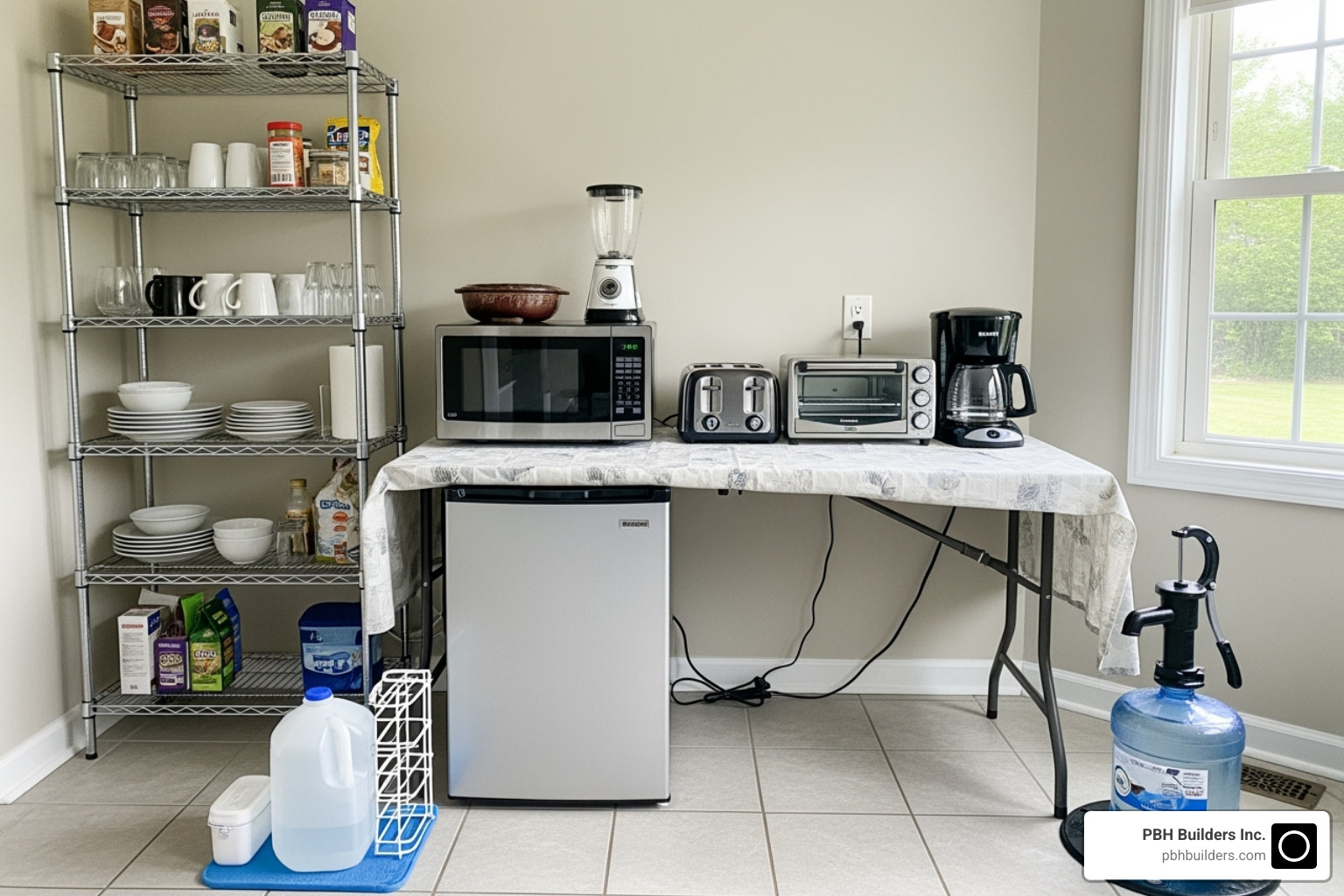
- Set up a temporary kitchen: Designate a space with water and power (like a dining room or basement) for a mini-fridge, microwave, toaster oven, and coffee maker.
- Simplify meals: Plan for simple meals, takeout, or frozen dinners. Use disposable plates and utensils to minimize cleanup.
- Pack up completely: Before demolition, empty your kitchen and label all boxes. Store everything outside the work zone.
- Control dust: Ask your contractor to seal off the kitchen with plastic sheeting. Expect some dust to escape, so change HVAC filters and consider air purifiers.
- Communicate with family: Keep everyone informed about the timeline and off-limit areas. Explain the process to children to ease their anxiety.
- Ensure pet safety: The noise and activity can stress pets. Keep them in a secure, quiet area away from the construction zone, or consider boarding them during the loudest phases.
For more advice, see our guide on How to Prepare for a Home Remodel.
Common Mistakes to Avoid
Avoid these common pitfalls to keep your project on track:
- Prioritizing Trends Over Function: Trendy finishes can date your kitchen quickly. Focus on a timeless, functional design and use easily changed items like hardware or light fixtures for trendy touches.
- Underestimating Costs: Always include a 10-20% contingency fund. Hidden issues like outdated wiring or plumbing are common and can add thousands to your budget.
- Neglecting Storage: A beautiful kitchen is useless without adequate storage. Inventory your belongings and ensure your design includes solutions like pantry pull-outs and deep drawers.
- Poor Lighting Design: A single overhead light is not enough. Plan for layered lighting with task, ambient, and accent lights to create a functional and inviting space.
- Forgetting Permits: Unpermitted work can lead to fines and issues when selling your home. Ensure your contractor handles all necessary permits.
- Micromanaging Your Contractor: Trust the professionals you hired. Establish clear communication channels, but avoid hovering, which can create tension and delays.
- Changing Plans Mid-Project: Changes after construction begins are expensive and disruptive. Finalize every decision before demolition starts.
- Not Planning for Delays: Supply chain issues can cause unexpected delays. Order materials early and build buffer time into your schedule.
At PBH Builders Inc., we guide clients through every phase, helping them avoid these pitfalls to create kitchens that improve their daily lives.
Frequently Asked Questions about Kitchen Remodel Planning
Here are answers to some of the most common questions homeowners have when using a kitchen remodel planning guide.
What is the very first step in planning a kitchen remodel?
The first step is to assess your current kitchen’s shortcomings and define your goals. Before looking at design ideas, list what frustrates you about your current space, such as poor workflow or lack of storage. Then, separate your needs (more counter space) from your wants (a high-end espresso machine). This foundational step ensures your new kitchen will truly serve your lifestyle and guides all future decisions.
How much should I budget for unexpected costs?
It is essential to set aside a contingency fund of 10% to 20% of your total budget. Remodeling often uncovers hidden issues like outdated wiring, old plumbing, or water damage. This fund acts as a safety net, allowing you to address these surprises without derailing your project or forcing you to compromise on your vision.
Should I choose my appliances or cabinets first?
This is a two-part process: select appliances during the design phase, but order cabinets first. You need the exact dimensions of your appliances (refrigerator, range, dishwasher) to create an accurate cabinet layout. However, cabinets often have the longest lead times, so they should be ordered as soon as the design is finalized to keep the project on schedule. This sequence prevents delays while ensuring everything fits perfectly.
Your Dream Kitchen Awaits
You’ve journeyed through this kitchen remodel planning guide, from vision to execution. You are now equipped with the knowledge to successfully manage your project.
A kitchen remodel is more than a home improvement project; it’s an investment in your daily life. This is where your family gathers and memories are made. A well-planned remodel creates a space that truly works for your life, enhancing both its function and your home’s value.
The planning process can seem daunting, but the time you invest upfront prevents costly mistakes and ensures you get a kitchen that fits your lifestyle. Remember the reasons you started this journey—to create a space that inspires you and welcomes family and friends.
At PBH Builders Inc., we guide homeowners through this exact process. Our team brings expertise and meticulous attention to detail to turn your vision into a stunning reality. We are partners in creating spaces that improve how you live.
Your dream kitchen is within reach. It’s time to turn your plans into the beautiful, functional heart of your home. Whether you’re in Chula Vista, San Diego, or our surrounding service area, we’re ready to help.
Start planning your kitchen renovation in Chula Vista, CA today!