| QUICK ANSWER Resilient home construction in San Diego blends backup power, efficient heating and water systems, better storm drainage, and structural reinforcement. Most homeowners build these upgrades into a planned remodel or new build rather than tackling them as standalone projects. |
San Diego does not get hurricanes, but the last several winters have made it clear that our homes still face real weather and grid related risk. Atmospheric river storms have caused flooding and hillside erosion in low lying and canyon adjacent neighborhoods. Public safety power shutoffs during fire season have left entire communities without electricity for hours or days at a time. Add rising utility rates into the mix, and it makes sense that more San Diego homeowners are asking their contractor how to build resilience directly into a remodel or new home, rather than treating it as an afterthought.
As a general contractor working on whole house remodels and new construction throughout San Diego County, we are seeing this shift firsthand. This guide covers what resilient construction actually includes, and where each upgrade fits best within a typical project.
What Resilient Construction Actually Means
Resilience is not one product or one upgrade. It is a combination of decisions made across the electrical, mechanical, and structural systems of a home so that it holds up better during storms, power outages, and seismic events, while also running more efficiently the rest of the year. The upgrades below are the ones we most often build into remodels and new construction across San Diego.
It helps to think about resilience in two categories: systems that keep a home functioning during a disruption, such as backup power and water management, and systems that protect the structure itself, such as seismic reinforcement and proper drainage. A well planned project usually touches both categories rather than focusing on just one.
Power and Energy Upgrades Worth Building In
| Upgrade | What It Does | Where It Fits Best |
| Battery backup system | Keeps essential circuits running during a grid outage | New construction or an electrical panel upgrade |
| Heat pump HVAC | Combines efficient heating and cooling in a single system | Whole house remodel |
| Heat pump water heater | Lowers energy draw and pairs well with battery systems | Kitchen or bathroom remodel |
| Smart electrical panel | Automatically manages load and prioritizes circuits during an outage | General contracting or panel upgrade |
These systems work best when they are planned into a project from the start rather than bolted on afterward. If you are already pursuing a whole house remodel or new home construction project, that is typically the most efficient time to add panel capacity, run the wiring for a battery system, or switch to heat pump equipment.
Storm and Water Management
San Diego’s dry season lulls a lot of homeowners into overlooking drainage until an atmospheric river storm proves the point. Grading that directs water away from the foundation, properly sized gutters and downspouts, and waterproofing at grade level all matter more in a region that gets concentrated rainfall in short bursts rather than steady rain throughout the year. Roofing condition plays a role here too. A roof that has not been inspected in several years is one of the more common sources of storm related water intrusion we see during remodel walkthroughs.
Hillside and canyon adjacent lots need extra attention, since concentrated runoff during a storm can erode slopes that have gone unchecked for years. A drainage review as part of a remodel or addition can catch these issues before they turn into a bigger structural concern.
If a remodel or addition is already opening up your exterior walls or roofline, it is worth having your contractor evaluate drainage and waterproofing at the same time. Our general contracting team reviews these items as a standard part of project scoping.
Structural Resilience: Seismic Considerations
Southern California sits on active fault lines, and many older San Diego homes were built before current seismic standards. Retrofitting elements such as foundation bolting and cripple wall bracing can often be bundled into a whole house remodel or room addition, since the framing is already exposed as part of the work. New construction projects are built to current seismic code from the start, along with Title 24 energy compliance, which our team manages as part of every new home construction project.
Resilience Upgrade Priority Framework
Not every upgrade needs to happen at once. This comparison reflects how each upgrade generally performs on everyday comfort versus emergency readiness, based on our experience across San Diego projects.
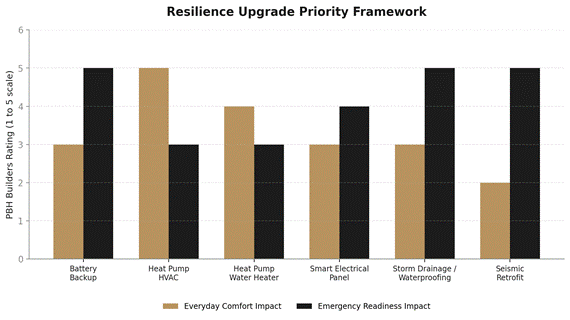
Battery backup and storm drainage upgrades score highest for emergency readiness, while heat pump HVAC delivers the most noticeable everyday comfort improvement. Most homeowners find that pairing one upgrade from each category during a single project delivers the best overall value.
Frequently Asked Questions
Can resilience upgrades be added to an existing home without a full remodel?
Some upgrades, such as a battery backup system or a smart electrical panel, can often be added as a standalone electrical project. Others, like seismic retrofitting or drainage regrading, are usually more efficient when paired with a broader remodel.
Do I need a permit for a battery backup system?
Most battery backup and panel upgrades require an electrical permit. Our team handles permitting as part of every project scope.
Is seismic retrofitting required by law in San Diego?
Certain retrofits are mandated for specific building types, such as some soft story multifamily structures, but requirements for single family homes vary by age and construction type. A structural assessment is the best way to know what applies to your property.
What is the difference between a heat pump and a traditional water heater?
A heat pump water heater moves heat from the surrounding air to warm water rather than generating heat directly, which typically uses less energy than a conventional electric or gas unit.
Can storm drainage improvements be added during a room addition project?
Yes. Grading and drainage work is commonly scoped alongside a room addition or outdoor living space project, since the surrounding grade is already being disturbed.
| Ready to Build a More Resilient Home? PBH Builders integrates energy and storm resilient upgrades into remodels and new construction across San Diego County. Call our team to talk through what fits your home. (619) 719-5431 Request a Consultation at pbhbuilders.com/contact |