Why a Pergola with Drainage Changes Everything
Pergola with drainage systems transform a basic shade structure into a year-round outdoor living space that stays dry and protected, even during rain. Here’s what makes them essential:
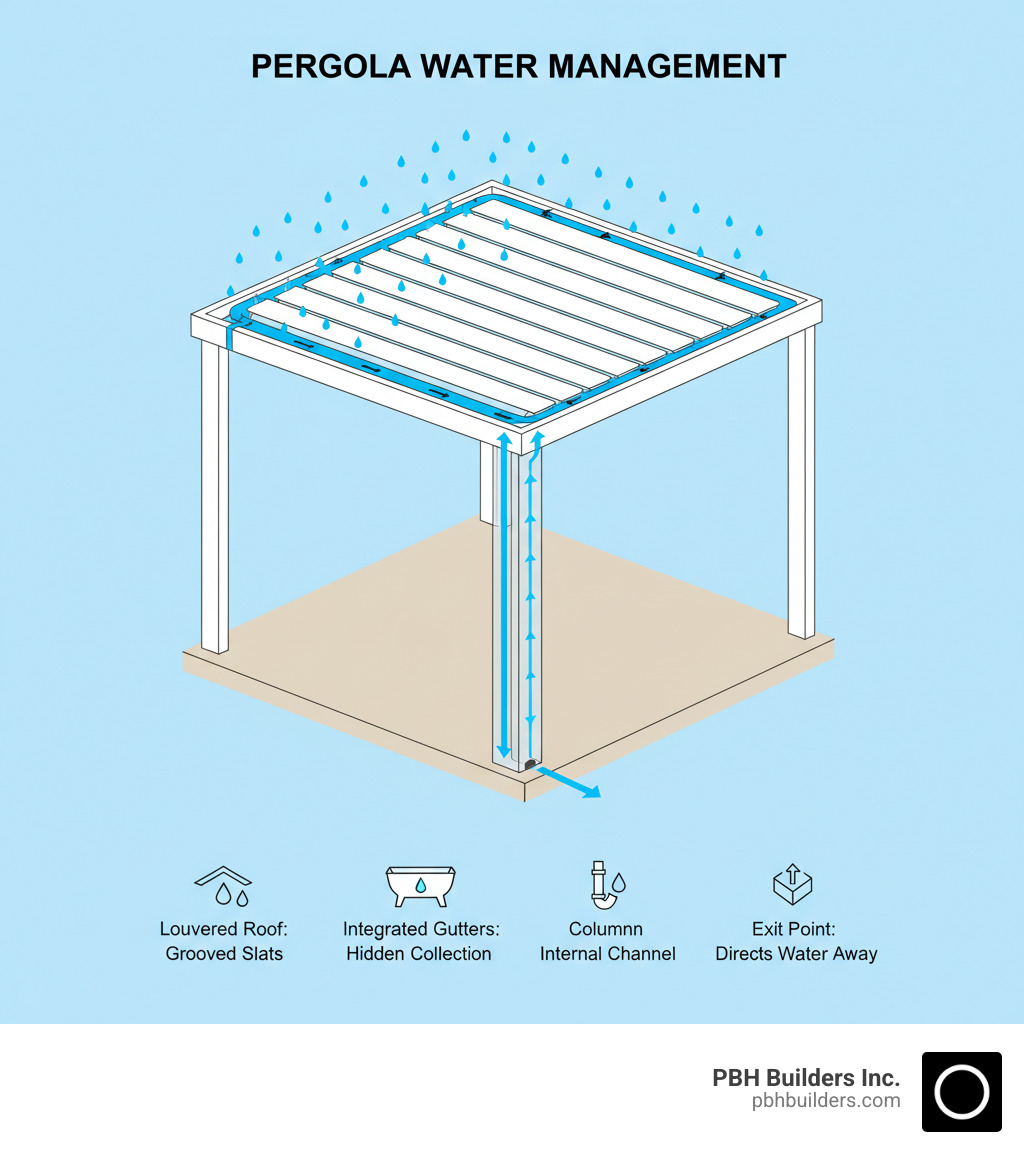
Key Components of a Pergola Drainage System:
- Louvered Roof – Adjustable slats with grooved channels that direct water flow when closed
- Integrated Gutters – Hidden collection troughs built into cross beams that capture runoff
- Column Drainage – Hollow support posts with internal pipes that channel water downward
- Exit Points – Discreet outlets at post bases that discharge water away from your patio
- Connection Options – Can link to existing drainage, soak-aways, or rainwater collection systems
You’ve invested in creating a beautiful outdoor space. But without proper water management, that investment faces constant threat from pooling water, furniture damage, and structural deterioration.
The research is clear: louvered pergolas can withstand winds up to 165 MPH and snow loads up to 62 PSF, but only when their drainage systems function properly. Modern engineered systems are designed so that rainwater flows through grooved louvers into internal gutters, then down through posts via internal downpipes—all hidden from view.
When rain falls on a properly designed pergola with drainage, you’ll notice something remarkable: the area underneath stays completely dry. No dripping between slats. No puddles forming on your patio furniture. Just a comfortable, protected space you can enjoy regardless of weather.
That’s the difference between a simple shade structure and a true outdoor room.
Pergola with drainage terms to know:
Understanding the Anatomy of a Pergola Drainage System
Think of a pergola with drainage like the human body—it’s not just one part doing all the work, but a complete system where every component has a specific job. When these parts work together seamlessly, you get an outdoor space that stays dry and comfortable, no matter what the weather throws at it.
Let’s walk through how this remarkable system actually works, from the moment a raindrop hits your roof to when it safely exits away from your patio.
The Louvered Roof: Your First Line of Defense
The magic starts at the top with the louvered roof. Unlike those old-school pergolas with gaps between the slats, modern adjustable louvers can tilt to give you shade or close completely to create a watertight barrier. Want sunshine? Open them up. Rain starting? Close them down. It’s that simple.
But here’s where it gets clever. Each louver blade isn’t just a flat piece of metal. They’re engineered with subtle grooves and interlocking channels that fit together like puzzle pieces when closed. These channels create a continuous path that guides water exactly where you want it to go.
The roof also has a slight slope built in—usually around 6cm from front to back. You probably won’t even notice it when you’re sitting underneath, but that gentle angle makes all the difference. Water doesn’t pool or sit on the surface. Instead, it flows smoothly along those grooved channels, heading straight toward the gutter system.
It’s like having hundreds of tiny water slides working together on your roof. Pretty smart, right?
The Hidden Network: Gutters and Downspouts
Once rainwater slides off those louvers, it needs somewhere to go. That’s where the integrated gutter system takes over—and you’ll barely know it’s there.
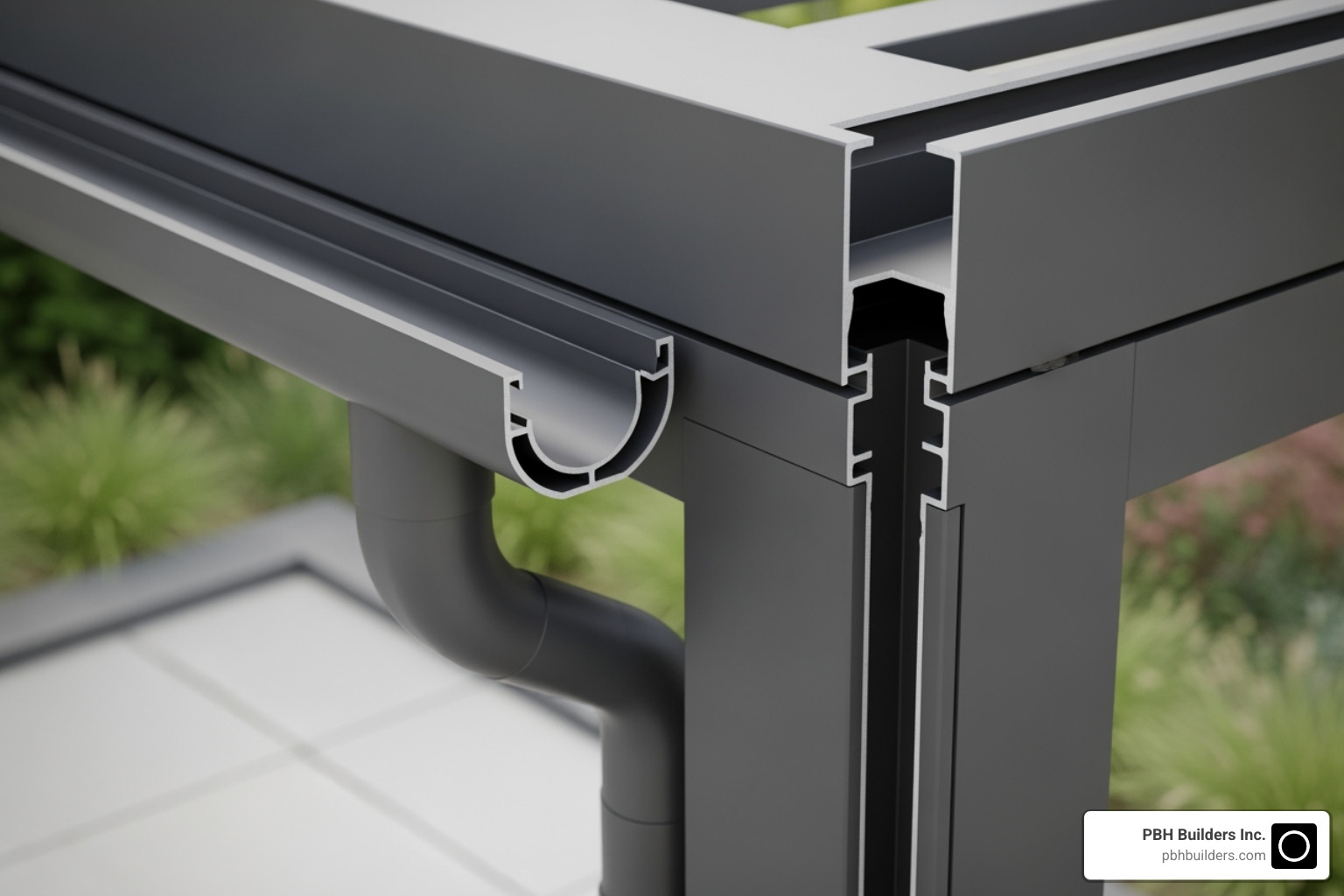
These aren’t the bulky gutters you see hanging off house roofs. They’re built right into the cross beams and frame of your pergola. When you look at a pergola with drainage, you see clean lines and neat design. The gutters are doing their job completely out of sight.
As water collects in these concealed channels, it flows along the perimeter and into specific drainage pathways. Every drop is captured and directed toward the support posts. Nothing spills over the edges. Nothing drips between the cracks. The system is designed to handle everything Mother Nature sends your way.
This hidden approach keeps your outdoor space looking beautiful while working incredibly hard behind the scenes. It’s the kind of engineering that makes you appreciate good design—functional and attractive.
The Foundation: Support Posts as Drainage Pillars
Here’s where things get really interesting. Those sturdy posts holding up your pergola? They’re not solid columns. They’re actually hollow drainage pillars that complete the water management system.
The water from those integrated gutters flows into these hollow support posts. Inside, you’ll find internal PVC pipes that carry the water straight down. PVC is perfect for this job—it’s lightweight, won’t rust or corrode, and provides a smooth surface that keeps water moving freely without any clogs or slowdowns.
This column-based approach means you can have a completely dry patio even during a downpour. The water travels down through these internal channels and exits at discreet points at the base of each post, well away from your furniture and entertaining space.
For optimal performance, you’ll typically want one drainage post for every 15 square meters of roof area. This ensures the system can handle heavy rainfall without getting overwhelmed.
There’s another benefit worth mentioning: this design keeps water completely separate from any electrical components. If your pergola has integrated lighting or power outlets, you never have to worry about water getting anywhere near the wiring. Safety and structural stability working hand in hand.
The entire system—from louvered roof to integrated gutters to hollow posts—works together so smoothly that you might forget it’s even there. Until it rains, that is. Then you’ll appreciate every clever detail as you sit comfortably underneath, completely dry, watching the storm pass by.
Why Your Outdoor Space Needs a Pergola with Drainage
Picture this: You’re hosting a lovely weekend brunch on your patio when dark clouds roll in. Your guests glance nervously at the sky, ready to abandon ship. But you? You smile and pour another round of mimosas. Why? Because your pergola with drainage has transformed your outdoor space into a true all-weather retreat.
A drainage system isn’t just a nice-to-have feature. It’s a fundamental component that transforms a simple shade structure into a versatile, all-season extension of your home. It’s the difference between an outdoor space you hope to use and one you always use, rain or shine.
How a Pergola with Drainage Protects Your Investment
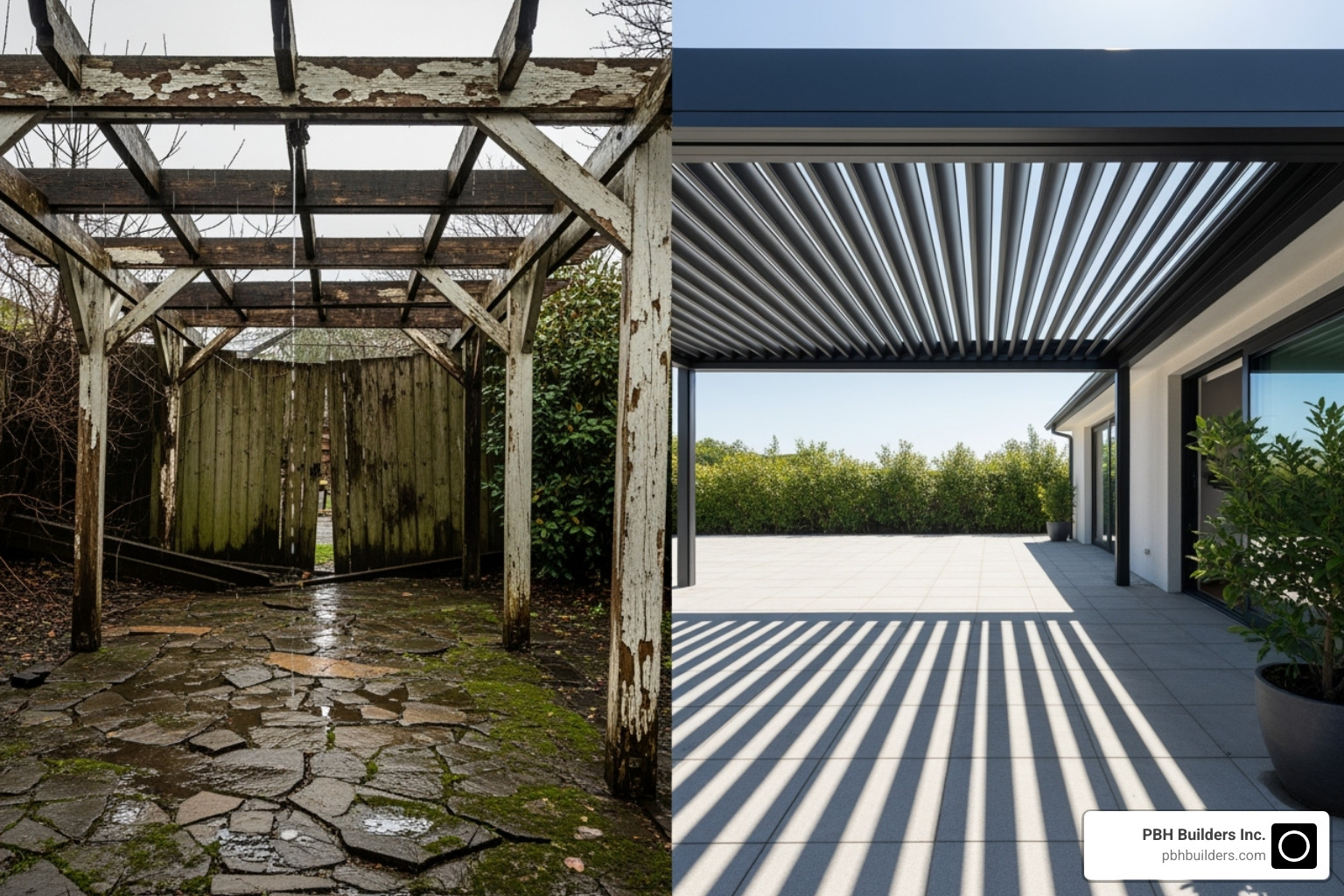
Let’s talk about what happens when water doesn’t have anywhere to go. Without proper drainage, water becomes your pergola’s worst enemy. It drips between open slats, pools on solid or fabric covers until they sag and stain, and collects around your structure’s foundation. This isn’t just annoying—it’s expensive.
Preventing water accumulation is the first line of defense. When rainwater has a clear path away from your outdoor space, it can’t cause the problems that lead to costly repairs. Modern drainage systems, like those in aluminum louvered pergolas, quickly remove rainwater before it has a chance to settle and cause trouble.
Your outdoor furniture represents a significant investment, and protecting outdoor furniture means keeping it dry. Soaked cushions breed mold. Wooden pieces warp and rot. Metal components rust and corrode. A pergola with drainage keeps your seating areas, dining sets, and decorative pieces in pristine condition, ready for guests at a moment’s notice.
The structure itself needs protection too. Avoiding corrosion in metal components and rot in wooden elements extends your pergola’s life considerably. Independent drainage systems prevent water accumulation, leaks, and the corrosion that comes from constant moisture exposure. This is especially critical for extending pergola life—we’re talking about adding years, even decades, to your structure’s lifespan.
Perhaps most critically, proper drainage means preventing foundation damage. Water constantly dripping or running off onto the ground near your home can erode soil and compromise foundations. This isn’t just about your pergola—it’s about protecting your entire home. A well-designed drainage system channels water safely away from these vulnerable areas, directing it to appropriate landscape features or collection systems.
Create protected outdoor entertainment areas
Enhancing Durability, Aesthetics, and User Experience
Beyond protection, a sophisticated pergola with drainage lifts your entire outdoor experience in ways you’ll notice every single day.
The durability factor is impressive. Modern pergolas built with rust-resistant materials like high-grade, powder-coated aluminum can withstand winds up to 165 MPH and snow loads up to 62 PSF. With proper drainage protecting these materials from constant moisture, you’re looking at a lifespan of 30 to 40 years or more. That’s a structure that will serve your family for generations.
But durability means nothing if your outdoor space doesn’t look beautiful. The sleek design of integrated drainage systems keeps your pergola looking sharp. Gutters and downspouts are cleverly hidden components within the frame and posts, maintaining clean lines and a modern appearance. No bulky pipes. No visible channels. Just neat architecture that improves your home’s aesthetic appeal.
This is where things get really exciting: increased usability transforms how you live. Your pergola becomes a space you can count on, not just hope for. Leave your cushions out overnight. Host dinner parties when the forecast calls for showers. Enjoy your morning coffee while rain falls around you—but not on you. This year-round enjoyment fundamentally changes your relationship with your outdoor space.
And let’s talk about what this means for your home’s value. Improved property value isn’t just a nice bonus—it’s a measurable benefit. Today’s homebuyers actively seek features that extend living space and reduce maintenance. A high-quality pergola with drainage checks every box: it’s functional, beautiful, durable, and low-maintenance.
At PBH Builders Inc., we specialize in creating these harmonious outdoor environments throughout the San Diego area. We understand that a well-designed pergola with drainage isn’t just about managing water—it’s about open uping the full potential of your outdoor living space, allowing you to accept San Diego’s beautiful climate without compromise.
Design beautiful outdoor spaces
Planning and Installing Your System
Getting a pergola with drainage isn’t like assembling flat-pack furniture—though some manufacturers might suggest otherwise. The truth is, while the concept is neat, the execution demands precision. Think of it like plumbing that doubles as architecture. Every angle matters. Every seal counts. Here’s what separates a flawless system from a frustrating one.
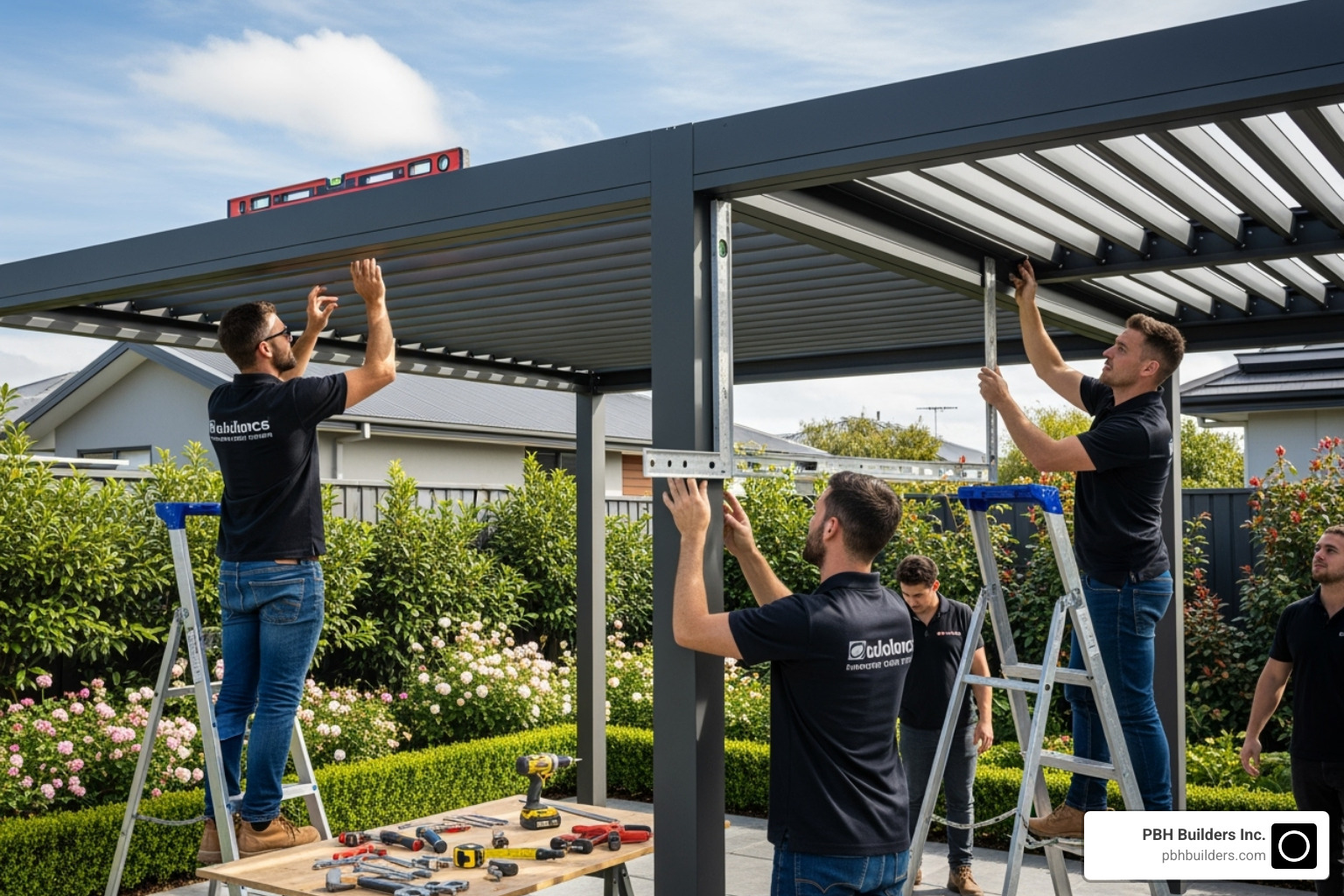
Planning and Installing a Pergola with Drainage
The magic of a pergola with drainage starts long before the first post goes in. It begins with understanding that water always wins—unless you plan smarter.
Proper slope is your best friend here. Even with those cleverly grooved louvers, gravity needs a little help. Most quality louvered systems incorporate a fall of about 6cm from front to back when the roof is closed. That gentle tilt—barely noticeable to the eye—makes all the difference between water flowing smoothly toward the gutters or pooling stubbornly on the surface. During installation, we take the time to verify these slopes with precision levels, because even a few millimeters off can compromise the entire system.
Every connection point, every junction where components meet, requires perfect sealing. Water is remarkably good at finding the tiniest gaps, and a single poorly sealed joint can turn your beautiful pergola into a frustrating leak factory. This is where professional installation really shows its value—knowing exactly which sealants work best, how much pressure to apply, and where reinforcement is needed.
The allocation of drainage posts follows a practical formula. A common recommendation is one drainage post per 15 square meters of roof surface, with both front posts handling drainage for faster water evacuation during heavy storms. This isn’t arbitrary—it’s based on real-world testing of how much water volume these systems can handle without overwhelming the internal pipes.
Before anything gets installed, though, you’ll need to steer local building codes and HOA regulations. San Diego has specific requirements about water management, setbacks, and structural additions. Your HOA might have opinions about aesthetics or drainage discharge points. We handle these details as part of our process, ensuring your project moves forward without unexpected delays or compliance issues.
Here’s where we’ll be honest: while some manufacturers claim their systems are DIY-friendly, suggesting just a few hours for assembly, the complexity of achieving a truly watertight pergola with drainage often justifies bringing in experienced professionals. The difference between “mostly works” and “works perfectly every time” comes down to expertise—knowing how to seal properly, align precisely, and integrate seamlessly with your existing landscape. Our team has installed countless systems across San Diego, and that experience translates directly into performance you can count on.
Follow a professional pergola installation guide
Integrating with Landscape Water Management
Your pergola with drainage shouldn’t just dump water onto your patio and call it a day. With thoughtful planning, that collected rainwater can become an asset rather than just something to get rid of.
Connecting to swales or soak-away systems transforms your pergola into part of a larger water management strategy. A swale—essentially a shallow, vegetated channel—slows water down and spreads it across your landscape, allowing it to soak into the soil naturally. Soak-aways work similarly but underground, using gravel-filled pits to absorb runoff. These approaches prevent localized flooding while replenishing groundwater. As permaculture enthusiasts have finded, integrating pergola drainage with landscape features can be both practical and neat. When installing with decking, connecting to soak-aways is an effective solution.
For those thinking about rainwater harvesting, your pergola’s drainage system offers an excellent collection opportunity. The water flowing through those internal downspouts can be redirected into rain barrels or larger cisterns. In San Diego’s climate, where every drop counts, this collected water can irrigate your garden, wash your car, or handle other outdoor tasks—all while reducing your water bill. Permaculture forums highlight examples of homeowners collecting thousands of gallons annually from similar roof systems.
The most critical integration, though, is directing water away from your home’s foundation. This isn’t optional—it’s essential. Properly installed drainage ensures that all collected water moves away from vulnerable areas, preventing erosion, soil saturation, and the expensive foundation problems that can follow. We design every system with this priority in mind.
Explore creative rainwater catchment ideas
Essential Maintenance for a Flawless System
Even the most sophisticated pergola with drainage needs occasional attention. The good news? Maintenance is straightforward if you stay on top of it.
Clearing leaves and debris from the gutters is your primary task. Just like your house gutters, the integrated troughs in your pergola can accumulate leaves, especially during fall or after storms. Regular cleaning of the water collection trough is recommended to prevent blockages. A quick visual check after windy days or seasonal leaf drop can save you from bigger problems down the line.
Don’t forget the downspouts inside the posts. These internal channels can occasionally catch debris that makes it past the gutters. Check the exit points at the base of each drainage post periodically. If water isn’t flowing freely during rain, or if you notice slow drainage, you might have a blockage that needs clearing.
Seasonal inspections are your opportunity to catch small issues before they become expensive repairs. Look for cracks in the louvers, loose seals around connections, or any signs of wear in the drainage channels. We recommend a thorough check in early spring before the heaviest rains and again in late fall to prepare for winter. Addressing minor wear now prevents major headaches later.
The reality is, a little regular attention keeps your system working perfectly. Most homeowners find they can handle basic maintenance themselves, though we’re always available for more thorough inspections or repairs if needed.
Find help with pergola repair and maintenance
Frequently Asked Questions about Pergola Drainage
We talk with homeowners every day about their outdoor spaces, and drainage questions always come up. It makes sense—you want to know exactly what you’re investing in! Let’s tackle the most common questions we hear about pergola with drainage systems.
How does drainage in a louvered pergola differ from a solid roof one?
The way water moves off these two types of pergolas is quite different, and it all comes down to their design.
With a louvered pergola, you’re working with adjustable slats that close to form a watertight seal. When those louvers close, they don’t just sit flat—they interlock with subtle grooves that create channels. Combined with that slight slope we mentioned earlier (often around 6cm from front to back), water flows smoothly along these channels right into integrated gutters hidden in the cross beams. From there, it travels down through internal pipes concealed within the posts. The whole system is tucked away, keeping your pergola looking sleek while handling rain beautifully. Plus, you get the flexibility to open those louvers on sunny days.
A solid roof pergola works more like a traditional patio cover. It has a fixed, impermeable roof that needs a more noticeable permanent slope to shed water effectively. These typically use external gutters and downspouts—similar to what you’d see on a house—to move rainwater away. They work well, but those external components are visible, which changes the look.
The key difference? Louvered systems give you adjustability and hidden drainage, while solid roofs provide constant coverage with more visible water management.
What happens if a pergola doesn’t have a drainage system?
Let’s be honest—it’s not a pretty picture. Without proper drainage, your beautiful outdoor space quickly becomes a headache.
For louvered pergolas, the lack of drainage makes that waterproof feature essentially useless. Water would pool on the closed louvers, seep through connections, or drip constantly onto everything below. You’d get leaks, water stains, and the louver mechanisms could start corroding. All that engineering goes to waste.
For pergolas with fabric covers, you’d see sagging and pooling as water weighs down the material. Over time, this stretches and damages the fabric, creating permanent deformation. And traditional open-slat pergolas? Well, they’re designed for shade, not rain protection, so everything underneath gets soaked.
Without drainage, you’re dealing with water accumulation that damages your outdoor furniture and cushions. Wood rots, metal rusts, and mold starts growing in damp spots. The pergola structure itself suffers too—constant moisture exposure leads to corrosion or rot, cutting years off its lifespan.
Perhaps most concerning is what happens at ground level. Water dripping steadily around the base erodes soil and can compromise your patio foundation or even your home’s foundation. That’s when a simple oversight becomes an expensive repair.
Bottom line? A pergola without drainage is like having a beautiful umbrella with holes in it—great until you actually need it to work!
What materials are best for a pergola drainage system?
The materials you choose determine whether your pergola with drainage lasts five years or fifty. We’re particular about this because we’ve seen what works and what doesn’t.
For the main structure—including those integrated gutters and the frame—high-grade, powder-coated aluminum is our go-to choice. Specifically, alloys like 6063 T5 offer the perfect combination of strength and corrosion resistance. The powder coating adds an extra protective layer that resists rust, fading, and weather damage, keeping your pergola looking pristine for decades. Aluminum is also lightweight yet incredibly strong, easily handling the wind and snow loads that San Diego weather occasionally throws at us.
Inside those hollow support posts, PVC pipes are ideal for carrying water downward. PVC won’t rust or corrode, no matter how much water flows through it. It’s lightweight, durable, and has a smooth interior surface that helps prevent debris buildup and clogs. Water flows freely, which is exactly what you want in a drainage system.
Don’t overlook the small stuff either. All the fasteners, brackets, and hardware should be stainless steel. This prevents rust at connection points and maintains the structural integrity of your entire system, even in damp conditions.
When these rust-resistant materials work together, you get a pergola with drainage that’s built to last through countless San Diego summers and those occasional winter storms. It’s about choosing quality now so you’re not dealing with repairs later.
Conclusion: Achieve Your Perfect Outdoor Oasis
Picture this: It’s a drizzly Saturday afternoon in San Diego, and while your neighbors are stuck indoors, you’re comfortably lounging on your patio, coffee in hand, watching the rain fall around you—but not on you. That’s the magic of a pergola with drainage.
This isn’t just about staying dry during an unexpected shower. It’s about fundamentally changing how you experience your outdoor space. When you invest in a well-designed pergola with drainage, you’re creating a true extension of your home—a space that’s just as reliable and comfortable as your living room, but with fresh air and natural light.
The engineering we’ve explored throughout this guide—the interlocking louvers that channel every drop, the hidden gutters that work silently in the background, the clever hollow posts that whisk water away—all of this comes together to protect what matters most. Your outdoor furniture stays pristine. Your pergola structure remains strong and beautiful for decades. Your home’s foundation stays safe from water damage. And most importantly, you get to enjoy your outdoor oasis whenever you want, rain or shine.
We’ve seen how the right outdoor living space can change daily life for San Diego homeowners. Morning coffee becomes a ritual. Family dinners move outside. Quiet evenings under the stars become the norm rather than the exception. A pergola with drainage makes all of this possible without the constant worry about weather forecasts or scrambling to move furniture when clouds roll in.
Yes, proper planning matters. Professional installation ensures everything works as designed. Regular maintenance keeps the system flowing smoothly. But these are small considerations compared to the years of enjoyment and peace of mind you’ll gain.
At PBH Builders Inc., we’ve built our reputation on creating outdoor spaces that truly improve how our clients live. We understand that every detail matters—from the initial design consultation to the final inspection. Our meticulous attention to landscape integration, code compliance, and long-term durability means your investment will deliver value for decades to come.
Your perfect outdoor oasis is closer than you think. It’s time to stop letting weather dictate your outdoor plans and start enjoying the San Diego lifestyle you deserve.