Quick Answer
Kitchen appliance upgrades typically range from a few hundred dollars for a basic microwave swap to well over $30,000 for a full suite of panel-ready, built-in appliances with induction cooking and smart integration. The biggest price movers are appliance category, panel-ready or built-in construction, induction versus gas, smart connectivity, and whether units are installed in an island. Pricing varies based on your specific project scope, layout, and quality tier, so a custom quote is the only way to get an accurate number.
Here’s a number that surprises most homeowners: the median major kitchen remodel now runs around $55,000, and appliances alone can swing that total by tens of thousands of dollars depending on what you choose. When it comes to kitchen appliances to upgrade in remodel projects, the decision isn’t just about brand or color. It’s about integration, energy use, and how each unit is installed, and all three of those factors directly change your final invoice.
Homeowners planning a 2026 or 2027 remodel are asking sharper questions than they used to: should the refrigerator be panel-ready? Is induction worth the upgrade? Does adding a dishwasher to the island really cost that much more? This guide breaks down what actually drives appliance pricing in a remodel, using current national data and trend research, so you can budget with confidence instead of guessing.
Which Appliances Do Most Remodelers Upgrade First?
Not every appliance gets replaced in a remodel, but some are nearly universal. According to industry remodeling data, dishwashers are the most commonly added large appliance at 74% of projects, followed by microwaves at 68%, ranges at 64%, refrigerator-freezer combinations at 62%, and range hoods at 60%. This tells us that ventilation and cleanup, not just cooking, are top of mind for today’s remodelers.
That order matters for budgeting. If dishwashers and hoods are the most frequently touched appliances, they’re also the ones most likely to need new venting, plumbing, or electrical work behind the scenes, which is where labor costs quietly add up. The Houzz 2026 kitchen trends coverage notes that these categories are being reimagined not just as functional boxes but as design elements integrated into cabinetry.
What Do Kitchen Appliance Upgrades Cost?
Appliance costs in a remodel span an enormous range because “upgrade” can mean anything from a basic replacement to a fully custom, panel-ready suite. Pricing varies based on your specific project, but here is a general sense of where most categories land before installation, venting, or electrical work is factored in.
| Appliance Category | Typical Cost Range |
|---|---|
| Dishwasher (standard to panel-ready) | $700 to $3,500+ |
| Range or cooktop (gas, electric, or induction) | $1,200 to $12,000+ |
| Refrigerator-freezer (standard to built-in/panel-ready) | $1,500 to $15,000+ |
| Range hood or ventilation system | $500 to $6,000+ |
| Steam oven or wall oven combo | $2,500 to $10,000+ |
| Microwave or microwave drawer | $300 to $2,500+ |
These figures cover the appliance itself. Installation, electrical upgrades for induction or 220V circuits, custom paneling to match cabinetry, and modified ductwork for range hoods are separate line items that a licensed remodeler should quote directly based on your kitchen’s existing infrastructure.
What Factors Move the Price Most?
Two kitchens with the same footprint can have appliance budgets $20,000 apart, and it almost always comes down to a handful of decisions. Understanding these variables helps you decide where to spend and where to save.
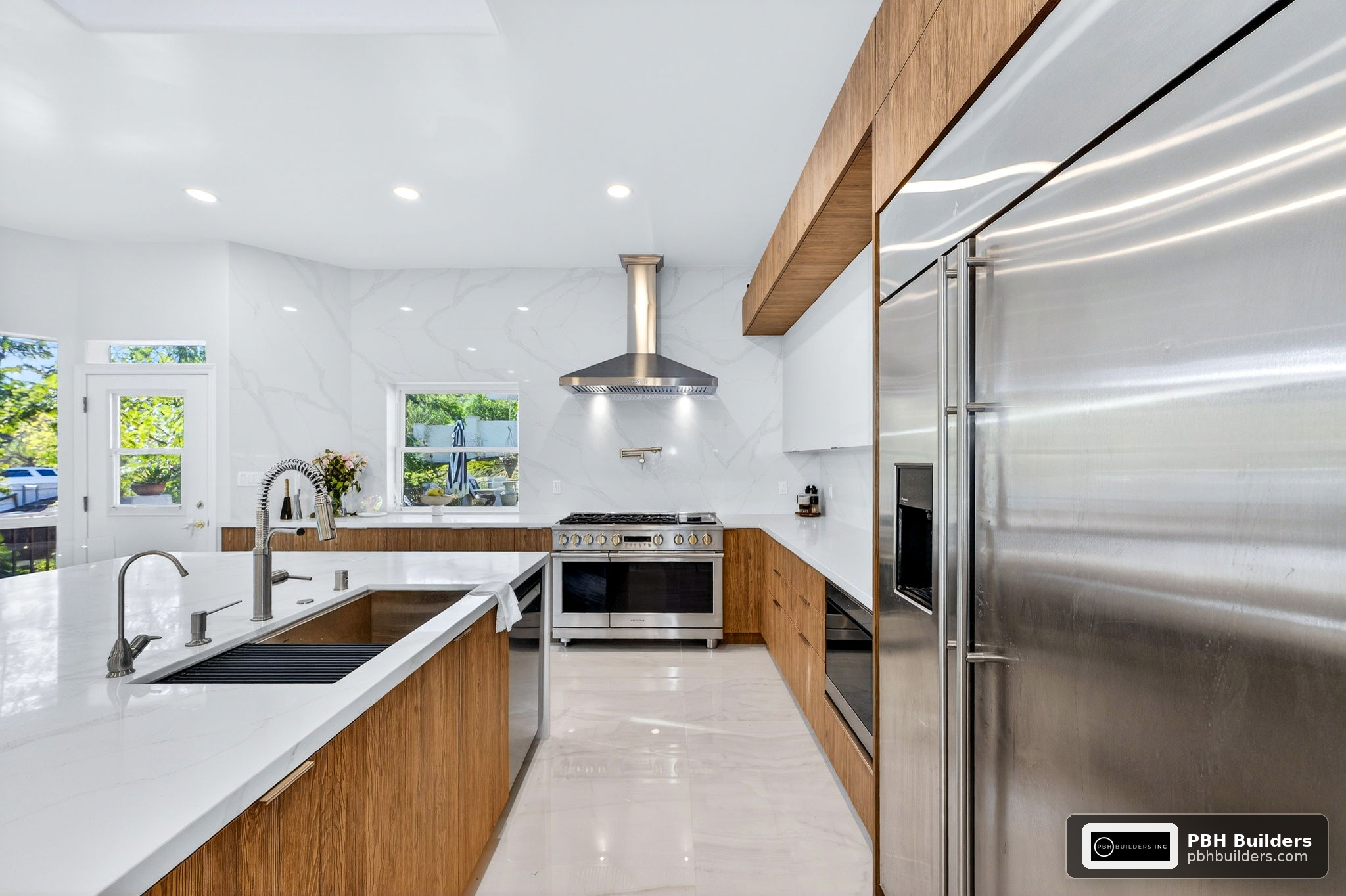
- Built-in vs. freestanding: Panel-ready and fully integrated appliances cost significantly more than freestanding units because they require custom cabinetry work and precise measurements.
- Cooking technology: Induction cooktops and ranges cost more upfront than gas or standard electric, and may require an electrical panel upgrade if your kitchen wasn’t wired for it.
- Ventilation requirements: A range hood tied to new ductwork through an exterior wall or roof costs far more than a simple over-the-range replacement.
- Smart and connected features: Wi-Fi enabled, app-controlled, or voice-activated appliances carry a price premium over analog counterparts.
- Brand and finish tier: Premium finishes, custom colors, and professional-grade brands can multiply the base cost of an appliance several times over.
- Location in the kitchen: Appliances installed in an island often require additional plumbing, electrical, or structural work compared to perimeter placement.
Why Are Island Appliances a Growing Cost Factor?
Islands have become command centers for prep, cleanup, and even cooking, and that shift shows up clearly in the data. Among renovating homeowners, 53% install at least one appliance in the island, with dishwashers leading at 35% and microwaves close behind at 32%. Cooktops appear in about 15% of islands, while full ranges are less common at roughly 6%, largely due to ventilation complexity.
Every island appliance adds cost beyond the unit itself. A dishwasher in the island needs supply and drain lines routed under the floor or through the base cabinetry. A cooktop needs downdraft ventilation or a ceiling-mounted hood, and a range needs both gas or electrical service and a compliant venting path. These structural requirements are why island appliance placement should be finalized early in the design phase, not after cabinets are ordered.
How Do Smart and Panel-Ready Appliances Affect Budget?
Connected kitchens are no longer a novelty. Survey data shows 42% of homeowners have or plan to add smart appliances, 37% plan automated systems, and 25% use or plan voice or app control in their kitchens. These features add convenience, but they also add cost through both the appliance itself and, in some cases, home network or wiring upgrades.
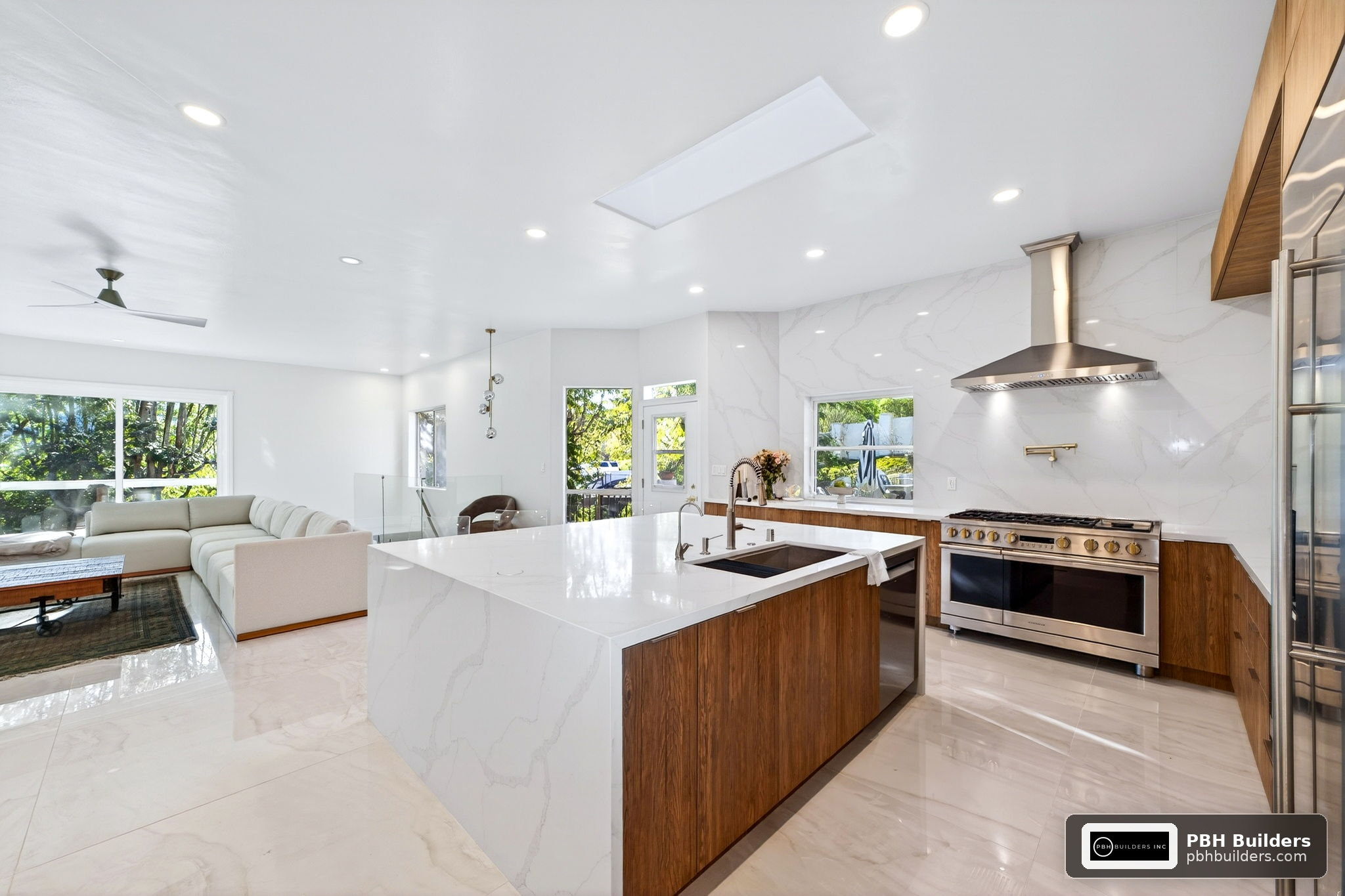
Panel-ready appliances are trending even harder. Industry surveys report that 85% of professionals see panel-faced dishwashers trending and 72% report panel-faced refrigerators trending in current projects, a pattern confirmed by design coverage from Elle Decor’s 2026 kitchen innovation roundup. This look costs more because the appliance manufacturer and the cabinet maker both need to coordinate on exact panel dimensions and hinge hardware, and mismatches mean rework.
Refrigerators trending panel-faced: 72%
Voice/app control: 25%
2031 forecast: $393.88B (4.02% CAGR)
Induction cooking is another category reshaping budgets. It’s gaining traction because it heats faster, responds more precisely, and cleans more easily than gas or coil electric surfaces, a trend confirmed by cooking appliance analysis from AJ Madison’s 2026 cooking appliance trend report. Steam ovens are following a similar trajectory as a premium add-on for serious home cooks who want better moisture control.
How Should You Prioritize Appliances on a Budget?
Not every kitchen needs every upgrade, and prioritizing intelligently is how experienced remodelers protect your budget without sacrificing the features that matter most day to day.
- Start with what you use most. If your household cooks daily, prioritize the range or cooktop. If you entertain often, the dishwasher and refrigerator capacity matter more.
- Match ventilation to your cooking style. High-heat cooking justifies a stronger, more expensive hood system; occasional cooking does not.
- Reserve panel-ready for visible appliances. A panel-ready refrigerator in an open-concept kitchen delivers more visual payoff than one tucked in a pantry wall.
- Confirm electrical and plumbing capacity early. Induction and island appliances often require infrastructure work that should be priced before final appliance selection.
- Get a written, itemized quote. Because pricing varies so widely by brand, integration level, and installation complexity, a general contractor should break out appliance costs separately from labor and infrastructure changes.
Guidance from the National Kitchen & Bath Association consistently emphasizes planning appliance placement and specifications before cabinetry is finalized, since retrofitting a kitchen for a different appliance size after installation is far more expensive than planning correctly from the start.
Key Takeaways
- Dishwashers, microwaves, ranges, refrigerators, and range hoods are the five most commonly upgraded appliances in kitchen remodels, in that order of frequency.
- Appliance costs range from a few hundred dollars for basic replacements to $15,000 or more per unit for premium, panel-ready, built-in models.
- Island appliance installation, especially dishwashers and microwaves, adds plumbing and electrical costs beyond the appliance price itself.
- Induction cooking, steam ovens, and smart connectivity are the fastest-growing upgrade categories heading into 2027.
- Panel-ready appliances now dominate design trends, with the vast majority of dishwashers and a strong majority of refrigerators specified in this style.
- Pricing varies based on your specific project scope, so a detailed, itemized quote is the only reliable way to budget accurately.
People Also Ask
What appliances should I upgrade in a kitchen remodel?
Data shows dishwashers, microwaves, ranges, refrigerator-freezer combos, and range hoods are the most frequently upgraded appliances, in that order. Prioritize based on how your household actually cooks and cleans up, not just trend popularity.
Is it worth putting a dishwasher in a kitchen island?
Yes, for many households, since it’s the most common island appliance at 35% adoption among renovating homeowners. Just budget for additional plumbing work since supply and drain lines must be routed to the island base.
Is induction cooking worth the extra cost?
Induction costs more upfront and may require electrical upgrades, but it heats faster, responds more precisely, and cleans easier than gas or standard electric. It’s one of the fastest-growing cooking upgrades heading into 2027.
What are panel-ready appliances and are they worth it?
Panel-ready appliances accept a custom cabinet-matching panel instead of showing a standard finish, creating a seamless built-in look. They cost more due to custom fabrication and installation coordination, but 85% of dishwashers and 72% of refrigerators specified in current projects trend this way.
How much of a kitchen remodel budget should go to appliances?
With median major remodels running around $55,000, appliances commonly represent a meaningful but variable share depending on how many units are upgraded and whether they’re panel-ready or premium tier. A contractor can itemize this based on your selections.
Frequently Asked Questions
What is the average cost to upgrade kitchen appliances in a remodel?+
Costs vary enormously based on category, brand, and installation type, ranging from a few hundred dollars for a basic microwave to $15,000 or more for a single panel-ready refrigerator. Pricing varies based on your specific project, so it’s best to get an itemized quote for your kitchen’s layout and appliance list.
Which kitchen appliance is most commonly replaced in a remodel?+
Dishwashers top the list, appearing in 74% of remodels, followed by microwaves at 68% and ranges at 64%. Refrigerator-freezer combinations and range hoods round out the top five.
Do smart appliances add significant cost to a remodel?+
Smart appliances typically carry a price premium over standard models, and some setups require network or electrical work. Adoption is rising quickly, with 42% of homeowners currently using or planning smart appliances in their kitchens.
What increases the cost of adding an appliance to a kitchen island?+
Island appliances often require new plumbing, electrical, or ventilation routed through the floor or base cabinetry, which adds labor beyond the appliance itself. This is why dishwashers and microwaves, which need simpler hookups, are far more common in islands than cooktops or ranges.
Should I upgrade all my appliances at once or one at a time?+
If cabinetry and countertops are being replaced anyway, upgrading appliances together avoids costly rework later, especially with panel-ready units that must match cabinet dimensions exactly. A phased approach can work for freestanding appliances that don’t require custom integration.
Are steam ovens worth including in a remodel?+
Steam ovens are a rising premium upgrade for frequent home cooks who want better moisture control and cooking flexibility. They cost more than a standard wall oven but are increasingly requested in higher-end remodels for 2026 and 2027.