Why a Driveway Retaining Wall is Your Best Solution for Sloped Properties
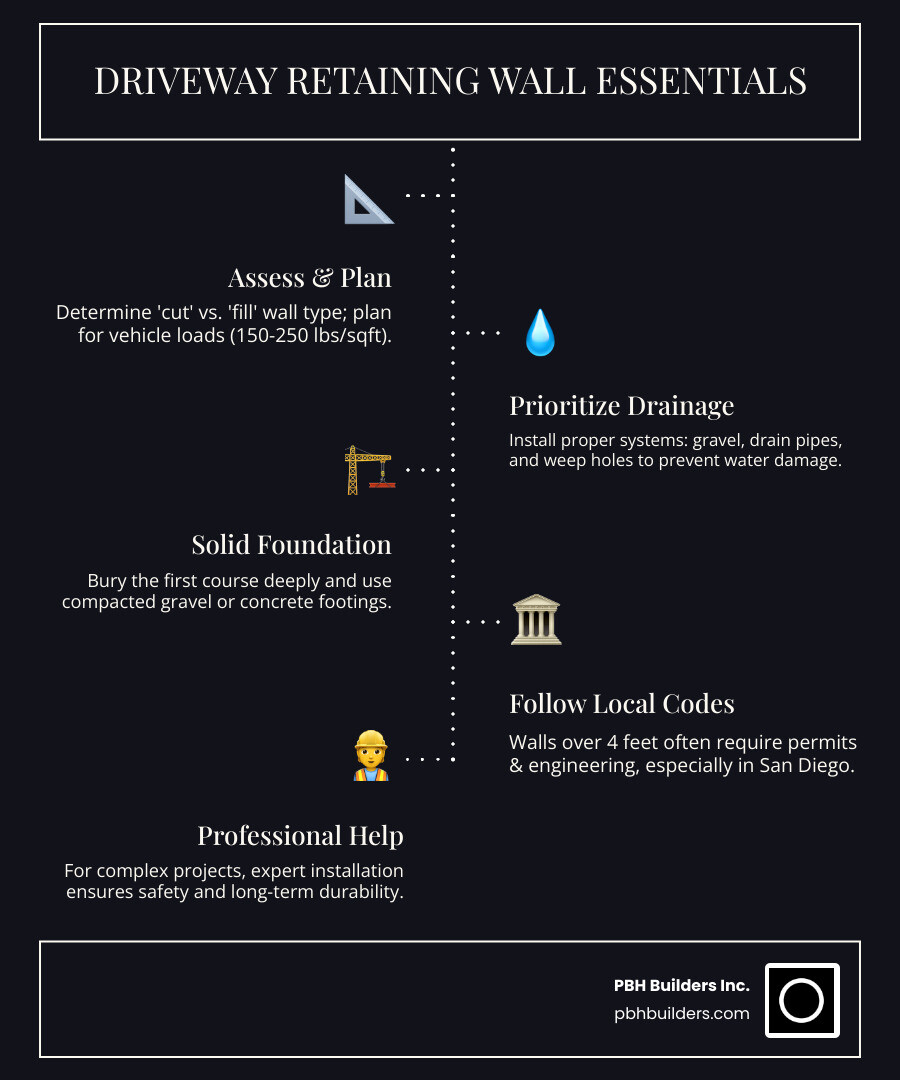
A driveway retaining wall is a specialized structure designed to hold back soil and support vehicles on sloped terrain. Here’s what you need to know:
Quick Answer for Building a Driveway Retaining Wall:
- Assess Your Needs – Determine if you need a ‘cut’ wall (carving into a slope) or ‘fill’ wall (building up ground).
- Plan for Extra Load – Driveway walls must support 150 lbs/sqft (cars) or 250 lbs/sqft (trucks).
- Prioritize Drainage – Install proper drainage with gravel, drain pipes, and weep holes.
- Build a Solid Foundation – Bury the first course and use a compacted gravel or concrete footing.
- Follow Local Codes – Walls over 4 feet in San Diego typically require permits and engineering.
- Consider Professional Help – Complex driveway walls need expert installation for safety and longevity.
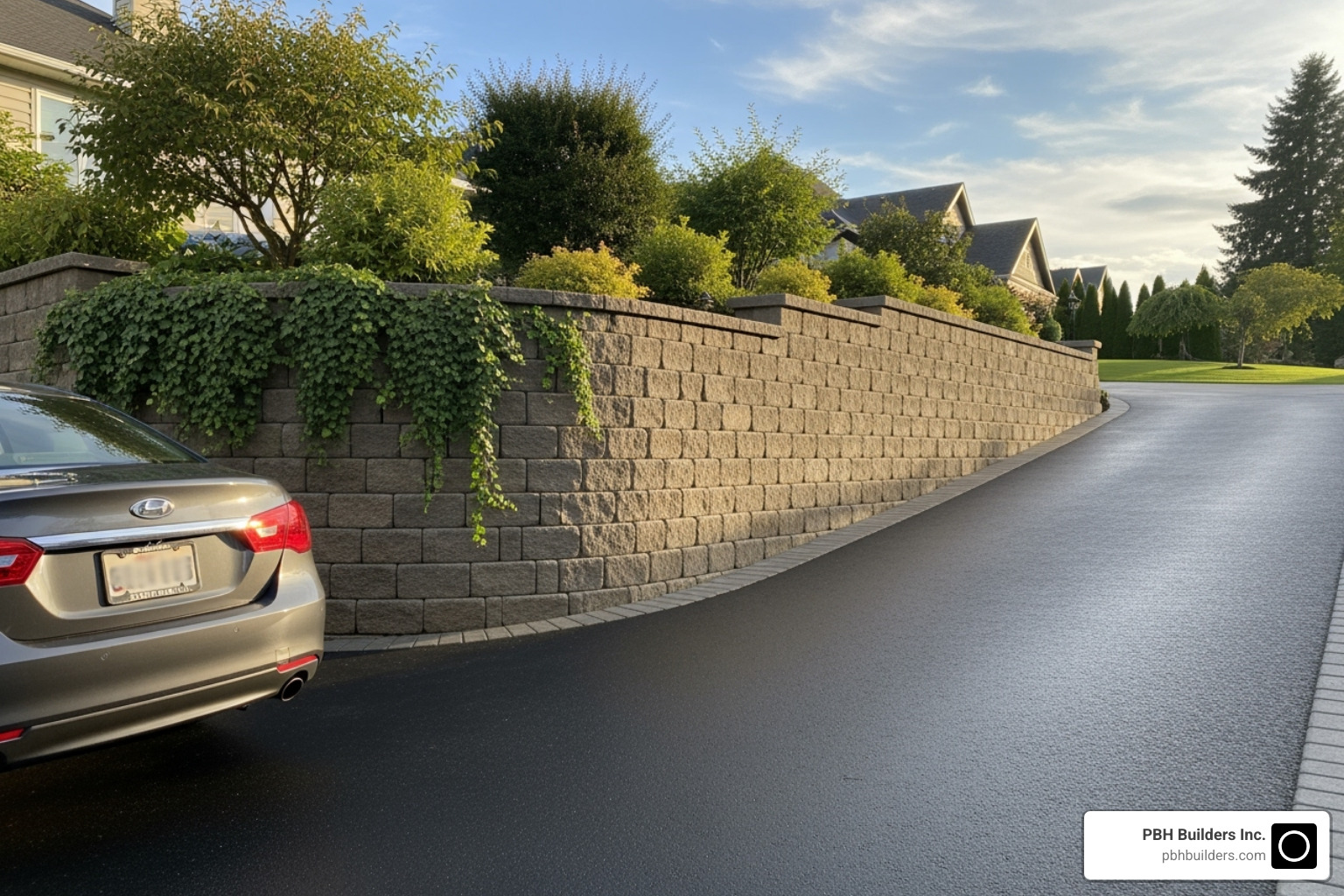
For San Diego homeowners with sloped properties, creating a functional driveway is a common challenge. A driveway retaining wall is the solution. Unlike simple garden walls, driveway retaining walls are engineered structures built to support the significant weight of vehicles. When properly built, these walls prevent erosion, create level parking, and add value to your home, often lasting 50-100 years.
A wall’s success depends on what you can’t see: proper drainage, a solid foundation, and correct backfilling. As one expert noted, “Water is the mortal enemy of driveways and retaining walls.”
Know your Driveway retaining wall terms:
Why Your Driveway Needs a Special Kind of Retaining Wall
A driveway retaining wall is more than a decorative border; it’s a hardworking structure providing essential support. It prevents soil erosion on San Diego’s hillsides, creates level parking on impossible slopes, and stops your driveway from cracking or shifting. A well-built wall transforms unusable terrain into a safe, functional space, adding significant value to your home.
What sets these walls apart is their need to handle a “surcharge load”—the immense weight of vehicles pressing down on the soil behind the wall. This is an active, dynamic force that requires robust design, quality materials, and expert construction. At PBH Builders Inc., we build retaining walls that stand the test of time because we understand these unique demands. For more details, visit our Retaining Walls services page.
Understanding the Unique Demands of a Driveway Retaining Wall
The engineering term for the extra weight from vehicles is “surcharge load.” A standard car adds roughly 150 pounds per square foot (lbs/sqft) of pressure, while a truck can exert 250 lbs/sqft or more. This constant, repetitive stress tests a wall’s strength.
Beyond weight, vehicles create vibrations that increase lateral earth pressure—the soil pushing against the wall. Add hydrostatic pressure from water collecting behind the wall, and the forces become immense. This is why a driveway wall must be engineered differently than a garden wall. Cutting corners on design or construction leads to bulging, cracking, or collapse, which is both expensive and dangerous.
Cut Walls vs. Fill Walls for Driveways
When building a driveway retaining wall, you’ll use either a cut wall or a fill wall, depending on your property’s terrain.
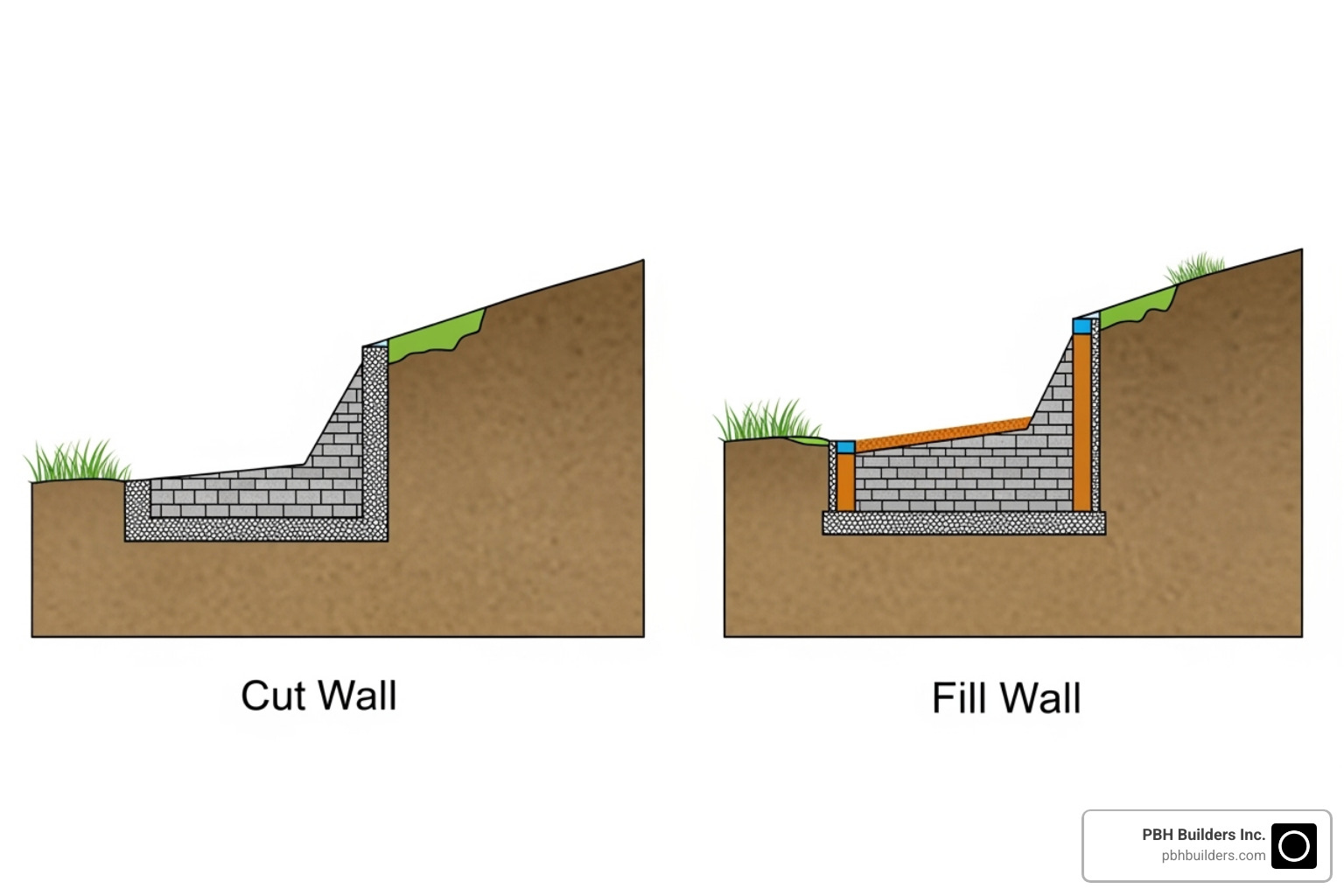
A cut wall is used when carving into a hillside to create level space for a driveway. The wall holds back the excavated slope, preventing it from sliding onto the new surface. A curb or parking stop at least four feet from the wall is a smart safety feature.
A fill wall does the opposite: it builds up ground to raise a driveway. This is common for creating a parking pad or stabilizing a settling area. Because fill walls support new soil and vehicles, they require reinforcement like geogrid—a mesh embedded in the soil to distribute weight. A guardrail is essential to prevent vehicles from rolling over the edge.
Key Design and Material Considerations for Your Driveway Retaining Wall
Building a driveway retaining wall is more like building a small bridge than a garden bed. The forces at play demand careful planning and engineering. Skipping these considerations can lead to expensive and dangerous failures.
Engineering and permits are your first checkpoint. In San Diego, any wall over 4 feet tall or supporting a driveway (a surcharge load) will almost certainly require an engineer’s design and a building permit. An engineer calculates the specific pressures your wall will face and specifies the foundation depth, reinforcement, and drainage needed. The permitting process ensures your wall is built to code, protecting your investment and property value. At PBH Builders Inc., we handle this entire process for our clients.
Drainage and foundation are non-negotiable. Water is the primary enemy of retaining walls. Without a proper drainage system, hydrostatic pressure will build up and destroy your wall. The foundation is equally critical, providing a stable base that won’t shift or settle. In San Diego, frost lines aren’t a major concern, but proper foundation depth and compaction are essential for long-term stability.
Choosing the Right Materials
The materials for your driveway retaining wall affect its appearance, longevity, and cost. We focus on materials that deliver both structural integrity and aesthetic appeal.
| Material Type | Durability | Cost (Uninstalled, per sq ft) | Installation Complexity | Aesthetic Appeal |
|---|---|---|---|---|
| Interlocking Concrete Blocks | High; engineered for strength and weather resistance | $11 – $15 | Moderate (DIY-friendly for smaller walls, professional recommended for driveways) | Versatile; available in various colors, textures, and styles. Can be stained or veneered. |
| Poured Concrete | Highest; strongest and most durable option | $8 – $12 | High (requires professional formwork, pouring, and reinforcement) | Modern and sleek; can be stamped, colored, or veneered for custom looks. |
| Natural Stone | Very High; timeless and extremely durable | $25 – $40+ | High (requires skilled masonry work) | Rustic and neat; natural variations create unique character. |
Interlocking concrete blocks are popular for their engineered strength and ease of installation. They come in many styles and create a robust system when installed with geogrid reinforcement.
For maximum strength, poured concrete is the top choice, especially for tall or heavy-load walls. Reinforced with rebar, it forms a monolithic structure that can be finished with veneers, stucco, or stamps for a custom look.
Natural stone offers timeless elegance and durability. While it requires skilled masonry, it creates a unique, high-end look. Stone veneers on a concrete core can provide a similar aesthetic at a lower cost.
A properly built masonry or concrete wall can last 50 to 100 years. We also specialize in complementary services like Pavers and Driveway Work to create a cohesive design.
The Critical Role of Drainage and Foundation
Your driveway retaining wall is only as good as its drainage and foundation. Without these, your investment is at risk.
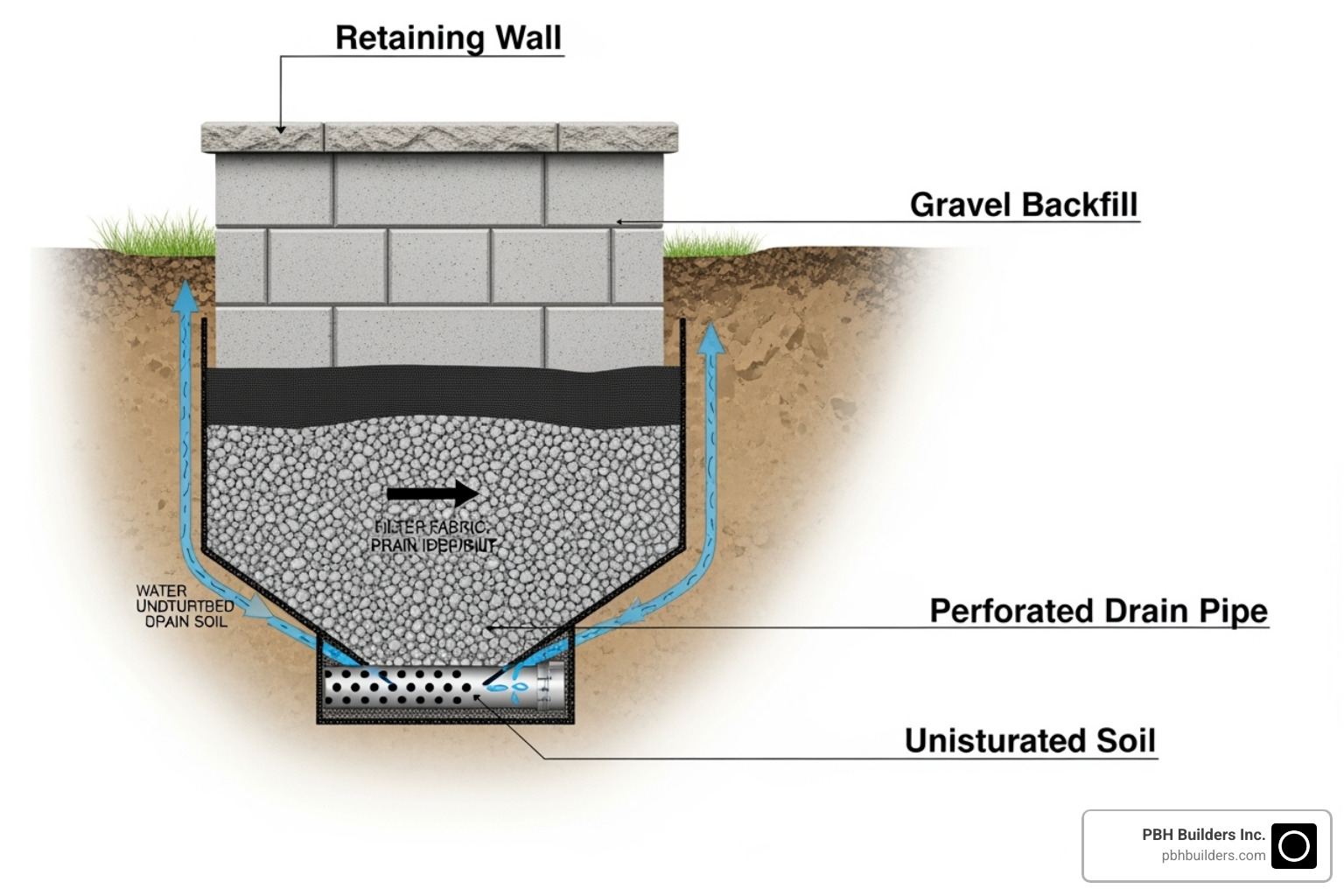
Hydrostatic pressure from water trapped in the soil is the main cause of wall failure. A comprehensive drainage system is essential to relieve this pressure. This includes:
- Gravel Backfill: A layer of clean, crushed stone behind the wall allows water to filter down instead of saturating the soil.
- Filter Fabric: Placed between the gravel and soil, it prevents dirt from clogging the gravel.
- Perforated Drain Pipe: At the base of the gravel, this pipe collects water and carries it away to a safe outlet.
- Weep Holes: Small openings in the wall’s face act as a pressure relief valve, letting trapped water escape.
A solid foundation prevents the wall from shifting or settling. For most walls, a compacted gravel footing is used. We excavate a trench, fill it with layers of crushed angular gravel, and compact each layer until solid. For taller or heavier-duty walls, a reinforced concrete footing provides an unyielding base. Skimping on these hidden elements is a recipe for failure.
The Construction Process: A Step-by-Step Guide
With planning complete, it’s time to build your driveway retaining wall. Precision during construction is key to a long-lasting result.
First, a critical safety step: call 811 before digging. This free service marks underground utility lines, preventing a dangerous and costly accident. Gather your tools, including shovels, levels, a rubber mallet, a plate compactor, and string lines. Meticulous layout is the foundation of success. For general guidance, resources like How to Build a Retaining Wall up to 6ft (1.8m) can be helpful.
Step 1: Excavation and Foundation Prep
This is where the hard work begins. Mark the wall’s path with stakes and string lines. Dig a trench wide enough for the blocks plus at least 12 inches for drainage material behind it. The depth must accommodate a 4- to 6-inch compacted gravel base, plus enough depth to bury at least half of the first course of blocks. Ensure the bottom of the trench is perfectly level. Add the crushed gravel base material and compact it with a plate compactor until it’s solid.
Step 2: Laying the Base Course and Ensuring It’s Level
The first course of blocks is the most important. Get it right, and the rest of the wall will be straight and strong. Place the first blocks on the compacted base, starting at the lowest point. A significant portion of this course should be buried for stability. Use a torpedo level on each block and a long level across the entire course to ensure everything is perfectly level and aligned. Use a rubber mallet to make fine adjustments. Once the course is set, backfill in front of the blocks with soil to lock them in place.
Step 3: Building Up, Backfilling, and Reinforcing
With the base set, you can build upward. Stagger the joints of each new course, like in bricklaying, to ensure strength. Brush off debris before adding each new row.
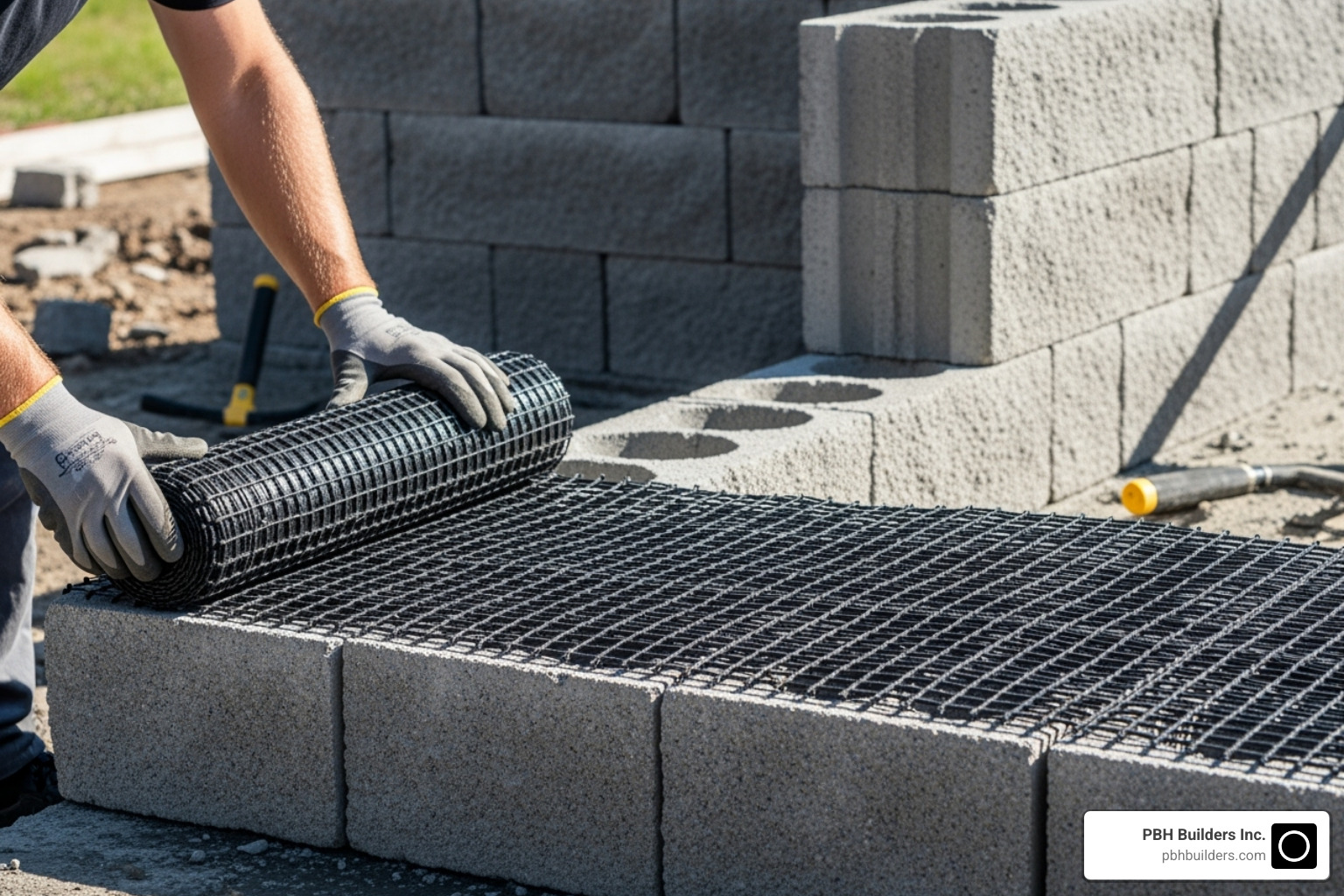
As you build, backfill behind the wall. Place a 12-inch layer of clean, crushed gravel directly behind the blocks. Beyond the gravel, use approved soil. Add backfill in 6- to 8-inch lifts, compacting each one thoroughly.
For any wall supporting a driveway, geogrid reinforcement is essential. This high-strength mesh is laid between courses and extends back into the compacted soil, creating a stable, unified mass. Install geogrid according to the engineer’s specifications (typically every 2-3 courses). Skipping this step is a primary cause of wall failure.
Step 4: Finishing Your Driveway Retaining Wall
Final touches complete the project and add a professional look. Secure capstones to the top of the wall with masonry adhesive for a polished finish. Grade the topsoil behind the wall to slope away from the structure, directing surface water away from the drainage zone. Finally, integrate landscaping to soften the wall’s appearance. For fill walls with a drop-off, add a concrete curb or guardrail for safety. This simple feature provides invaluable peace of mind.
Challenges, Maintenance, and When to Call a Pro
Even a well-built driveway retaining wall can face challenges over time. Knowing the warning signs allows for early intervention before problems become severe.
Common issues to watch for include:
- Bulging or Leaning: This indicates excessive pressure, often from poor drainage.
- Cracking: While minor hairline cracks can be cosmetic, large, horizontal, or stair-step cracks signal structural stress.
- Water Issues: Pooling water behind the wall, or white, chalky deposits (efflorescence) on its face, point to a failing drainage system.
- Erosion: Soil washing away from the base of the wall is a sign that the foundation is being undermined.
A failing wall is a serious safety risk. For more insights, Angi’s Driveway Retaining Wall Project Tips and Considerations offers helpful guidance.
Maintaining Your Retaining Wall for Longevity
Regular maintenance is simple and key to your wall’s longevity. A few times a year, especially after heavy rain, inspect the wall for any changes. Ensure weep holes and drainage outlets are clear of leaves and debris. Manage vegetation, as aggressive roots from large shrubs or trees can damage the wall over time. Finally, a gentle cleaning with a masonry-safe product can remove stains and keep your wall looking its best.
When DIY Becomes a Don’t: Hiring a Professional
While DIY projects are satisfying, a driveway retaining wall often requires professional expertise for safety, quality, and legal compliance. You should hire a professional if:
- The wall is over 4 feet tall. These walls require an engineer’s design and a building permit.
- The wall supports a critical load, such as a driveway or another structure.
- You have poor soil conditions, like expansive clay or a high water table.
- The project involves complex drainage due to steep slopes or heavy rainfall.
- You need to steer permits and engineering documentation.
At PBH Builders Inc., we bring technical expertise and creative vision to every project. We manage the design, engineering, and permitting to ensure your wall is beautiful and built to last. When your project demands professional-grade work, we’re ready to help. Learn why clients trust us by visiting our Best General Contractors San Diego page.
Frequently Asked Questions about Driveway Retaining Walls
We hear a lot of questions from homeowners about driveway retaining walls. Here are answers to the most common ones.
How long does a driveway retaining wall last?
A well-built wall made from quality materials like masonry or poured concrete can have a 50 to 100-year lifespan, or even longer. The key to longevity is expert installation that includes a solid foundation, proper drainage, and necessary reinforcement. Regular maintenance, such as keeping drainage clear, also plays a crucial role in preventing problems and extending the wall’s life.
How far should a retaining wall be from a driveway?
We recommend a minimum setback of four feet between the driveway and the retaining wall. This distance serves several purposes: it creates a safety buffer to prevent accidental vehicle impacts, provides necessary space for the drainage system behind the wall, and allows room for features like safety curbs or landscaping. For larger vehicles, you may want to increase this distance.
Do I need a permit for a driveway retaining wall in San Diego?
Yes, you will almost certainly need a permit. In San Diego, any retaining wall taller than four feet requires a building permit and an engineered design. Critically, even walls shorter than four feet typically require an engineer’s stamp if they support a “surcharge” load—which includes the weight of a driveway and vehicles. We always advise clients to check with the local San Diego building authorities before beginning any project to avoid fines or costly rebuilds.
Secure Your Property with a Professionally Built Retaining Wall
We’ve covered the essentials of building a driveway retaining wall, from understanding surcharge loads to the critical importance of drainage and foundation work. The key takeaway is that this is a serious structural investment that demands expert design and skilled construction. A simple garden wall may be a DIY project, but a driveway wall must withstand constant forces to ensure the safety and accessibility of your property.
The difference between a wall that fails and one that endures for generations lies in what you can’t see: adequate drainage, a compacted foundation, and proper reinforcement. These are the areas where professional precision matters most.
Choosing a professional like PBH Builders Inc. is an investment in peace of mind. We understand San Diego’s terrain, handle the complex permitting process, and bring decades of experience to create spaces that are both beautiful and structurally sound.
Your property deserves a driveway retaining wall that improves its value and provides safe access for years to come. Whether you need to tame a slope or expand your parking, we are here to help.
Ready to transform your property? Contact us for your retaining wall project and let’s start building something that will stand strong for decades.