Quick Answer
The best kitchen cabinet styles and materials depend on your budget, how you use your kitchen, and how long you plan to stay in the home. In 2026, wood-toned finishes (29%) have overtaken white (28%) as the top choice nationally, shaker doors still lead installations at 58%, and solid wood, plywood, and quality MDF each offer different durability-to-cost trade-offs. Pricing varies based on your specific project, so get a custom quote before assuming a per-box or per-linear-foot number applies to your kitchen.
For nearly two decades, white cabinets were the default answer to almost every kitchen remodel. That default just broke. In the 2026 Houzz U.S. Kitchen Trends Study of 1,780 renovating homeowners, wood-toned cabinetry edged out white for the first time, 29% to 28%. That one-point swing represents a real shift in how homeowners think about kitchen cabinet styles and materials, and it means the choices you make today could look dated faster if you follow last decade’s playbook.
This guide walks through the door styles, materials, construction methods, and price ranges that matter most right now, plus the questions and red flags that separate a cabinet package that lasts twenty years from one that swells, sags, or gaps within five.
Why Is 2026 Different for Kitchen Cabinets?
Cabinets are typically the single largest line item in a kitchen remodel, often consuming 30% to 40% of the total budget. That makes the style and material decision more consequential than almost anything else in the room, because a mistake here is expensive to undo.
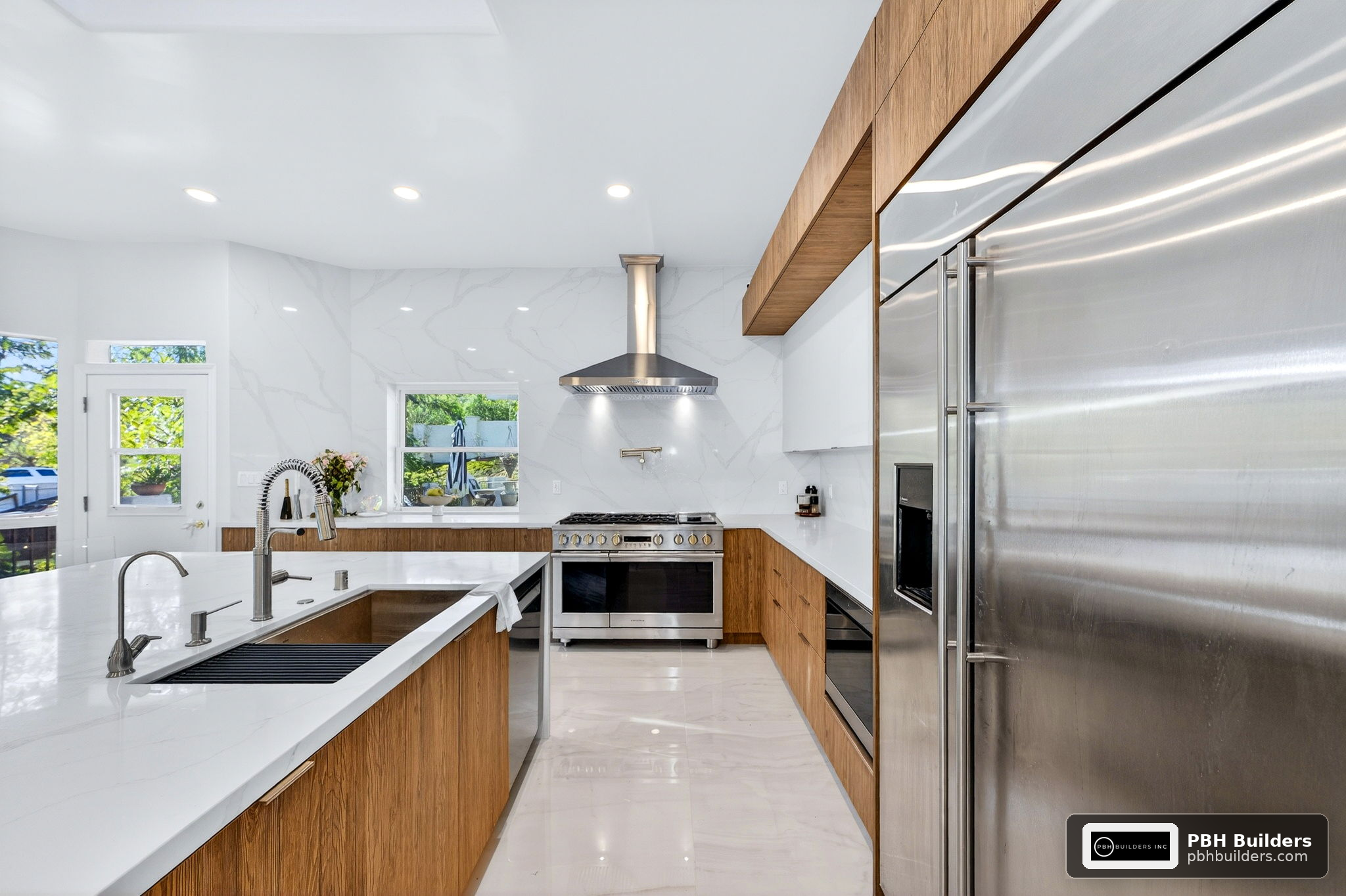
The NKBA 2026 Kitchen Trends Report found that 59% of design professionals say wood grain finishes are actively overtaking painted cabinetry, with white oak the single most requested species at 51%. That is a meaningful signal from the people specifying cabinets every day, not just a homeowner survey. At the same time, 24% of homeowners are now mixing two finishes in one kitchen, pairing a warm wood upper run with a darker or contrasting lower run or island.
None of this means white or painted cabinets are wrong choices. It means the range of good options has widened, and the decision now hinges more on durability, construction quality, and how a style will age than on chasing a single dominant trend.
What Are the Main Kitchen Cabinet Door Styles?
Door style drives most of the visual character of a kitchen, and it also affects cost, cleaning, and how easily you can update the look later. Shaker remains the most installed style in the country at 58% of projects, prized for its simple recessed panel and five-piece frame that works in traditional, transitional, and modern kitchens alike.
Flat-panel and slab doors hold 22% of installations today, but they are the style professionals expect to grow fastest, with 69% of design pros citing slab doors as the fastest-rising look, according to 2026 kitchen trend reporting from Realtor.com. Slab doors suit frameless, European-style cabinet boxes and read as clean and architectural, especially in handleless configurations.
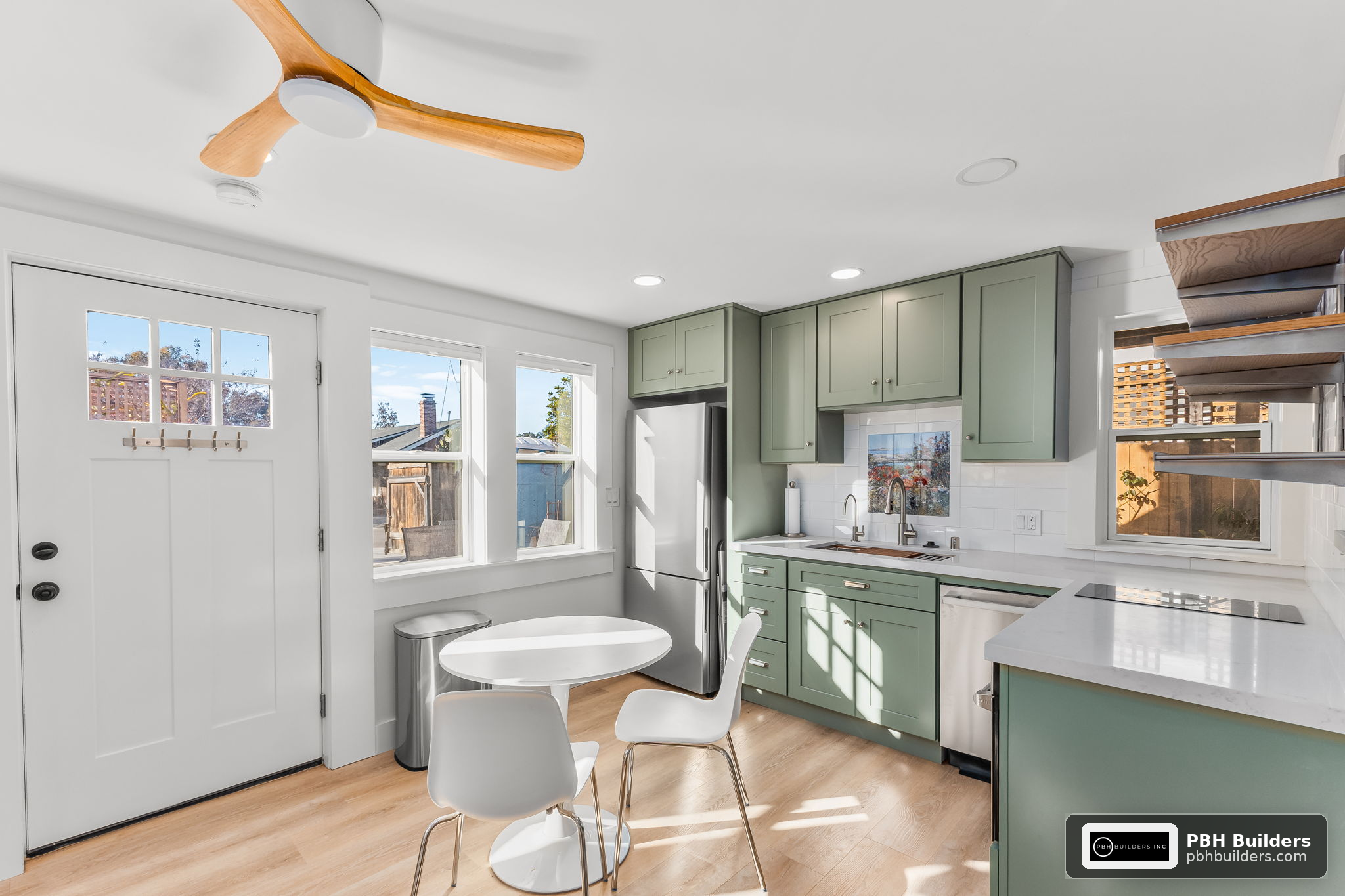
- Shaker: Recessed center panel, square edges, five-piece door. Versatile, timeless, easy to repaint later.
- Slim shaker: A narrower rail and stile version gaining traction as a softer, more refined take on the classic.
- Flat-panel/slab: A single flat surface, often with no visible frame. Modern, minimal, shows fingerprints more on gloss finishes.
- Inset: Doors sit flush inside the face frame rather than overlaying it. High-end look, requires tighter tolerances and more skilled installation.
- Beveled-edge: A subtle angled edge that adds dimension without full ornamentation.
- Raised-panel: Traditional, ornate profile, less common in new builds but still popular in classic and estate-style homes.
Texture is also creeping into door choice itself. Fluted, reeded, and gently curved fronts are showing up more often as accent elements, particularly on islands or a single run of cabinetry, adding depth without a full style overhaul.
What Cabinet Materials Actually Hold Up?
Style gets the attention, but material determines how the cabinets perform over the next fifteen to twenty-five years. The core options are solid wood, plywood, MDF, particleboard, veneer, laminate, and increasingly, thermofoil for budget-conscious frameless kitchens.
Solid wood offers the best combination of strength and repairability, since dents and scratches can often be sanded and refinished. It is also more sensitive to humidity swings, which matters in kitchens near dishwashers, sinks, and ranges. Plywood boxes with a hardwood or veneer face are the industry’s structural workhorse: they resist warping better than particleboard and hold screws more securely over time, a point long emphasized by cabinet manufacturing standards from groups like the Kitchen Cabinet Manufacturers Association.
MDF (medium-density fiberboard) has become the standard substrate for painted shaker doors because it holds a smooth, seamless painted finish better than real wood, which can show grain telegraphing through paint. Quality matters enormously here: furniture-grade MDF with moisture-resistant additives performs very differently than the cheapest big-box version.
| Material | Durability | Best For |
|---|---|---|
| Solid wood (oak, maple, cherry) | Excellent; refinishable, expands/contracts with humidity | Long-term homeowners, stained/natural finishes |
| Plywood box construction | Very good; resists warping and screw pull-out | Cabinet boxes in any style, high-moisture areas |
| Furniture-grade MDF (painted) | Good; smooth finish, prone to chipping at edges if struck | Painted shaker and flat-panel doors |
| Particleboard | Fair; heavier, weaker under moisture and stress | Budget builds, interior shelving only |
| Thermofoil/laminate | Fair to good; can peel or bubble near heat sources | Slab-style, high-humidity or rental properties |
Which Finishes and Colors Are Trending Now?
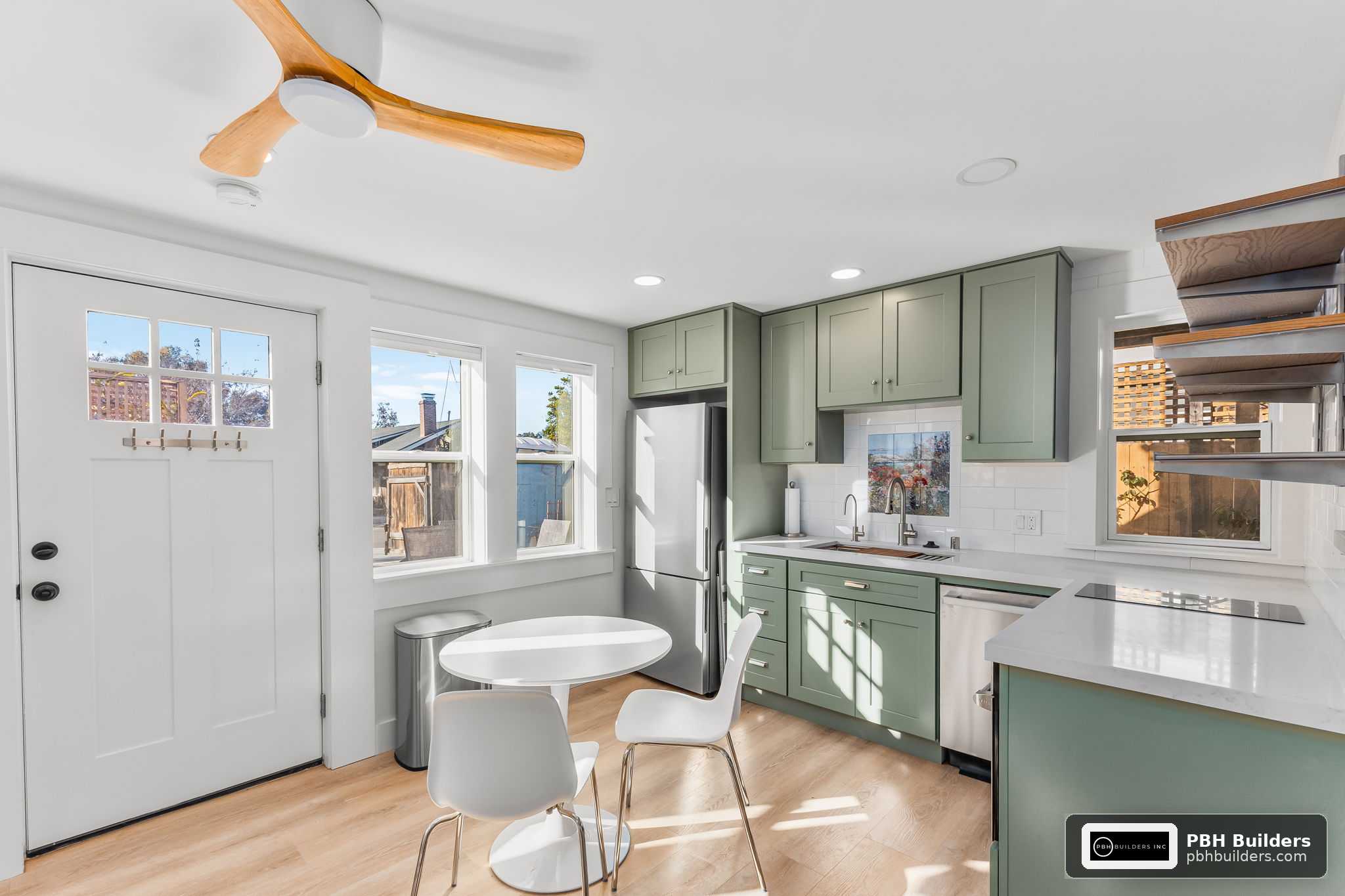
Wood veneers and natural wood finishes, especially white oak, are the clear headline material trend for 2026, backed by demand from both consumers and design professionals. Painted MDF and painted hardwood remain common for shaker and inset doors, particularly in muted, warm neutrals rather than the stark whites and cool grays that dominated the 2015 to 2022 period.
Color data from Houzz shows the scale of this shift: rust is up 178% year over year, chocolate brown up 153%, mushroom up 69%, olive up 57%, sage up 55%, taupe up 50%, and cream up 44%. Green has also quietly overtaken gray as the leading non-neutral cabinet color in some 2026 breakdowns, at 6% versus 5%, a detail highlighted in coverage from Homes & Gardens’ 2026 cabinet trend analysis.
Sheen level matters as much as color. Matte and soft-sheen finishes are now favored over high-gloss lacquers because they read as more natural, hide fingerprints better, and pair more convincingly with textured elements like fluted panels or reeded glass. Handleless cabinetry, typically built on frameless European systems, is also strongly associated with this more architectural, matte-forward look, as detailed in guidance from Kitchen Cabinet Kings’ overview of cabinet types.
Framed vs. Frameless: Which Construction Should You Choose?
Beyond door style, cabinet boxes come in two structural families, and this choice affects everything from interior storage space to hardware options.
- Framed (traditional American): A face frame adds structural rigidity and a classic look, but reduces interior opening width slightly and typically requires overlay or inset doors.
- Frameless (European/full-access): The box itself provides rigidity via thicker panel material, giving roughly 10% more interior storage access and a cleaner look that suits flat-panel doors and handleless hardware.
Frameless construction is a major reason flat-panel and slab doors are rising in popularity, since the two systems were essentially designed for each other. Framed construction, meanwhile, remains the more forgiving and often more budget-friendly path for inset or raised-panel traditional styles.
What Do Kitchen Cabinets Cost and Why?
Cabinet pricing varies enormously based on material, construction method, door style complexity, finish, hardware, and whether cabinets are stock, semi-custom, or fully custom. As a rough framework, full kitchen cabinetry packages commonly range from $5,000 to $50,000 or more, with fully custom inset cabinetry in premium wood species reaching well beyond that on larger kitchens.
Lead time: Days to a few weeks
Best for: Tight budgets, rentals, quick flips
Lead time: 4 to 8 weeks
Best for: Most full kitchen remodels
Lead time: 8 to 16+ weeks
Best for: Unique layouts, high-end finishes, longevity
Several factors push costs up or down within these ranges: solid wood versus MDF, inset versus overlay doors, soft-close hardware upgrades, interior organization systems, and the complexity of your kitchen’s layout, including islands, angled walls, or ceiling-height uppers. Pricing varies based on your specific project, so the most reliable way to budget accurately is to get a detailed, itemized quote rather than relying on a generic per-linear-foot number.
What Red Flags Should You Watch for When Buying Cabinets?
Not every cabinet quote or showroom sample tells the full story. A few warning signs are worth taking seriously before you sign a contract.
- Vague material specs. If a quote just says “wood” or “engineered wood” without naming the species, box material, and door material separately, ask for specifics in writing.
- No warranty on boxes vs. doors. Reputable manufacturers typically offer different warranty terms for cabinet boxes and door fronts; a supplier who can’t explain the difference is a caution sign.
- Unusually fast lead times on custom work. Genuine custom cabinetry takes weeks, not days. Extremely fast turnaround on “custom” orders often means they are relabeled stock units.
- Particleboard boxes marketed as premium. Particleboard has its place in budget builds, but it should never be priced or presented as equivalent to plywood construction.
- No mention of moisture protection near sinks and dishwashers. Ask specifically how the toe kick and lower cabinet base near wet zones are protected.
What Questions Should You Ask Your Cabinet Supplier?
A short, direct conversation upfront saves months of frustration later. Bring these questions to any cabinet consultation.
- What is the box material, and is it plywood, MDF, or particleboard?
- Is this framed or frameless construction, and how does that affect door style options?
- What door and finish warranty do you offer, and does it cover moisture damage?
- What is the realistic lead time from order to installation, including any custom finish work?
- Can I see a physical sample of the exact finish and sheen, not just a photo or digital rendering?
- How is hardware (hinges, soft-close mechanisms, drawer slides) rated, and what’s the expected lifespan?
- What happens if a panel warps or a finish fails within the first two years?
People Also Ask
What is the most durable kitchen cabinet material?
Plywood cabinet boxes paired with solid wood or high-quality veneer doors generally offer the best long-term durability, resisting warping and holding hardware more securely than particleboard or standard MDF over 15 to 25 years of daily use.
Are wood cabinets more popular than white cabinets in 2026?
Yes, according to the 2026 Houzz U.S. Kitchen Trends Study, wood-toned cabinets reached 29% of renovations, narrowly surpassing white at 28% for the first time on record.
What cabinet door style is most popular right now?
Shaker remains the most installed door style at 58% of projects, though flat-panel and slab doors are growing fastest, with 69% of design professionals naming slab as the top rising trend.
Is MDF or plywood better for kitchen cabinets?
Plywood is generally stronger and more moisture-resistant for cabinet boxes, while furniture-grade MDF is preferred for painted door fronts because it produces a smoother, seamless painted finish without visible wood grain.
What is the difference between framed and frameless cabinets?
Framed cabinets have a face frame for added rigidity and a traditional look, while frameless (European-style) cabinets offer roughly 10% more interior storage access and suit modern flat-panel and handleless designs.
Frequently Asked Questions
How much of my remodel budget should go to cabinets?+
Cabinets typically consume 30% to 40% of a full kitchen remodel budget since they combine materials, custom fabrication, and installation labor. Pricing varies based on your specific project, layout complexity, and material choices, so a detailed quote is the most accurate way to budget.
What wood species is most requested for cabinets in 2026?+
White oak is the most requested species according to the NKBA 2026 Kitchen Trends Report, cited by 51% of design professionals, thanks to its warm, medium tone and versatile grain pattern.
Should I choose two-tone cabinets or a single finish?+
Two-tone kitchens, often a wood or neutral upper paired with a darker island or lower run, are now used in 24% of remodels and add visual interest without overwhelming the space. A single finish is often more timeless and easier to match if you extend cabinetry later.
Do matte cabinet finishes show fewer fingerprints than gloss?+
Yes, matte and soft-sheen finishes generally hide fingerprints, water spots, and minor scuffs better than high-gloss lacquer, which is one reason designers favor them for slab and flat-panel doors in busy kitchens.
How long do quality kitchen cabinets typically last?+
Well-built cabinets with plywood boxes and solid wood or quality veneer doors commonly last 20 to 25 years or more with proper care, while lower-grade particleboard or thin laminate cabinets may need replacement within 10 to 15 years.
Is it worth paying more for custom cabinets over stock?+
Custom cabinets make sense for unique layouts, premium materials, or long-term homeowners who want exact fit and finish control. For simpler layouts or shorter-term ownership, semi-custom often delivers most of the visual benefit at a lower cost.
Key Takeaways
- Wood-toned cabinets (29%) have overtaken white (28%) nationally for the first time, per the 2026 Houzz U.S. Kitchen Trends Study.
- White oak is the most requested wood species among design professionals at 51%, reflecting a broader shift toward warm, natural tones.
- Shaker doors still lead actual installations at 58%, but flat-panel/slab styles are rising fastest and pair naturally with frameless construction.
- Plywood boxes and solid wood or quality veneer doors offer the best long-term durability; particleboard should never be priced as a premium material.
- Two-tone kitchens (24% of remodels) and matte, textured finishes like fluted or reeded panels are key ways designers are adding warmth in 2026.
- Cabinet costs commonly range from $5,000 to $50,000+ depending on material, construction, and customization, so always request a detailed, itemized quote.
- Ask suppliers directly about box material, warranty terms, and moisture protection before signing, since vague specs are a common red flag.
Choosing the right kitchen cabinet styles and materials is ultimately about matching your household’s real habits, budget, and timeline to a construction method and finish that will still look and function well a decade from now. If you’re planning a kitchen remodel and want a straightforward, itemized breakdown of options for your specific space, PBH Builders can walk you through material samples, door styles, and a custom quote built around your kitchen, not a generic price list. Reach out today to schedule a consultation and get pricing tailored to your project.