Quick Answer
Kitchen countertop options and prices vary widely, from roughly $10 to $40 per square foot for laminate up to $75 to $250 per square foot for premium marble, with granite, quartz, and solid surface generally landing between $40 and $200 per square foot installed. The right choice depends on your budget, how hard you use your kitchen, and how much maintenance you’re willing to do, so pricing varies based on your specific project scope and material selection.
Here’s a number that surprises most homeowners: the average installed countertop price across all materials hit $72 per square foot in 2026, up 14% from just $63 per square foot in 2023. That’s a fast jump for a single kitchen component, and it explains why so many remodel budgets get blown before cabinets are even finished. Understanding kitchen countertop options and prices before you start shopping is the single best way to avoid sticker shock and choose a material that actually fits how you cook, clean, and live.
Countertops routinely eat up 10 to 15% of a full kitchen remodel budget, sometimes more if you choose an exotic slab or intricate edge profile. This guide breaks down what actually drives that cost, compares the major materials side by side, and explains where the smart money goes in 2026.
What Drives Kitchen Countertop Cost?
Countertop pricing isn’t just about the material itself. Four factors combine to determine your final invoice: raw material cost, fabrication complexity, edge and finish selection, and installation labor in your local market. A basic laminate sheet and a book-matched exotic quartzite slab can differ by 20x per square foot before labor is even added.
Square footage matters too, but not in a simple linear way. Smaller kitchens often pay a higher effective rate per square foot because fabricators have minimum job charges, and larger islands or waterfall edges add cutting and finishing time regardless of total area. According to HomeAdvisor’s countertop cost breakdown, sink cutouts, seams, and specialty edges are among the most common line items that push a quote higher than a homeowner initially expected.
Location also plays a real role. Slab availability, local fabricator competition, and delivery distance from quarries or manufacturing plants all shift pricing. A material that’s affordable in one region may carry a premium in another simply due to shipping and supply.
What Do Different Countertop Materials Cost?
Below is a snapshot of typical 2026 installed pricing by material. These are wide ranges because fabrication complexity, slab grade, and regional labor rates all shift the final number, so pricing varies based on your specific project and finish selections.
| Material | Typical Installed Range | Known For |
|---|---|---|
| Laminate | $10–$40/sq ft | Lowest cost, modern designs |
| Ceramic Tile | $20–$80/sq ft | Budget-friendly, DIY-friendly |
| Butcher Block | $40–$100/sq ft | Warm look, great for islands |
| Solid Surface | $40–$80/sq ft | Seamless look, moderate cost |
| Granite | $40–$200/sq ft | Durable natural stone |
| Quartz | $50–$200/sq ft | Low maintenance, no sealing |
| Concrete | $65–$135/sq ft | Custom shapes, modern styling |
| Quartzite | $70–$200/sq ft | Premium, very hard natural stone |
| Marble | $75–$250/sq ft | Luxury look, higher upkeep |
For context, a standard 30 square foot kitchen can run anywhere from around $450 to $1,200 for laminate, $1,200 to $3,000 for granite, or $1,500 to $3,600 for quartz, according to pricing data compiled by RenoQuotes’ kitchen countertop pricing guide. Other industry snapshots, including the 2026 Slab OS countertop pricing report, show similarly wide bands depending on slab grade and regional labor.
How Does Durability Affect the Real Cost Over Time?
The cheapest material upfront isn’t always the cheapest material over a 15 to 20 year kitchen lifespan. Laminate is affordable and DIY-friendly, but it can chip, scorch, and delaminate at seams, often requiring replacement well before stone or quartz counterparts. Butcher block needs regular oiling and is vulnerable to water damage near sinks.
Quartz has become a favorite precisely because it skips the sealing and resealing that natural stone requires while resisting stains, scratches, and bacteria growth better than most alternatives. Granite and quartzite are extremely hard and heat-resistant but do need periodic sealing to prevent staining. Marble, despite its premium price, is the softest and most porous of the natural stones, meaning it etches from acidic foods and requires the most careful maintenance.
Budget-focused guidance increasingly emphasizes that price alone shouldn’t be the deciding factor, since durability, maintenance demands, and installation complexity often matter more across the countertop’s actual service life, a point echoed in cost analyses from Block Renovation’s countertop replacement cost guide.
Budget vs. Premium: Which Material Makes Sense?
Not every kitchen needs a $150 per square foot slab, and not every budget kitchen needs to look budget. Here’s how the tiers generally break down.
Price: $10–$80/sq ft
Best for: Rentals, quick flips, tight budgets
Price: $40–$100/sq ft
Best for: Most full kitchen remodels
Price: $50–$200/sq ft
Best for: Long-term homes, high-use kitchens
Price: $75–$250/sq ft
Best for: Statement kitchens, resale-focused luxury homes
Several 2026 trend reports point to quartz as the standout “value” material, since it delivers a premium, stone-like appearance with minimal maintenance and wide availability across fabricators, a trend confirmed in analysis from Slabwise’s 2026 countertop trends guide. If you want the look of natural stone without the sealing schedule, quartz is usually the answer.
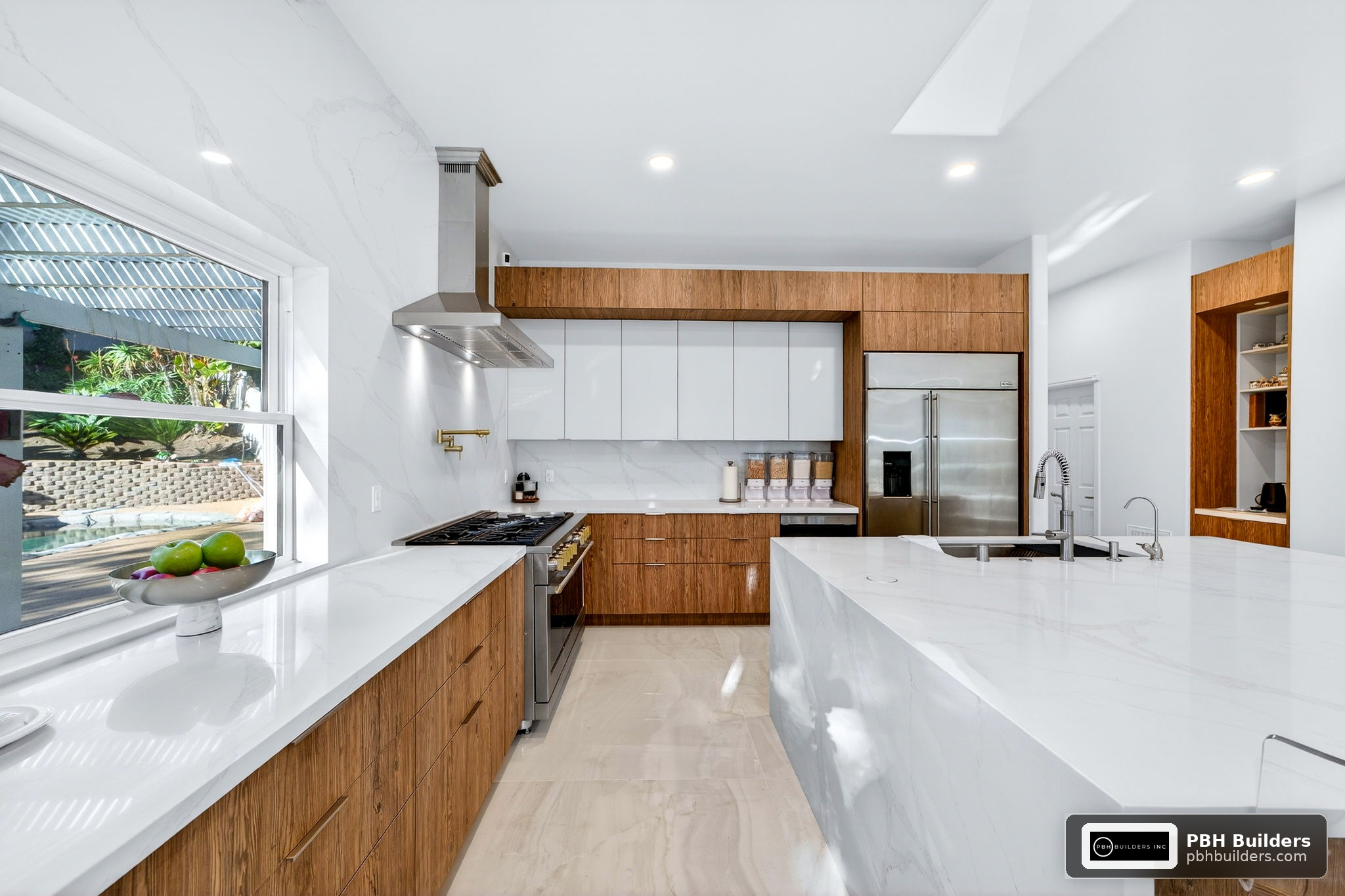
How Do Installation and Fabrication Affect the Final Price?
Material cost is only part of the equation. Fabrication, which includes cutting, edging, polishing, and cutouts for sinks and cooktops, can add substantially to the final price. Simple straight edges cost less than ogee, bullnose, or waterfall edges, which require more skilled labor and time.
Removal of old countertops, plumbing disconnection and reconnection, and structural support for heavy stone slabs are also common add-ons that homeowners forget to budget for. Granite and quartzite slabs, in particular, are heavy enough that cabinets sometimes need reinforcement before installation. For a full picture of these line items, TMG Stone Design’s countertop cost guide breaks down how fabrication complexity shifts final quotes.
Because so many variables stack on top of the base material price, the most reliable way to know your real number is a detailed, on-site quote rather than a generic per-square-foot estimate pulled from an online calculator.
What Countertop Trends Matter for 2026?
The global countertops market is valued at an estimated $161.23 billion in 2026, reflecting sustained renovation and new-build demand, according to market research from Mordor Intelligence’s countertops market report. That growth is fueling more material choice, faster fabrication turnaround, and increasingly realistic laminate and quartz patterns that mimic natural stone at a fraction of the price.
Laminate is also trending upward in design quality, with manufacturers producing textured, matte, and stone-look finishes that look far more premium than laminate did even five years ago. This makes laminate a smarter budget play for homeowners who want style without the natural stone price tag. Meanwhile, quartzite and concrete continue gaining ground with homeowners who want a one-of-a-kind, high-end look for a statement island or full kitchen renovation.
- Average installed countertop pricing rose 14% between 2023 and 2026, from $63 to $72 per square foot.
- Laminate remains the most budget-friendly option at $10 to $40 per square foot, with vastly improved modern finishes.
- Quartz and granite dominate the mainstream market, typically landing between $40 and $200 per square foot depending on slab grade.
- Marble and premium quartzite sit at the top of the market, often $75 to $250 per square foot, reflecting rarity and fabrication difficulty.
- Fabrication, edge profiles, and cutouts can meaningfully change your final invoice beyond the base material price.
- Durability and maintenance costs should factor into your decision as much as the upfront price per square foot.
- Getting a custom, on-site quote is the only reliable way to know your true project cost, since pricing varies based on your specific kitchen layout and material selection.
People Also Ask
What is the cheapest kitchen countertop material?
Laminate is generally the cheapest option, running about $10 to $40 per square foot installed. Ceramic tile is another budget-friendly choice, though it requires more grout maintenance over time.
Is quartz or granite better for a kitchen countertop?
Quartz requires no sealing and resists stains and bacteria better than granite, making it lower maintenance overall. Granite offers unique natural veining and excellent heat resistance but needs periodic resealing to stay stain-resistant.
How much does it cost to redo countertops in a 30 square foot kitchen?
Costs for a 30 square foot kitchen can range from roughly $450 for laminate up to $3,600 for higher-end quartz, depending on material grade and fabrication complexity. Pricing varies based on edge style, cutouts, and local labor rates, so a custom quote is the most accurate way to plan.
Which countertop material lasts the longest?
Quartzite and quartz are among the most durable options, resisting scratches, heat, and daily wear extremely well over decades of use. Granite is also highly durable, while laminate and butcher block typically have shorter functional lifespans.
Frequently Asked Questions
What is the average price per square foot for kitchen countertops?+
The average installed countertop price across all materials was reported at $72 per square foot in 2026. However, actual cost depends heavily on the material chosen, ranging from around $10 per square foot for laminate to $250 per square foot for premium marble.
Do I need to seal my countertops every year?+
Most natural stone countertops, including granite and marble, need resealing roughly once a year to maintain stain resistance. Quartz and solid surface countertops are engineered materials and never require sealing.
Why do countertop prices vary so much between quotes?+
Countertop pricing depends on slab grade, edge profile, cutouts, removal of old materials, and local labor costs, all of which vary project to project. Two kitchens of the same square footage can receive very different quotes based on layout complexity and material selection alone.
Is butcher block a good countertop choice for a whole kitchen?+
Butcher block works well for islands and accent areas but is less ideal near sinks or wet zones due to water sensitivity. Many homeowners mix materials, using butcher block for an island and a more water-resistant material like quartz for the main perimeter.
How can I get an accurate quote for my kitchen countertop project?+
The most accurate way is an in-person or virtual consultation where a professional measures your space, discusses material preferences, and factors in edge style and cutouts. Online calculators offer a rough starting point, but pricing varies based on your specific project scope and finish choices.
Are cheaper countertop materials worth it for a rental or flip?+
For rentals and quick flips, laminate or tile often make financial sense since they minimize upfront investment while still offering a clean, updated look. For a forever home, investing in a more durable material like quartz or granite typically pays off over the countertop’s lifespan.
Choosing between kitchen countertop options and prices ultimately comes down to matching material performance to how you actually use your kitchen, not just chasing the lowest per-square-foot number. Whether you’re weighing budget-friendly laminate, workhorse granite, or a premium quartzite slab, getting a detailed, on-site estimate is the only way to know your true cost. Reach out to PBH Builders for a custom countertop quote tailored to your kitchen’s layout, style, and budget.