How to Choose the Right Material for the Surface You’ll Use Every Day
| QUICK ANSWER Countertops are one of several elements that come together in a kitchen remodel, alongside layout, cabinetry, backsplash, lighting, and flooring, and the right material depends on how the space will be used rather than color alone. Engineered quartz offers the most consistent, low maintenance option for busy kitchens, granite and quartzite are the strongest choices for heat and scratch resistance, and marble delivers a classic look but needs regular sealing and careful use. Since countertops touch cabinetry, sinks, and backsplash directly, they are worth planning alongside those elements rather than choosing in isolation. |
Countertops Are One Piece of a Larger Project
A kitchen remodel is really a set of interconnected decisions. Layout determines how the space flows, cabinetry sets the storage and style foundation, and finishes like countertops, backsplash, lighting, and flooring tie everything together. Because these elements touch each other directly, a strong kitchen remodel treats them as a coordinated plan rather than a list of separate purchases.
Countertops sit at the center of that plan more than most people expect. They meet the cabinetry at every edge, frame the sink and faucet, anchor the backsplash material, and take more daily wear than almost any other surface in the kitchen. This guide focuses on countertops specifically, as one part of the broader remodel, and looks at how the material decision connects back to the rest of the project.
Where Countertops Fit Among the Other Elements
| Kitchen Remodel Element | What It Covers | How It Connects to Countertops |
| Layout | Work triangle, island placement, traffic flow | Determines counter length, corner treatments, and island top size |
| Cabinetry | Storage, door style, wood tone or paint color | Sets the color and style palette the countertop needs to complement |
| Countertops | Material, edge profile, slab selection | Covered in depth in this guide |
| Backsplash | Tile or slab material behind the counter | Often pulls colors or veining directly from the countertop choice |
| Sink and faucet | Style, mount type, finish | Undermount sinks require a nonporous, finished counter edge |
| Lighting | Under-cabinet and pendant lighting | Reflective countertop finishes change how task lighting reads |
| Flooring | Material and color underfoot | Grounds the palette that cabinetry and countertops build on |
Why the Material Choice Matters More Than Color
Every countertop material can look beautiful in a showroom. The differences show up years later, in how well a surface resists staining, whether it needs periodic sealing, and how it holds up to the specific cooking and cleaning habits of the household using it. Choosing a material based only on color or pattern, without considering how it performs day to day, is one of the most common regrets homeowners share after a kitchen remodel is finished.
Comparing the Leading Countertop Materials
| Material | Heat Resistance | Stain Resistance | Maintenance | Best For |
| Engineered Quartz | Good, avoid direct hot pans | Excellent, nonporous | Low, no sealing needed | Busy kitchens, consistent look |
| Granite | Excellent | Good with sealing | Moderate, reseal periodically | Kitchens, heat heavy cooking |
| Quartzite | Excellent | Good with sealing | Moderate, reseal periodically | High traffic kitchens, natural stone look |
| Marble | Good | Fair, prone to etching | High, frequent sealing and care | Baking stations, low acid use |
| Soapstone | Excellent | Good, self-healing surface | Moderate, occasional oiling | Farmhouse and traditional styles |
| Butcher Block | Poor, avoid direct heat | Fair, needs sealing | High, oiling and sanding | Islands, secondary prep surfaces |
| Laminate | Poor | Fair | Low | Budget friendly kitchens |
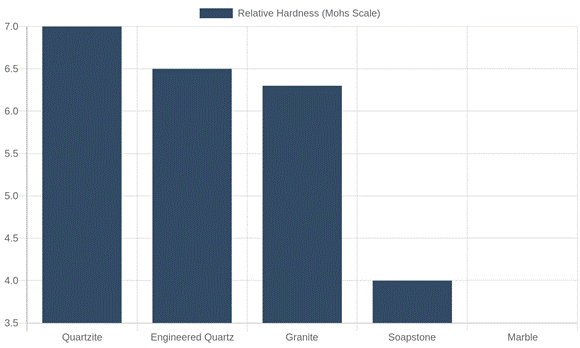
Hardness ratings on the Mohs scale for common countertop stones. Higher numbers generally resist scratching better, though sealing and daily care still matter for stain resistance.
A Closer Look at Each Material
Granite
Granite has been the standard for premium kitchens for decades because it combines natural beauty with genuine heat and scratch resistance. Every slab is unique, since it is quarried stone rather than a manufactured product, which appeals to homeowners who want one of a kind veining. Granite is porous and needs periodic sealing to stay stain resistant, typically once a year depending on the specific stone and how it is used.
Engineered Quartz
Engineered quartz is manufactured from crushed quartz combined with resins, which makes it nonporous and far more consistent in pattern than natural stone. It resists staining without sealing, handles daily kitchen use well, and comes in a wide range of colors including patterns designed to mimic marble. The tradeoff is less heat tolerance than granite or quartzite, so trivets are recommended for hot cookware.
Quartzite
Not to be confused with engineered quartz, quartzite is a natural stone that forms from sandstone under heat and pressure. It ranks among the hardest countertop materials available and holds up extremely well to heat and scratching, while offering a look similar to marble. Quality varies significantly between suppliers, so verifying the exact stone with a fabricator matters more with quartzite than with most other materials.
Marble
Marble remains a classic choice for a timeless, elegant look, especially for a baking centric kitchen where its naturally cool surface helps with pastry work. It is softer and more porous than granite or quartzite, which makes it prone to etching from citrus, wine, and vinegar. Homeowners who choose marble typically accept a certain amount of patina developing over time as part of its character.
Soapstone
Soapstone has a soft, matte surface that darkens and develops a natural patina with mineral oil treatments over time. It resists heat and does not require sealing in the traditional sense, though periodic oiling keeps its color even. It fits especially well in farmhouse and traditional kitchen designs.
Butcher Block and Laminate
Butcher block brings warmth and a natural material to a kitchen, often used on an island as a secondary surface rather than the primary counter, since it needs regular oiling and is vulnerable to heat and knife marks. Laminate remains a practical, budget conscious option for secondary spaces or kitchens with lighter use, and pairs well with a simpler cabinetry package.
Matching Countertops to Cabinetry, Sinks, and Backsplash
Countertop selection works best when it is planned alongside cabinetry rather than after. Darker cabinets tend to pair well with lighter countertop veining, while lighter or refinished cabinets can support bolder stone patterns. If your cabinets are structurally solid but the finish feels dated, our cabinet refinishing services are worth exploring alongside a new countertop, since updating both together creates a cohesive result.
Sink style also affects material choice. Undermount sinks, which are common in granite, quartzite, and quartz installations, need a nonporous edge that will not degrade from constant water exposure, which is part of why laminate is rarely paired with an undermount configuration. Backsplash material is often the easiest element to coordinate last, since many homeowners either continue the countertop material a few inches up the wall or choose a tile that pulls one color out of the stone’s veining.
Sequencing Countertops Within the Full Remodel
Countertops are typically templated only after cabinetry is installed, since fabricators need exact, in place cabinet dimensions to cut slabs correctly. That means countertop selection needs to happen early in the design process, even though installation happens later in the build. Choosing the material during the same conversation as cabinetry and layout, rather than after cabinets are already ordered, avoids the common scenario where a homeowner falls in love with a stone that no longer fits the finalized cabinet color or budget.
Where This Fits Into Your Kitchen Remodel
This guide is one part of a full kitchen remodel, alongside layout, cabinetry, and finish decisions covered in our broader guide to kitchen remodeling in San Diego. For more on current design direction across all these elements, see our roundup of 2026 kitchen remodeling trends.
The same material considerations apply to vanity tops in a bathroom remodeling project, where moisture resistance and easy cleaning tend to matter most. To see how countertops fit alongside cabinetry, layout, and every other part of a full kitchen project, visit our complete list of construction and remodeling services.
Frequently Asked Questions
Is engineered quartz the same as natural quartzite?
No. Engineered quartz is a manufactured product made from crushed quartz and resin, while quartzite is a natural stone formed from sandstone. They can look similar but perform differently, particularly around heat resistance and pattern consistency.
Do all natural stone countertops need to be sealed?
Most porous natural stones, including granite, marble, and quartzite, benefit from periodic sealing to resist staining. Engineered quartz does not require sealing because it is nonporous by design.
Should I choose countertops before or after cabinets?
Choose the general material and color direction at the same time as cabinetry, since the two need to complement each other. The final countertop template happens after cabinets are physically installed, but the decision itself should be made earlier in the design process.
Can two different countertop materials be used in the same kitchen?
Yes, this is a common design choice. A durable material like quartz or granite on the main counters paired with butcher block on an island gives a kitchen both practicality and visual variety.
How do I know if a countertop material will match my existing or planned cabinets?
Bringing a cabinet door sample or photo to a slab selection appointment is the most reliable way to see how veining, color, and undertones will look together before committing to a material.
Ready to Plan Your Kitchen Remodel?
Whether you are focused on countertops or planning a full kitchen renovation from layout to lighting, our team can help you see how each element works together. Contact PBH Builders to schedule a consultation, or visit our FAQ page to learn more about how we plan and sequence remodeling projects.