Why Kitchen Workflow is the Foundation of Great Design
An efficient kitchen layout design creates a space where cooking, cleaning, and socializing flow smoothly, eliminating wasted steps and frustration. Here’s what makes a kitchen truly efficient:
Key Elements of an Efficient Kitchen:
- Strategic Work Zones – Organize your kitchen into distinct areas for food storage, prep, cooking, cleaning, and serving.
- Smart Appliance Placement – Position your sink, refrigerator, and cooktop to minimize walking distance (typically 4-9 feet apart).
- Adequate Aisle Space – Maintain at least 42-48 inches between opposite counters for comfortable movement.
- Sufficient Counter Space – Plan for a minimum of 36 inches of uninterrupted prep area, plus landing zones near appliances.
- Clear Traffic Paths – Keep main walkways outside your primary work area to prevent interruptions.
While aesthetics are important, the secret to a great kitchen is how it works. A beautiful but impractical kitchen makes cooking a chore, whereas an efficient design can save hours of unnecessary movement each week.
Creating an efficient layout doesn’t require a massive space or budget. The core principles, from the classic “work triangle” to modern “work zones,” apply to any kitchen, whether it’s a compact galley or a spacious open-plan design. These proven strategies work for any household.
This guide will show you how to design a kitchen layout that makes meal prep faster, cleanup easier, and entertaining more enjoyable, all custom to your space and lifestyle.
Simple Efficient kitchen layout design glossary:
Foundations of Kitchen Workflow: From Triangles to Zones
Imagine a kitchen where every move feels intuitive and cooking becomes a dance, not a marathon. That’s the goal of an efficient kitchen layout design. It’s about minimizing wasted steps and creating a seamless flow for all kitchen tasks. This concept has evolved from early 20th-century efficiency studies to meet modern demands.
Historically, research from the U.S. Department of Agriculture (USDA) aimed to reduce kitchen labor. Studies on “step-saving principles” led to organizing kitchens into distinct work centers, laying the groundwork for the famous “working triangle” concept.
As kitchens transformed from utilitarian spaces into social hubs, a new approach emerged: the “work zone” method. This contemporary strategy better accommodates multiple cooks and diverse activities, acknowledging that today’s kitchens are used for much more than just cooking.
The Classic ‘Working Triangle’: Still Relevant Today?
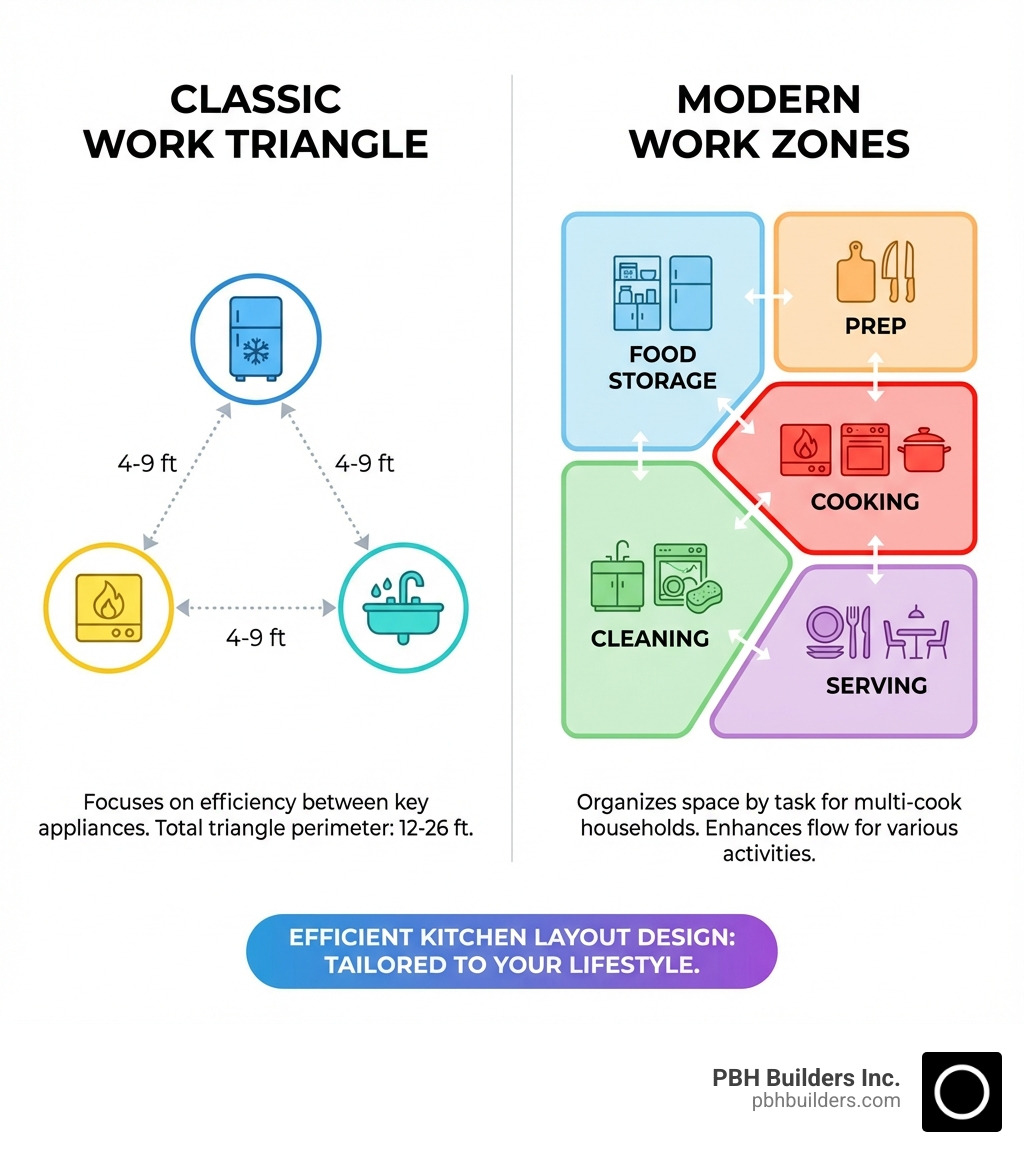
The ‘working triangle’ is a classic concept connecting the three main work points: the sink, the refrigerator, and the cooktop. The goal is to keep these elements relatively close to minimize steps for a single cook.
According to traditional guidelines, each leg of the triangle should be between 4 and 9 feet long, with the total perimeter no more than 26 feet. This provides enough workspace without creating excessive walking distances. Major traffic paths should not cross through the triangle, which prevents interruptions during meal prep. While the working triangle was designed for a single cook, it still serves as a valuable guideline for ensuring core appliance proximity. For more on optimizing your kitchen, check out our kitchen remodel planning guide.
The Modern ‘Work Zone’ Method
While the working triangle offers valuable insights, the ‘work zone’ method is a more flexible approach to efficient kitchen layout design for modern households. It organizes the kitchen into distinct, task-based areas or “zones,” allowing multiple people to work simultaneously without getting in each other’s way.
The key work zones typically include:
- Food Storage Zone: Includes the refrigerator, freezer, and pantry. It should be convenient for unloading groceries and accessing ingredients.
- Prep Zone: The main workspace for chopping and mixing, requiring at least 36 inches of uninterrupted counter space. It should be near the sink and cooking zone, with storage for prep tools.
- Cooking Zone: Centered on the cooktop and oven, this area needs landing space (at least 15 inches on each side) and storage for pots, pans, and utensils.
- Cleaning Zone: This zone revolves around the sink and dishwasher. It should contain cleaning supplies and the trash/recycling bin for easy cleanup.
- Serving Zone: Often near the dining area, this zone stores dishes, glasses, and cutlery for easy serving and setting the table.
The work zone method is adaptable to any lifestyle, creating an efficient kitchen that functions smoothly even with multiple cooks at work.
Choosing Your Blueprint: How Layouts Impact Efficiency
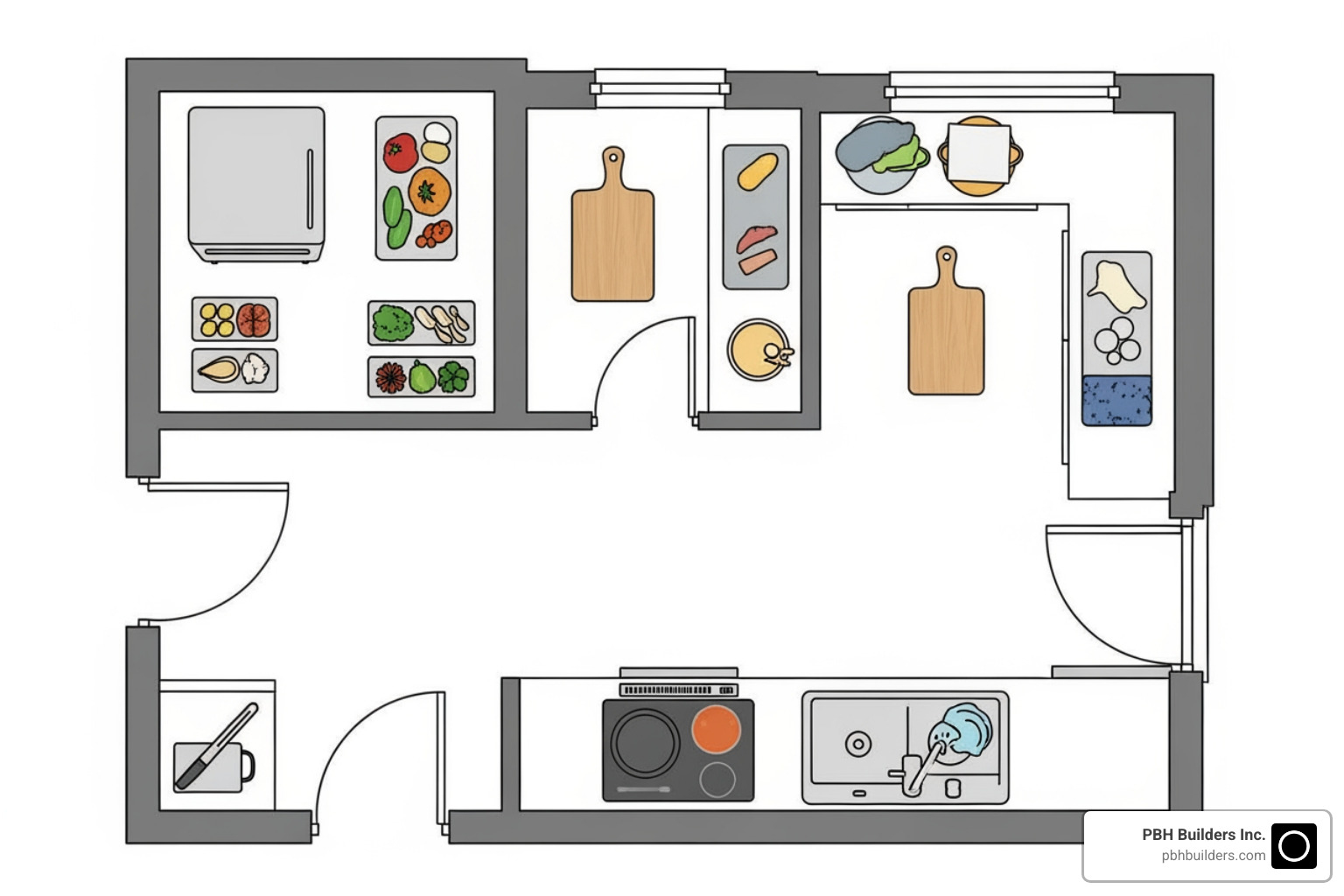
Your room’s size and shape are the biggest factors in choosing an efficient kitchen layout design. The goal is to maximize function and flow within your architectural constraints, considering elements like window placement for natural light. We also help clients decide between open-plan and closed kitchens. Open kitchens are social and feel spacious, while closed kitchens offer a contained, dedicated workspace. Understanding this choice is key to a successful design. For more design inspiration, explore our 7 Design Tricks to Elevate Your Kitchen Remodel.
Here’s a quick comparison of common layouts:
| Layout Type | Pros for Efficiency | Cons for Efficiency |
|---|---|---|
| L-Shape | Excellent work triangle; good for corner storage; adaptable for dining. | Can feel spread out in large spaces; corner cabinets can be tricky. |
| U-Shape | Maximizes counter and storage; ideal work triangle; great for one cook. | Can feel enclosed; not ideal for multiple cooks unless very large. |
| Galley | Highly efficient for one cook; ample counter space; compact. | Can be a traffic lane; feels narrow; limited social interaction. |
| Island | Adds prep/storage/seating; can define zones; good for multiple cooks. | Requires significant space; can obstruct traffic if not planned well. |
Choosing the Right Efficient Kitchen Layout Design for Your Space
Selecting the right layout depends on your unique needs and space. Here’s how different layouts can serve as the blueprint for an efficient kitchen layout design:
- L-shaped layout: Ideal for rectangular rooms, this layout uses two perpendicular walls, forming a natural work triangle and leaving space for a table or island. It’s flexible and social.
- U-shaped layout: Using three walls, this layout maximizes counter space and storage. It creates a highly efficient work triangle, often considered the most efficient for a single cook.
- Galley layout: Featuring two parallel walls with a walkway, this layout is perfect for narrow spaces. It’s very efficient for one cook, but consider using light colors to avoid it feeling enclosed.
- Single-wall layout: The ultimate space-saver, this layout places everything on one wall. It’s ideal for studios or open-concept living where the kitchen needs to blend in.
- Island layout: An island can improve L- or U-shaped layouts, adding prep space, storage, and seating. It can house a sink or cooktop, becoming a social hub. A peninsula offers similar benefits in smaller spaces. Dive deeper into possibilities with our Custom Kitchen Island Designs.
Open vs. Closed Kitchens: Which is More Efficient?
The debate between open and closed kitchens comes down to lifestyle.
Open-plan kitchens, popular in San Diego, feel large and connected, letting in natural light. They’re great for socializing and supervising children. An open layout can improve traffic flow and allows for flexible work zones, often centered around an island. The downsides include visible mess and the spread of noise and cooking odors into adjacent living areas.
Closed kitchens provide a dedicated workspace, containing noise, odors, and mess. This creates a focused cooking environment and offers more wall space for cabinet storage. The best choice depends on your priorities. We help homeowners across the San Diego area weigh these factors to design a kitchen that perfectly suits their needs.
The Building Blocks of an Efficient Kitchen Layout Design
With a layout chosen, the details of appliance placement, storage, and traffic flow are next. These elements, guided by standards from the National Kitchen and Bath Association (NKBA), are crucial for turning a good plan into a great one. They are the unsung heroes of an efficient kitchen layout design.
Strategic Placement for Appliances and Sinks
Proper placement of major fixtures is paramount to an efficient workflow:
- Sink Placement: The sink is the most-used fixture and should be central to your work zone. Plan for ample counter space on both sides (e.g., 24-36 inches on one side, 18-30 on the other) for prep and dish stacking.
- Refrigerator Clearance: Ensure your refrigerator has clearance for its doors and at least 18 inches of adjacent counter space (“landing space”) for loading and unloading. Avoid placing it next to a heat source like a wall oven.
- Oven Placement: Consider oven door swings, especially for wall ovens. Models with French doors like this GE oven require extra side clearance. Placing an oven outside the traditional work triangle is acceptable if it improves overall workflow.
- Dishwasher Location: The dishwasher should be next to the sink for easy loading. Storing everyday dishes in adjacent cabinets or drawers makes unloading more efficient.
Thoughtful appliance placement is a cornerstone of every successful kitchen remodel. For more insights, explore our Expert Kitchen Remodeling in San Diego PBH Builders guide.
Maximizing Storage and Counter Space
Smart storage and ample counter space prevent chaos in even the most beautiful kitchen:
- Storage Optimization: Store items where you use them: prep tools in the prep zone, and pots near the cooktop. Use drawers and pull-outs instead of deep cabinets for better access. A detailed inventory, perhaps using a planning spreadsheet, can help optimize cabinet contents.
- Vertical Space: Use vertical space with wall cupboards, open shelving, or pot racks. Ensure at least 16 inches (about 40cm) of clearance between countertops and upper cabinets to avoid a cramped feel.
- Counter Space Planning: Plan for adequate counter space. Aim for at least 36 inches of uninterrupted prep space. Also, ensure at least 15 inches of landing space on both sides of your cooktop for safety and convenience.
Optimizing your cabinets and countertops is one of our specialties. Learn more with our Kitchen Cabinets San Diego services.
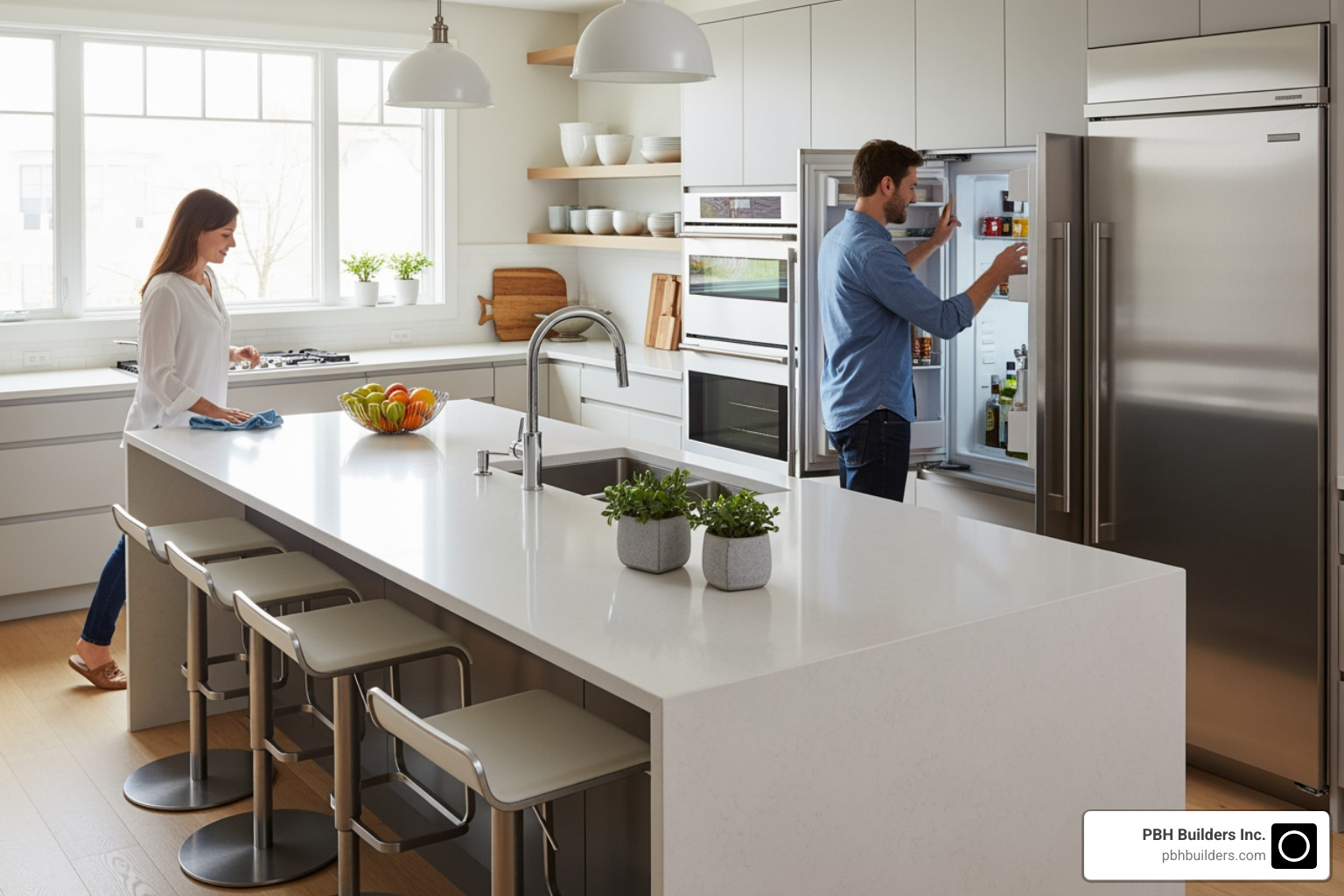
Aisle Space and Traffic Flow
Proper aisle space is critical to prevent bottlenecks and ensure a safe workflow, especially in busy households.
- Aisle Width Rules:
- Minimum: The absolute minimum aisle width is 36 inches (approx. 90cm).
- Standard: A 42-inch-wide (approx. 107cm) aisle is generally fine for a single cook.
- Optimal for Two Cooks: For two cooks, 48 inches (approx. 120cm) is best, especially around an island or in a galley kitchen.
- Traffic Flow: Divert household traffic around the main work zones, not through them. An island can help guide traffic. Also, account for the swing of appliance and cabinet doors, ensuring they don’t block pathways when open.
By adhering to these dimensions, we ensure your kitchen remains a joy to use, even during peak mealtime madness.
Planning and Fine-Tuning Your Perfect Kitchen
A truly efficient kitchen layout design adapts design rules to your specific lifestyle and cooking habits. This personal touch transforms a functional blueprint into a space that is uniquely yours.
A Practical Plan for Your Efficient Kitchen Layout Design
Here are the practical steps for planning your dream kitchen:
- Measure Your Space Accurately: Accurately measure your space, including walls, windows, doors, and utility locations. Precision is key to avoiding costly mistakes.
- Inventory Your Items: Inventory all your kitchen items to determine storage needs. A detailed list, like this planning spreadsheet, helps guide decisions on cabinet and drawer organization.
- Consider Your Cooking Habits and Lifestyle: Analyze your cooking habits. Do you need extensive prep space for gourmet meals, or a simple layout for quick reheating? Do you entertain often? Tailor the design to your specific activities.
- Plan Electrical Outlets and Switches: Plan for electrical outlets where you’ll use small appliances. Don’t overlook switches for under-cabinet and task lighting, as they are crucial for daily convenience.
- Consult Professionals: A professional designer from PBH Builders Inc. offers invaluable expertise. We help you steer complex decisions, optimize space, and ensure your design meets local San Diego building codes. We’re here to help turn your vision into reality.
The Role of Lighting and Ventilation
Lighting and ventilation are critical but often overlooked components of an efficient kitchen. They impact functionality, comfort, and safety.
- Lighting: A layered lighting approach is best for preventing shadows and reducing eye strain. This includes:
- Task Lighting: Focused illumination for work areas, like under-cabinet lights for counters or pendants over an island.
- Ambient Lighting: General overhead lighting that illuminates the entire room.
- Accent Lighting: Used to highlight features and make the space more inviting.
- Ventilation: Good ventilation is crucial for air quality. A powerful range hood removes smoke, grease, steam, and odors. The hood’s power (CFM) should match your range’s output. Proper ventilation keeps your kitchen cleaner and makes cooking more pleasant.
Investing in quality lighting and ventilation is an investment in your kitchen’s long-term efficiency. Find more ways to improve your kitchen’s functionality with our guide to Unlocking Your Kitchen’s Potential: A Guide to Kitchen Remodeling.
Frequently Asked Questions about Efficient Kitchens
We often get asked similar questions by homeowners in the San Diego area when they’re planning their kitchen remodels. Here are some of the most common ones:
What is the most efficient kitchen layout?
While it’s subjective, the U-shaped layout is often cited as most efficient for its compact work triangle that minimizes steps. Galley kitchens are also highly efficient for narrow spaces. For larger homes, an L-shaped layout with a well-placed island can be highly efficient for multiple cooks and work zones.
How much space do you need between a kitchen island and counter?
We recommend the following clearances for optimal traffic flow:
- Minimum: At least 42 inches (approx. 107 cm) for one person to move comfortably.
- Ideal for Two Cooks: 48 inches (approx. 120 cm) is best for high-traffic areas or kitchens with multiple cooks.
- Appliance Door Swing: Always factor in the swing of appliance doors to ensure they don’t block the pathway when open.
What is the biggest mistake in kitchen design?
The biggest mistake is prioritizing aesthetics over functionality and workflow. A beautiful but impractical kitchen leads to daily frustration. Common errors include:
- Ignoring Workflow: Not thinking through the natural progression of tasks (prep, cook, clean).
- Insufficient Counter Space: Especially in critical prep areas.
- Poor Lighting: Dark work areas are unsafe and cause eye strain.
- Wasted Storage: Inaccessible cabinets or not enough storage for your items.
- Poor Traffic Flow: Narrow aisles or pathways cutting through the main work area.
Conclusion
Designing an efficient kitchen layout design is about crafting a space that supports your life, making daily routines smoother. By applying principles from the classic work triangle to modern work zones, you can transform your kitchen into a hub of seamless activity.
The key is to prioritize functionality, optimize workflow, and tailor the design to your lifestyle. Thoughtful planning of appliance placement, storage, and traffic flow will dramatically improve your kitchen’s long-term value and your daily satisfaction.
At PBH Builders Inc., we bring expert craftsmanship and design excellence to homes across San Diego and surrounding communities like Chula Vista, Oceanside, and Encinitas. We create kitchens that are not only stunning but also incredibly efficient.
Ready to transform your kitchen into a perfectly orchestrated culinary space? Let’s start planning your kitchen renovation in Chula Vista, CA today!