Why Retaining Walls Are Essential for San Diego Properties
Retaining wall companies build structures that hold back soil, prevent erosion, and create usable outdoor spaces on sloped terrain. For San Diego’s hilly properties, retaining walls are often a structural necessity, changing unusable land into valuable patios, gardens, and more.
However, not all contractors are created equal. A properly engineered wall can last for generations, while a poorly built one can fail within a year, causing property damage and safety hazards. The difference lies in expertise, proper drainage, base preparation, and reinforcement.
When choosing a retaining wall company, prioritize:
- Licensing and Experience: Look for licensed contractors with 15+ years of specialized experience.
- Local Expertise: They should understand San Diego’s soil, codes, and permit requirements.
- Engineering Support: Access to structural engineers is crucial for walls over 4 feet.
- Material Knowledge: Proficiency with various systems like modular blocks, concrete, and stone.
- Portfolio and References: A strong portfolio demonstrates quality workmanship.
This guide covers everything from identifying the need for a wall to vetting specialized contractors who deliver lasting results.
Retaining wall companies vocab explained:
The Fundamentals: Why Your Property Might Need a Retaining Wall
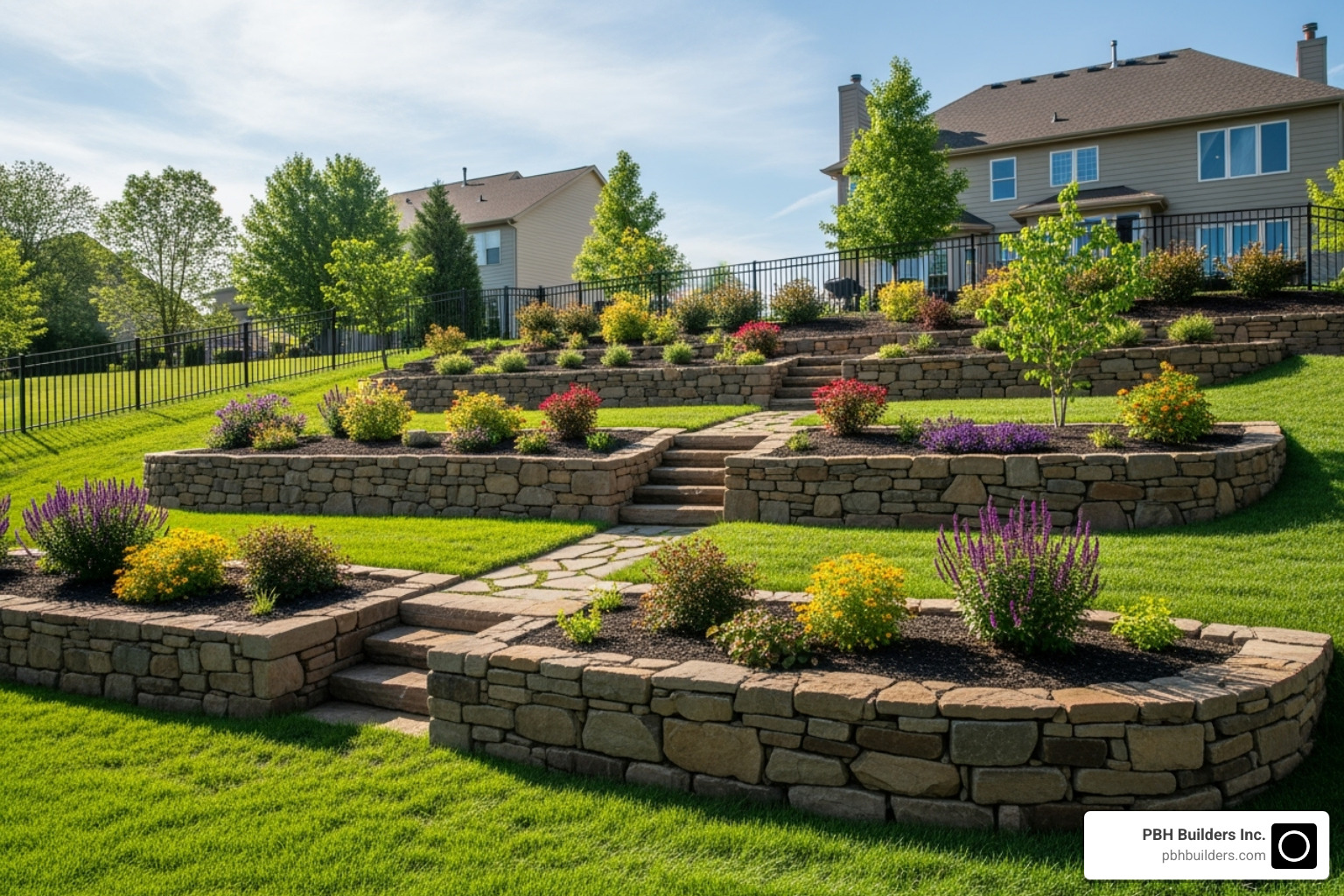
San Diego’s beautiful hillside properties often come with the challenge of sloped, unusable land. Retaining wall companies build hardworking structures that hold back soil and solve common property issues.
Key reasons you might need a retaining wall:
- Soil Erosion Control: A wall acts as a permanent barrier, stopping your hillside from washing away during heavy rains and keeping valuable topsoil in place.
- Creating Usable Space: The primary benefit is turning a steep incline into level tiers. This maximizes usable land, creating flat areas for patios, gardens, or even parking.
- Water Management: Strategically placed walls can manage flood and water runoff, redirecting flow away from your home’s foundation and other vulnerable areas.
- Improved Property Value: A professionally installed retaining wall is a significant hardscaping feature that adds curb appeal and real financial value. You can see examples in our Retaining Wall Projects by PBH Builders.
Freestanding vs. Retaining Walls
It’s crucial to understand the difference between wall types to ensure you get the right structure.
A retaining wall is engineered for soil retention. It’s built to withstand immense lateral pressure from the earth behind it and requires a substantial, deep foundation. This is serious structural work.
A freestanding wall, in contrast, is built on flat ground with no slope pushing against it. Its purpose is to divide spaces or serve as a decorative feature, like a seating wall or garden border. Its foundation is much simpler. Using a freestanding wall design where a retaining wall is needed will lead to failure. Reputable contractors will assess your slope and soil to determine the correct structure for your needs.
The Science of Stability: Critical Design and Engineering Factors
What separates a retaining wall that lasts for decades from one that fails in a year is proper design and engineering. The structural integrity of your wall depends on accounting for soil pressure, water, and ground movement before construction begins. These details, often invisible in the finished product, are why choosing experienced retaining wall companies is so important. You can find more info about retaining wall installers who prioritize these factors.
Drainage, Reinforcement, and Site Conditions
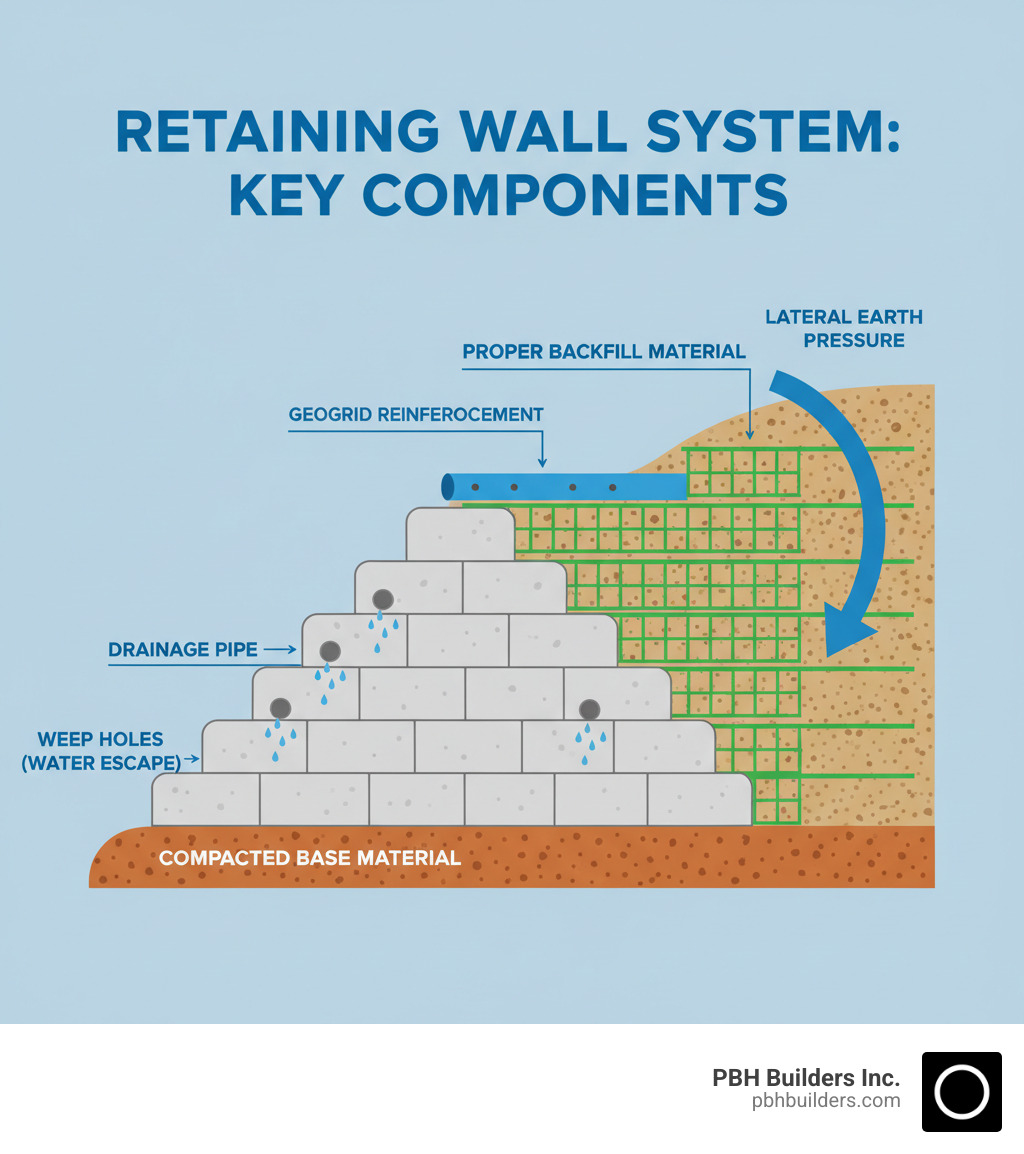
Drainage is the single most critical factor. When water builds up behind a wall, it creates immense hydrostatic pressure, which can cause even the strongest wall to fail. A complete drainage system is not optional. This includes:
- Weep holes at the base to let water escape.
- Perforated drainage pipes to channel water away.
- Crushed rock backfill to allow water to flow down to the pipes.
For taller walls, geogrid reinforcement is also essential. This synthetic mesh is layered into the soil behind the wall, tying the soil mass together to prevent the wall from bowing or toppling. It is a key component for soil stabilization on challenging sites.
Every property’s site conditions are unique. Soil type (clay vs. sand), local climate (rainfall patterns, frost), and load considerations (what the wall supports, like a driveway or patio) all dictate the wall’s design. This is where the role of structural engineers becomes vital. For walls over four feet or those supporting significant loads, an engineer’s analysis is necessary for safety and code compliance. We work closely with engineering partners and can facilitate this process when you consult with PBH Builders’ engineering partners.
Regulatory and Permit Requirements
Permits are a necessary part of the process, designed to protect your investment. In most areas, a permit is required for any retaining wall over 4 feet in height (measured from the footing). Other permit triggers include supporting a surcharge (like a driveway or pool) or building on a steep slope. Local building codes, especially San Diego’s specific hillside ordinances, vary and are constantly updated. An experienced local contractor will handle the permit process, ensuring your project is fully compliant and inspected, which provides peace of mind.
A Builder’s Palette: Comparing Retaining Wall Materials and Systems
Selecting the right material is where functionality meets style. Your choice will define the look of your outdoor space and should be guided by aesthetics, budget, and long-term performance. When evaluating retaining wall companies, assess their expertise with different materials in San Diego’s climate.
Here’s a comparison of the most common options:
| Material Type | Cost (Relative) | Lifespan (Years) | Aesthetics | Maintenance |
|---|---|---|---|---|
| Modular Blocks | Medium | 50-100+ | Versatile, various colors/textures, modern to rustic | Low, occasional cleaning |
| Poured Concrete | Medium-High | 100+ | Smooth, can be textured/stamped, industrial | Low, may need sealing |
| Wood (Treated Pine) | Low | 15-30 | Natural, rustic | High, susceptible to rot, requires replacement |
| Natural Stone | High | 100+ | Organic, timeless, integrates with nature | Low, occasional cleaning, potential for settling |
Modular and Precast Block Systems
Modular blocks are a versatile and reliable choice. Their interlocking designs allow for ease of installation and incredible design flexibility, from gentle curves to sharp corners. Manufactured for consistent quality, these blocks are engineered for durability and can last 50 to 100+ years with proper installation. They offer a wide range of looks, from weathered stone to modern chiseled faces, and come with matching components for a cohesive finish, as seen in our Retaining Wall 11594 by PBH Builders project.
Traditional Retaining Wall Materials
- Poured Concrete: For maximum structural strength, poured concrete with steel reinforcement is best. It’s the go-to for very tall walls or those supporting heavy loads. While often seen as industrial, it can be colored, stamped, or textured for a more architectural look, and its lifespan can exceed 100 years.
- Wood: Treated pine is often the cheapest material upfront, offering a natural, rustic look. However, its lifespan is limited to 15 to 30 years as it’s susceptible to rot and insects. It’s a viable option for smaller projects or those on a tight budget. For more on this, see our DIY Wood Retaining Wall Guide.
- Natural Stone: For timeless, organic beauty, nothing beats natural stone. A stone wall looks like a natural part of the landscape and can last 100+ years. Installation is labor-intensive and requires skilled craftsmanship, making it a premium option.
- Gabion Walls: These are wire cages filled with rocks, offering excellent drainage and an industrial-chic aesthetic. They are cost-effective, eco-friendly, and increasingly popular in modern, sustainable designs.
Reviewing Your Options: How to Vet and Select Retaining Wall Companies
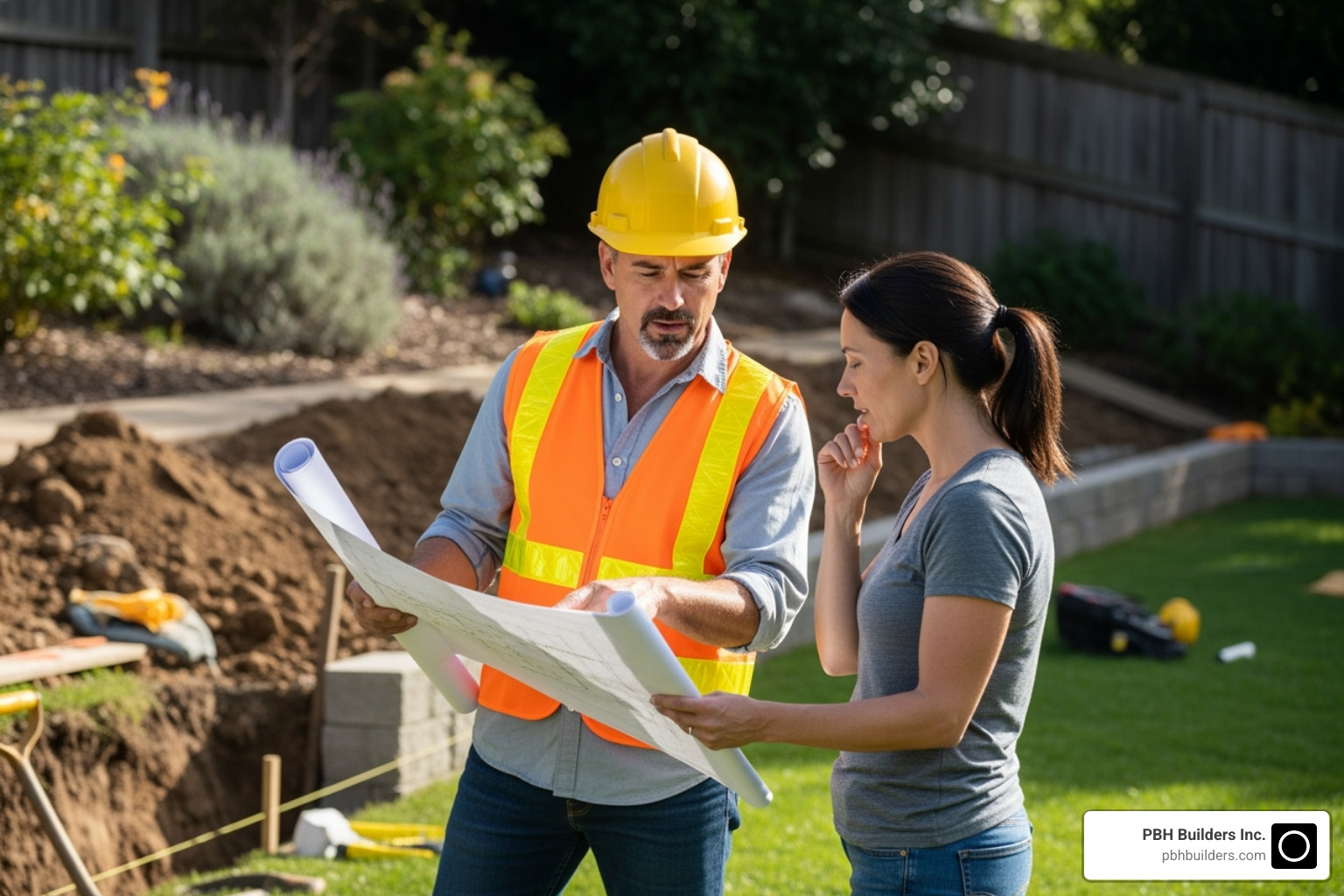
Choosing the right contractor is the most important decision you’ll make. The vetting process importance cannot be overstated, as it’s the key to a lasting structure versus a costly failure. Start by finding local contractors who specialize in retaining walls and understand San Diego’s unique soil and building codes. To begin your search, you can Contact PBH Builders for a consultation.
Key Credentials and Evaluation Criteria
When evaluating retaining wall companies, look for these non-negotiable qualifications:
- Licensing and Insurance: This is your primary protection. Never hire a contractor who cannot provide proof of proper California licensing and comprehensive insurance.
- Specialized Experience: Prioritize specialization vs. general landscaping. A company that focuses on structural retaining walls will have the necessary engineering knowledge that a generalist may lack. Look for 15+ years of dedicated experience.
- Portfolio and References: A strong portfolio of work demonstrates their capabilities and quality. Browse their completed projects, like our Retaining Wall 4627 by PBH Builders, and ask for client testimonials.
- Communication and Transparency: Do they answer your questions clearly and explain technical concepts in an understandable way? A good partner communicates well from the first interaction.
- Detailed Quotes: Request itemized quotes that break down costs for materials, labor, permits, and engineering. Vague estimates are a red flag.
- Local Code Knowledge: A reputable contractor will have a thorough understanding of local codes and can guide you smoothly through the permitting process.
Finding the right solution involves a partnership. A good contractor will start with a homeowner needs assessment, collaborate with engineers when necessary, and develop a comprehensive project plan that aligns with your goals and budget. Whether you’re considering wood or another material, they should help you make an informed choice. For more on wood options, see our guide on Wood Retaining Wall Contractors at PBH Builders.
Budgeting Your Project: Costs and Common Failure Points
The primary reasons for failure in retaining walls are almost always preventable. They trace back to critical oversights like improper base preparation, inadequate drainage, and a lack of reinforcement. A failed wall, identified by bulging, cracking, or tilting, is a costly and dangerous problem. Proper construction by experienced retaining wall companies from the start is the only way to guarantee a lasting result, like the one seen in Retaining Wall 11586 by PBH Builders.
Understanding Retaining Wall Costs
A retaining wall is an investment in your property’s stability. In the San Diego area, projects typically range from $3,200 to $9,200, with an average around $6,100. The cost per square foot is generally $20 to $50, but can climb to $150 for complex projects with premium materials or difficult site access.
Key cost drivers include:
- Material Costs: Wood is the most budget-friendly, while natural stone is a premium choice.
- Labor Expenses: This is often the largest portion of the budget.
- Permit Fees: Required for walls over four feet or those with surcharges.
- Project Complexity: Site access, soil conditions, and design intricacy all affect the final price.
Common Mistakes to Avoid
Avoid these costly and dangerous errors by hiring a professional:
- Skipping Permits: Building without a permit can lead to fines, demolition orders, and liability for an unsafe structure.
- Incorrect Base Compaction: The base must be perfectly level and compacted. Rushing this step causes settling and failure.
- Using Wrong Backfill: Using clay or dense soil traps water. Proper granular backfill is needed for drainage.
- Ignoring Geogrid Needs: For walls over four feet, geogrid reinforcement is essential for stability. Landscape fabric is not a substitute.
- Poor Water Management: This is the #1 cause of failure. A comprehensive drainage system (weep holes, pipes, gravel) is non-negotiable.
Frequently Asked Questions about Retaining Walls
Here are answers to the most common questions homeowners ask when considering a retaining wall project.
How high can a retaining wall be without a permit?
The general rule in most California municipalities is that a permit is required for any retaining wall over 4 feet in height, measured from the bottom of the footing. However, permits may still be needed for shorter walls if they support a surcharge (like a driveway or pool) or are built on a steep slope. Rules vary by municipality, so it’s critical to check local codes. A professional contractor will handle this to ensure compliance.
What is the cheapest type of retaining wall?
Treated pine or wood is typically the cheapest material for a retaining wall upfront. However, it’s important to consider lifespan considerations. A wood wall lasts about 15 to 30 years before needing replacement due to rot or insect damage. For better long-term value, concrete blocks are a great option. While the initial cost is higher than wood, their 50-100+ year lifespan and low maintenance make them a smarter investment over time. The best choice depends on your budget and long-term plans.
How long should a professionally built retaining wall last?
The lifespan is highly material-dependent and relies on the quality of the installation. With proper construction by experienced retaining wall companies, you can expect the following:
- Wood Retaining Walls: 15 to 30 years.
- Concrete and Block Retaining Walls: 50 to 100+ years.
- Natural Stone Retaining Walls: 100+ years.
The importance of proper installation cannot be overstated. A wall built with correct drainage, a solid base, and proper reinforcement will achieve its maximum lifespan. The expertise of the installer is just as important as the material itself. At PBH Builders, we’ve been building walls to last since 1998.
Conclusion: Building a Foundation That Lasts
A retaining wall is a significant investment in your property’s safety, beauty, and value. Its success hinges on three elements: thoughtful design, quality materials, and expert professional installation. The single most important decision is choosing the right company for the job.
In San Diego, you need a team that understands our unique soil, climate, and building codes. At PBH Builders Inc., we’ve combined engineering precision with creative design to transform local landscapes since 1998. We build walls that don’t just hold back soil—they protect your investment and create beautiful, usable outdoor spaces.
Ready to transform your challenging terrain? Secure your property and improve its beauty with a team that has perfected the craft for over two decades. Explore our professional retaining wall services and let’s discuss how we can bring your vision to life.